US overcapacity probe cites Honam chip cluster and auto production goals; Seoul says Washington signaled it would honor tariff deal
South Korea said Thursday it was not considering any drastic changes to its industrial policies after the United States cited those policies in a report underpinning a new tariff proposal.
Washington argued that Seoul’s support for industries including semiconductors, automobiles and petrochemicals contributed to structural overcapacity.
The Office of the US Trade Representative on Wednesday proposed a combined tariff rate of up to 15 percent on covered Korean goods, in line with last year’s bilateral trade deal. It also outlined an alternative rate of up to 25 percent if it finds ongoing consultations and existing commitments unsatisfactory.
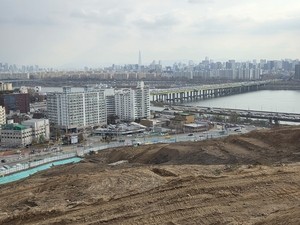
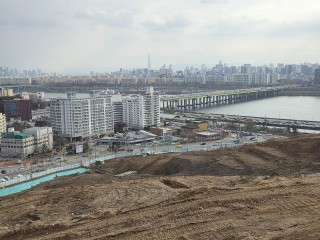
The US report cited a planned semiconductor cluster in the southwestern Honam region as one example of Seoul’s industrial development plans.
An official at the Ministry of Trade, Industry and Resources said Thursday that despite detailed questioning during the investigation, US officials had not singled out specific projects during consultations.
“It would be going too far to suggest that each individual item in the report translates into a certain percentage of tariffs,” the official told reporters in an online briefing. “We are not considering any drastic changes to our industrial policies at this point.”
The official said Washington had assured Seoul ahead of the announcement that it would honor the bilateral tariff agreement.
“We expect the final tariff rate to remain at the level agreed upon between the two countries,” the official said.
Industry Minister Kim Jung-kwan pointed to Korea’s growing trade surplus with the US as a source of pressure.
“Given the burden posed by our ballooning trade surplus with the US, keeping the final tariff rate at 15 percent would be more than a success,” Kim told reporters Wednesday.
Fueled by soaring chip demand amid the artificial intelligence investment boom, Korea’s trade surplus with the US reached a record $102.3 billion in the first 10 months of this year, more than double last year’s full-year surplus of $49.5 billion.
“We live in an era where big numbers, whether in exports or trade surpluses, have become a problem,” Kim said, adding that the surplus would have been an almost unimaginable burden without last year’s $350 billion investment framework with the US.
The USTR proposed rates of 15 to 35 percent for 14 of the 16 economies it investigated under Section 301, while deferring determinations on Mexico and Norway.
Korea, Japan, the European Union and Switzerland were offered 15 percent.
For Korea, the proposed rate takes into account most-favored-nation duties and existing Section 301 tariffs, including the 12.5 percent levy imposed in July over forced labor.
The USTR also outlined alternative rates of 25 percent for Taiwan, 20 percent for Japan and the EU, and 40 percent for China. Asked why Korea faced a higher alternative rate than Japan or the EU, the ministry official said the USTR had not disclosed its methodology, but that “the trade balance may have been taken into account.”
Seoul views the proposal as Washington’s attempt to restore tariff levels after duties imposed under the International Emergency Economic Powers Act were ruled unconstitutional. The official characterized the alternative rates as leverage for Washington to ensure compliance with existing trade commitments.
“As long as we adhere to the tariff agreement, it is difficult to say that the mutual commitment to honoring the deal has weakened,” the official said.
Seoul disputes US overcapacity findings
The USTR report accused Seoul of promoting production and exports in strategic industries through government initiatives and financing from state-run banks.
Alongside the Honam semiconductor cluster, it cited the government’s three industrial megaprojects and the Lee Jae Myung administration’s 123 policy priorities, including its goals of ranking third globally in AI competitiveness and fifth in automobile production by 2030.
Manufacturing accounts for 28.3 percent of Korea’s gross domestic product, nearly triple the US figure of 9.9 percent, while merchandise exports account for 35.9 percent of GDP, more than five times the US share, the report said.
It also attributed two Korean chipmakers’ combined global market shares of 70 percent in DRAM and 51 percent in NAND flash to extensive government support, including tax incentives and infrastructure development.
“There are substantial parts of the report that we cannot agree with,” the ministry official said, stressing that Korea’s industrial policy reflects market conditions and corporate investment demand.
Korea’s chip exports are meeting surging global demand, the official said. Government support for the country's petrochemical industry is intended to “facilitate and support voluntary restructuring by the private sector” amid global overcapacity that is hurting Korean producers.
The official suggested the USTR had listed a broad range of policies to establish legal grounds for its tariff action in anticipation of possible litigation. The official also dismissed Washington’s contention that Korea’s imports from China and the operations of Chinese-invested companies contribute to government-driven overcapacity as “a leap in logic.”
US investments and unresolved tariff risks
The ministry official also played down concerns that higher tariffs could pressure Seoul to accelerate its investment in the US.
“The two are essentially proceeding in parallel. We do not see one as being contingent on the other,” the official said, reiterating that investment decisions would be based on commercial viability.
Seoul has yet to receive concrete US proposals on such matters as potential nuclear power plant sites, the official added.
Seoul seeks to expand purchases of US energy and aircraft. A meeting of the Korea-US Free Trade Agreement joint committee envisaged in last year’s deal has yet to be scheduled, while consultations on reciprocal trade commitments and tariff circumvention continue.
Beyond the overcapacity investigation, semiconductor tariffs remain unresolved, while US lawmakers’ criticism of Korea’s digital regulations as nontariff barriers has raised the prospect of another Section 301 probe.
“We have not received any specific demands yet, but we are making thorough preparations and keeping a close watch,” Kim said of the digital regulatory issue Wednesday.
“With the possibility of further tariff increases if overcapacity worsens, potential trade friction must also be taken into account when designing industrial policies,” said Chang Sang-sik, president of the Institute for International Trade at the Korea International Trade Association.
“Semiconductor tariffs and a Section 301 investigation into the digital sector remain the key outstanding variables,” he added.
The USTR will accept written comments through Jan. 5 and hold a public hearing on Jan. 25 before finalizing its tariff measures.
yeeun@heraldcorp.com