Central bank lifts 2027 growth forecast to 4.1%; Semiconductor profits expected to exceed one-fifth of national income
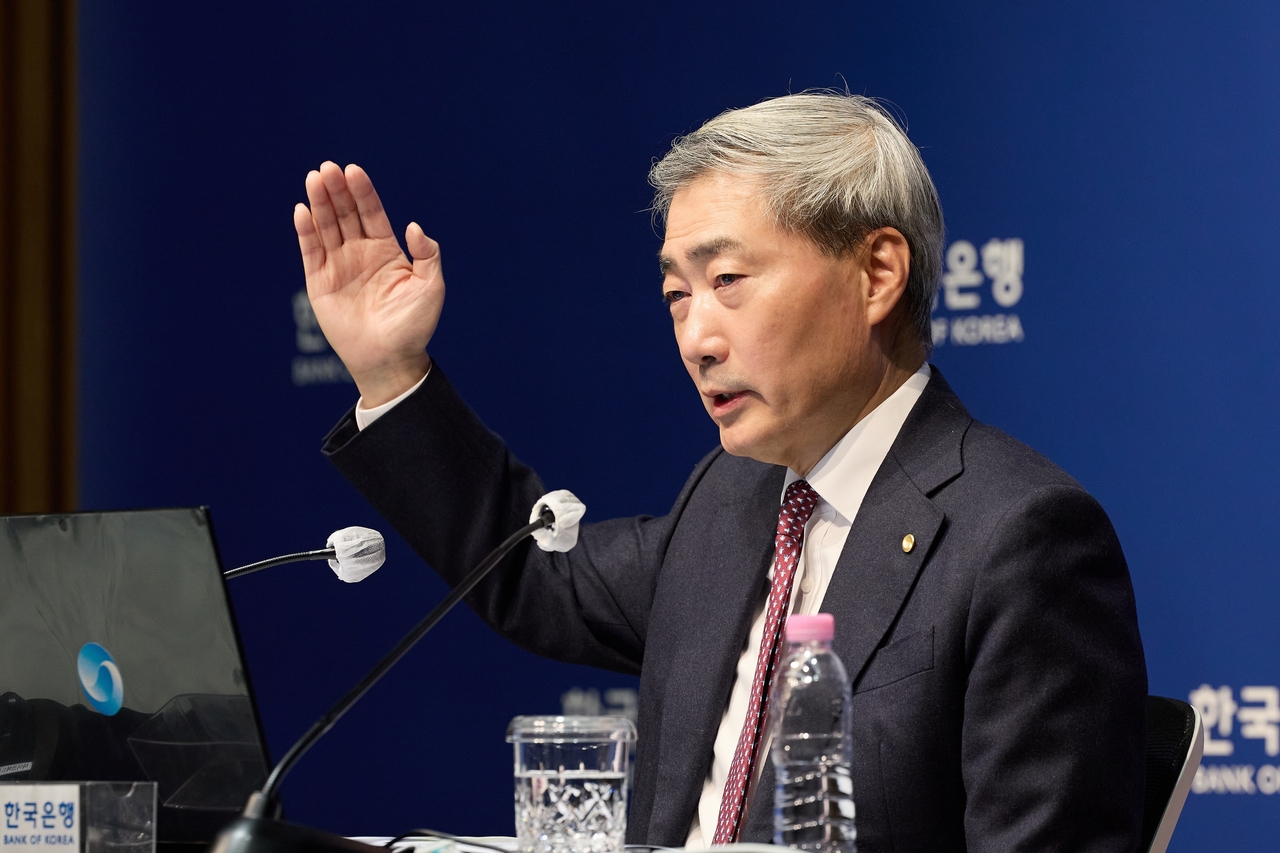
The Bank of Korea raised its key interest rate by 25 basis points to 3.25 percent on Thursday, resuming monetary tightening at its final policy meeting of the year, as strong growth and persistent inflation outweighed concerns over household debt and weak consumption.
The Monetary Policy Board had raised rates in July and August before holding the benchmark at 3 percent last month. The rate is now at its highest level since October 2024. The board's next meeting is scheduled for Jan. 14.
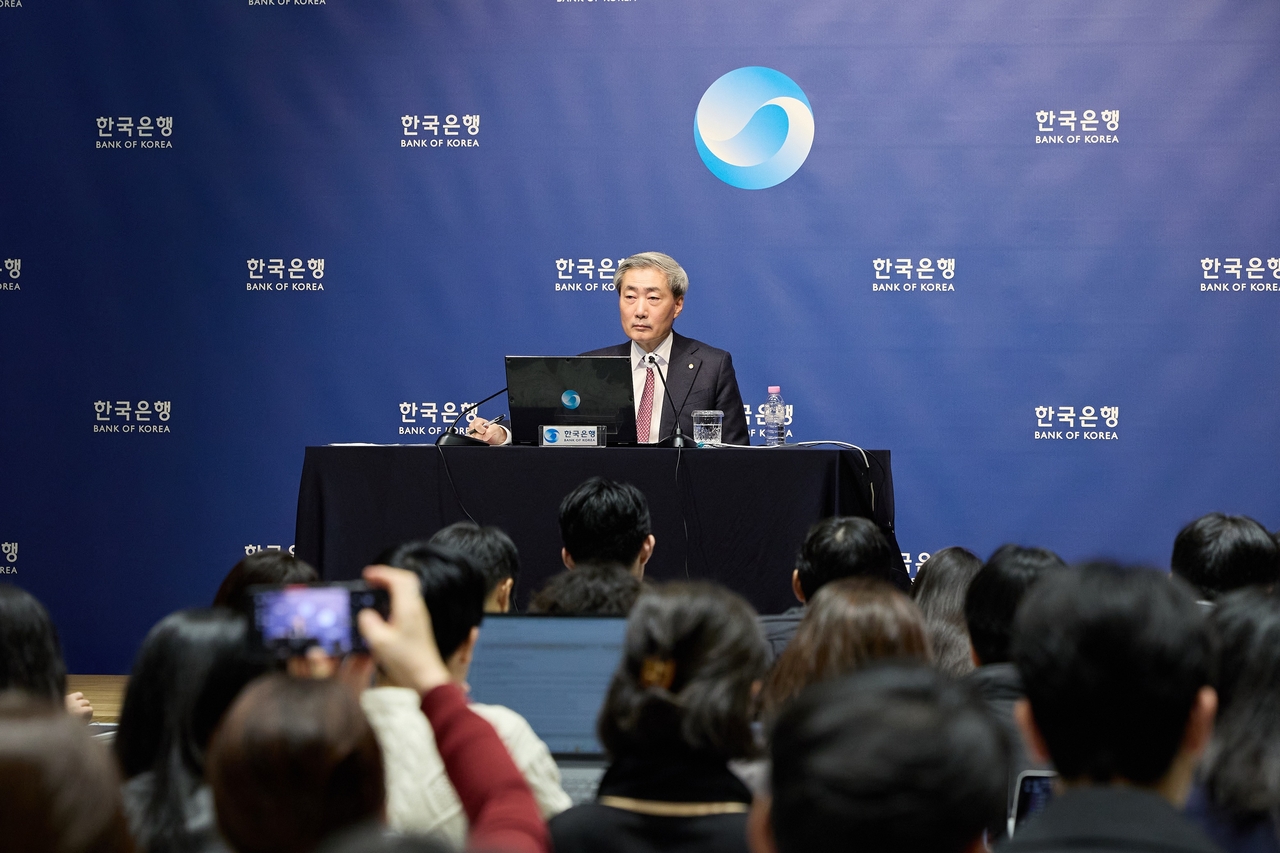
BOK Gov. Shin Hyun-song said strong semiconductor exports were supporting growth while inflation remained elevated.
"Growth has remained strong, supported by favorable conditions in the semiconductor sector, while both headline and core inflation continued to rise at a relatively rapid pace in the upper 2 percent range in October," Shin said.
He added that inflation was expected to remain above the central bank's target for an extended period as higher costs feed through to consumer prices and stronger growth adds to demand.
The BOK raised its growth forecasts to 3.9 percent for 2026 and 4.1 percent for 2027, citing strong exports and continued investment in infrastructure for artificial intelligence. It expects growth to reach 3 percent in 2028. The central bank kept its 2026 inflation forecast at 2.7 percent and raised its 2027 projection by 0.1 percentage point to 2.4 percent.
Further hikes remain an option
The BOK's policy statement left the door open to further rate increases, saying it would decide on their timing while monitoring inflation, growth and financial stability. Two of the seven board members, Hwang Kun-il and Lee Soo-hyung, dissented in favor of holding rates steady.
The board's dot plot showed eight of 21 projections at 3.5 percent, the largest cluster, pointing to the possibility of another hike of 25 basis points. In August, the largest cluster was at 3 percent.
Fed outlook adds to rate pressure
South Korea's third-quarter GDP grew 3.4 percent from a year earlier, well above the BOK's August forecast of 2.6 percent. Consumer price inflation eased to 2.8 percent in October from 2.9 percent a month earlier, but remained above the central bank's 2 percent target. The BOK estimates inflation would have reached the mid-3 percent range without the government's oil price cap, introduced in March.
Shin has argued that early action can prevent bigger problems, likening it to "using a hoe to stop what could otherwise require a shovel."
Expectations of a US rate hike have added to the pressure. US core personal consumption expenditures inflation rose 3.3 percent from a year earlier in October, while third-quarter GDP growth was revised up to an annualized 4.3 percent. A Fed hike in December could have widened the rate gap and put further pressure on the won if the BOK had held rates steady. Thursday's move narrowed the gap to 0.75 percentage point.
Chip profits may not reach households evenly
The rate increase will add to borrowing costs for households, which carry more than 2,000 trillion won ($1.49 trillion) in combined debt. The BOK estimates that a 0.5 percentage point rate increase would raise annual interest payments by 340,000 won per borrower, or 6.7 trillion won across all borrowers.
Shin acknowledged the burden, but said persistent inflation would cause greater damage. He also said semiconductor prices mattered more to monetary policy than stock prices, as recent market losses have hit investors who borrowed to buy shares.
Semiconductors accounted for 24.5 percent of South Korea's GDP in the second quarter. Under the country's chain-weighted GDP method, industry weights are updated annually, making next year's growth even more sensitive to the semiconductor cycle. A stronger cycle could lift growth, while a downturn could have a greater impact.
Shin rejected concerns that semiconductor-led growth would do little for domestic demand. He said operating profits from semiconductor exports were expected to reach around 700 trillion won this year, making them a major driver of nominal GDP.
South Korea's nominal GDP, which stood at about 2,600 trillion won last year, is expected to exceed 3,000 trillion won this year, he said. Semiconductor companies' operating profits alone would account for more than one-fifth of national income.
Shin said the profits would flow into the wider economy through corporate taxes, employee bonuses, investment and dividends, rather than disappear into a "black hole." He also defended the BOK's 4.1 percent growth forecast for next year, saying it had reliable information on semiconductor companies' expected sales.
But the gains may remain concentrated. Bonuses of up to 600 million won per employee have raised concerns about inflation, although semiconductor workers account for less than 1 percent of the workforce. The BOK expects the payouts to support consumer spending, but some money could instead go toward property purchases or debt repayment.
The uneven recovery is already visible: Despite stronger-than-expected third-quarter growth, private consumption contracted for the first time since the COVID-19 pandemic.
ch0221@heraldcorp.com