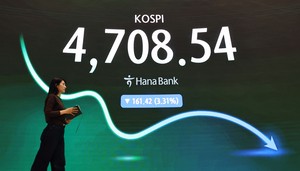
Central bank lifts 2026 growth forecast to 3.9%, sees inflation at 2.7%
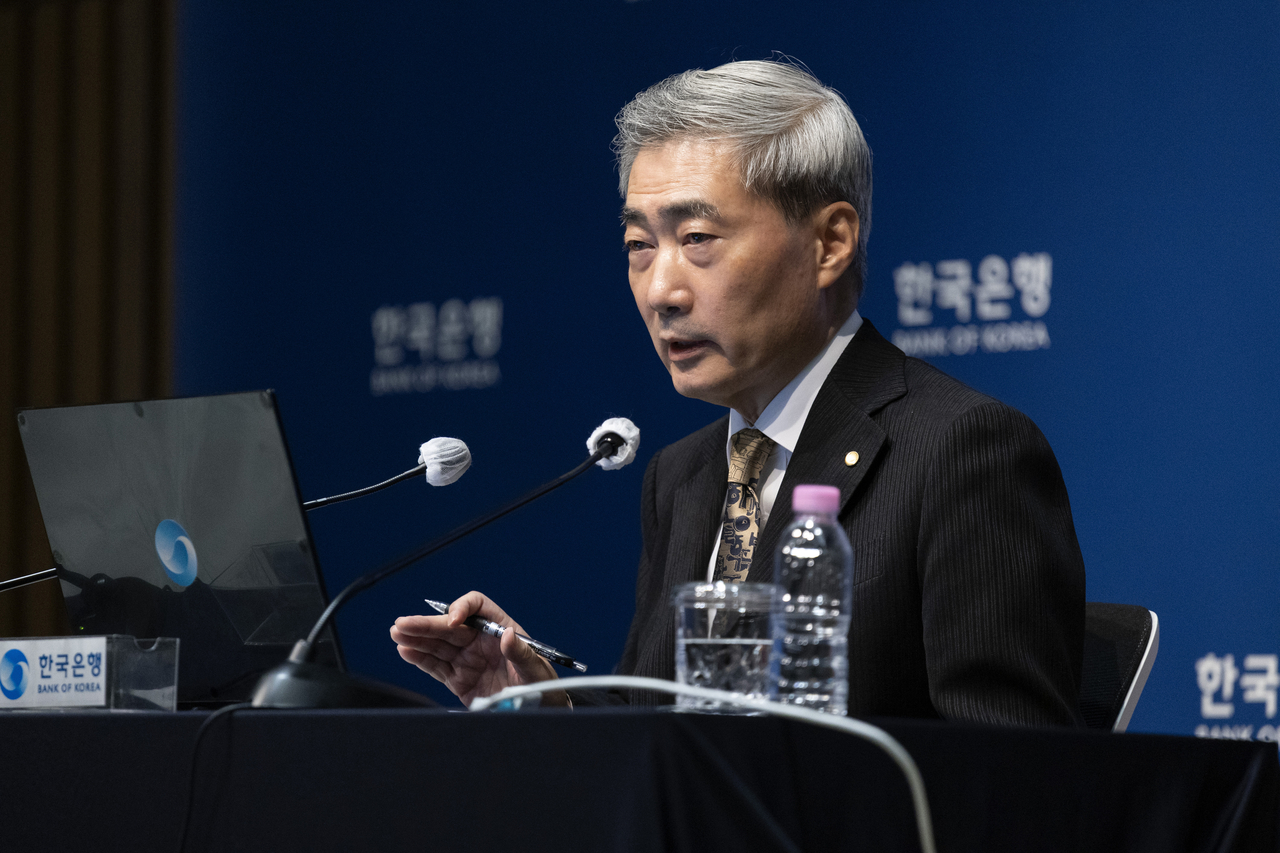
The Bank of Korea raised its key interest rate by 25 basis points to 3.25 percent on Thursday, resuming monetary tightening at its final policy meeting of the year amid stronger-than-expected growth and persistent inflationary pressures.
The Monetary Policy Board had raised the benchmark rate by 25 basis points in both July and August before holding it steady at 3 percent last month to assess the effects of tightening measures. Thursday's move marked the BOK's final rate hike of the year.
The central bank revised its growth forecasts to 3.9 percent for 2026 and 4.1 percent for 2027, and projects growth of 3 percent in 2028. It forecast consumer price inflation of 2.7 percent this year, 2.4 percent next year and 2.1 percent in 2028.
BOK Gov. Shin Hyun-song signaled after the board's Oct. 22 meeting that restrictive policy stance would be maintained until inflation was firmly under control.
"The preemptive moves have helped slow home price increases and gains in the financial vulnerability index," Shin said. "We will continue to respond until inflation converges sustainably toward the target."
Since then, economic growth and inflation have remained stronger than the central bank's earlier projections. South Korea's economy grew 1 percent in the third quarter, more than three times the BOK's August forecast of 0.3 percent. Cumulative growth for the year reached 3.6 percent, exceeding its full-year projection of 3.3 percent.
Consumer prices rose 2.8 percent in October from a year earlier, down from 3.1 percent in August and 2.9 percent in September but still above the BOK's 2 percent target. The central bank has also warned of further price pressures from rising international oil prices and stronger domestic demand. Rate increases by major central banks were also among the factors considered by the BOK.
The BOK has emphasized the potential spillover effects of the semiconductor industry's expansion, but signs of a broader recovery across the economy remain limited. Private consumption unexpectedly contracted in the third quarter, suggesting that the export-led recovery has yet to translate into stronger domestic demand.
Against this backdrop, some analysts say the Monetary Policy Board could temper expectations for further rate hikes next year through a dissenting vote in favor of holding rates steady or fine-tuning its rate projections.
ch0221@heraldcorp.com