Pyongyang pushes to expand role of tactical nuclear weapons, raising security concerns in Seoul
North Korean leader Kim Jong-un seeks to redraw the terms of any future negotiations with Washington, signaling Pyongyang's preference for talks on arms control between nuclear-armed states rather than denuclearization, experts said Thursday.
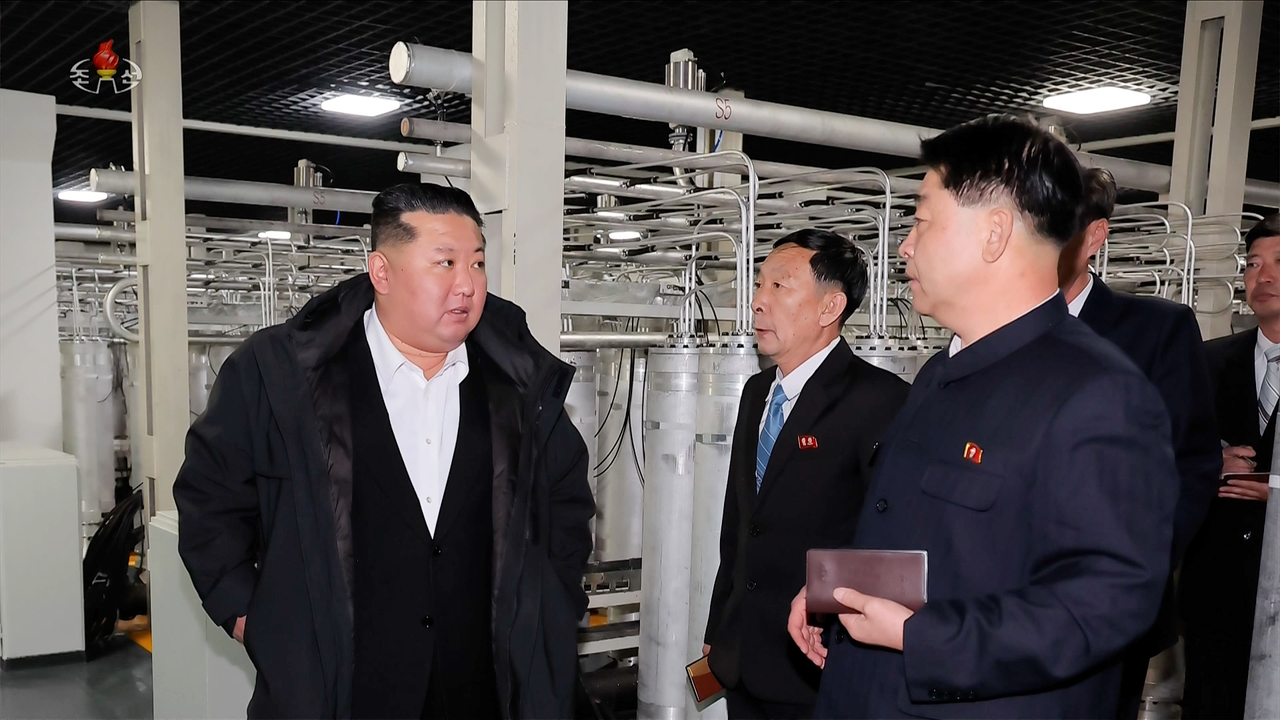
The message came as Kim inspected nuclear materials production and weapons research facilities Wednesday, days after a meeting with US President Donald Trump failed to materialize during Trump's visit to China last week.
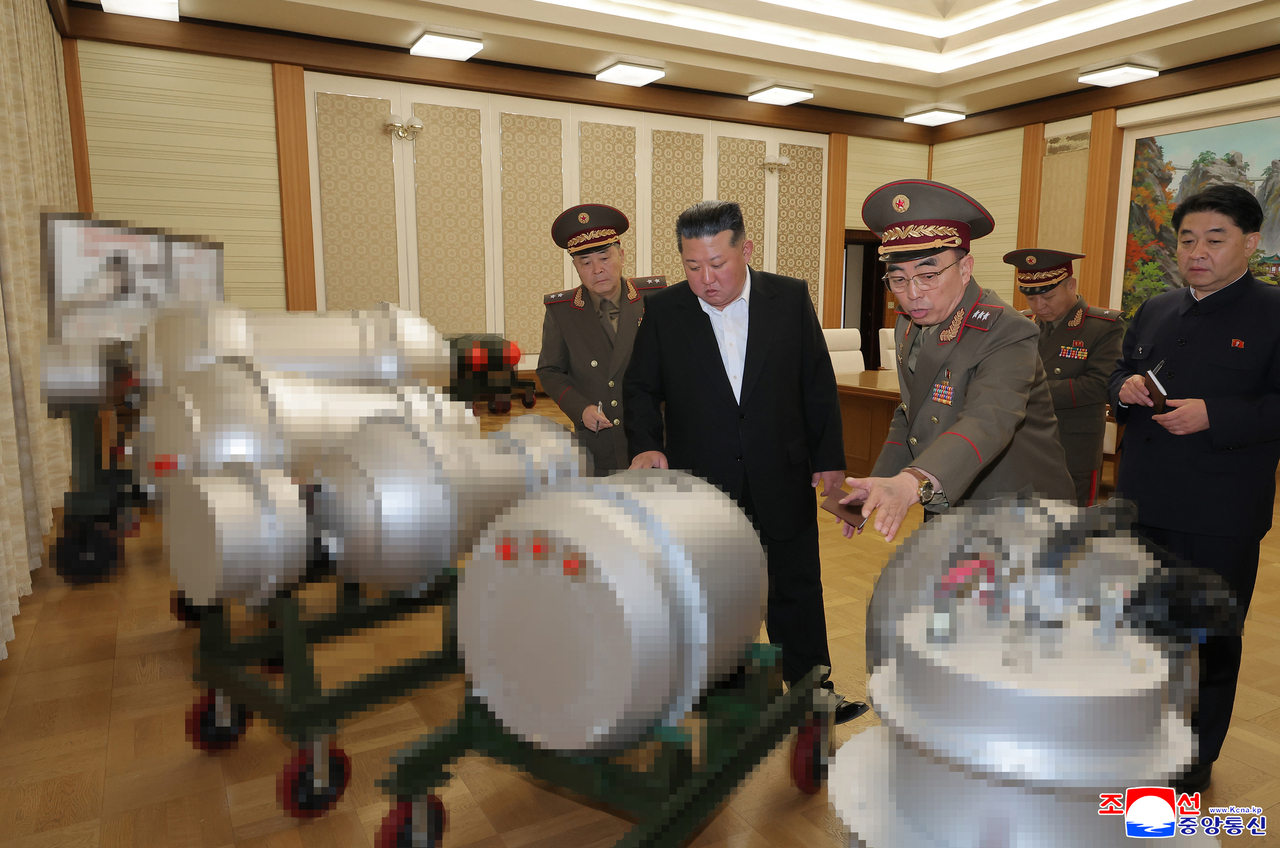
According to the North's official Korean Central News Agency, Kim visited a newly built weapons-grade nuclear materials production facility, a nuclear-powered equipment production base and the Nuclear Weapons Institute to review progress on the nuclear strategy outlined at the ninth congress of the Workers' Party of Korea in February.
Kim declared North Korea's nuclear status irreversible, warning that any attempt to undermine its constitutionally enshrined possession of nuclear weapons would be regarded as "an open declaration of war."
"Our nuclear capability has now become a reality. Denying this reality is just the recognition of failure," Kim said, stressing that Pyongyang would "never seek the recognition and approval of anyone."
Experts said Kim was not shutting the door to diplomacy with Washington but seeking to dictate the terms under which it could resume.
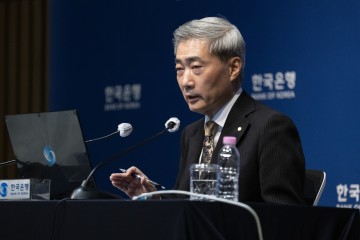
Hong Min, a senior research fellow at the Korea Institute for National Unification, said Pyongyang was not necessarily seeking formal recognition as a nuclear-armed state, but rather Washington's abandonment of denuclearization as a policy objective.
Hong interpreted Kim's remarks, coupled with the absence of any direct reference to Trump, as a sign that Pyongyang was leaving the door open to dialogue while seeking to fundamentally reshape its agenda.
Lim Eul-chul, a professor at Kyungnam University's Institute for Far Eastern Studies, said the remarks amounted to a declaration that Pyongyang intends to abandon the framework that has governed US-North Korea nuclear negotiations for more than three decades.
"Rather than permanently closing the door to US-North Korea dialogue, North Korea is pursuing a calculated strategy of raising the threshold for engagement, declaring that denuclearization talks are over and that any future dialogue would take place between two nuclear-armed states," Lim said.
Lim added that Pyongyang was seeking to limit future negotiations to mutual nuclear threat management and arms control, effectively taking the complete, verifiable and irreversible dismantlement of its nuclear arsenal off the table.
The message, he said, reflects Pyongyang's confidence that "time is on its side" and its determination to strengthen its nuclear retaliatory capabilities until Washington accepts its possession of nuclear weapons as a fait accompli.
Growing tactical nuclear threats against Seoul
Kim's inspection also underscored North Korea's ambition to expand the operational role of tactical nuclear weapons, particularly against South Korea.
Kim stressed that the nuclear weapons manufacturing sector should "pay attention to utilizing the tactical nukes of different missions in multiple domains."
He described the task as "important and urgent," citing the military value of tactical nuclear weapons in modern warfare and "the inevitable reality facing the border with the most dangerous enemy state," an apparent reference to South Korea.
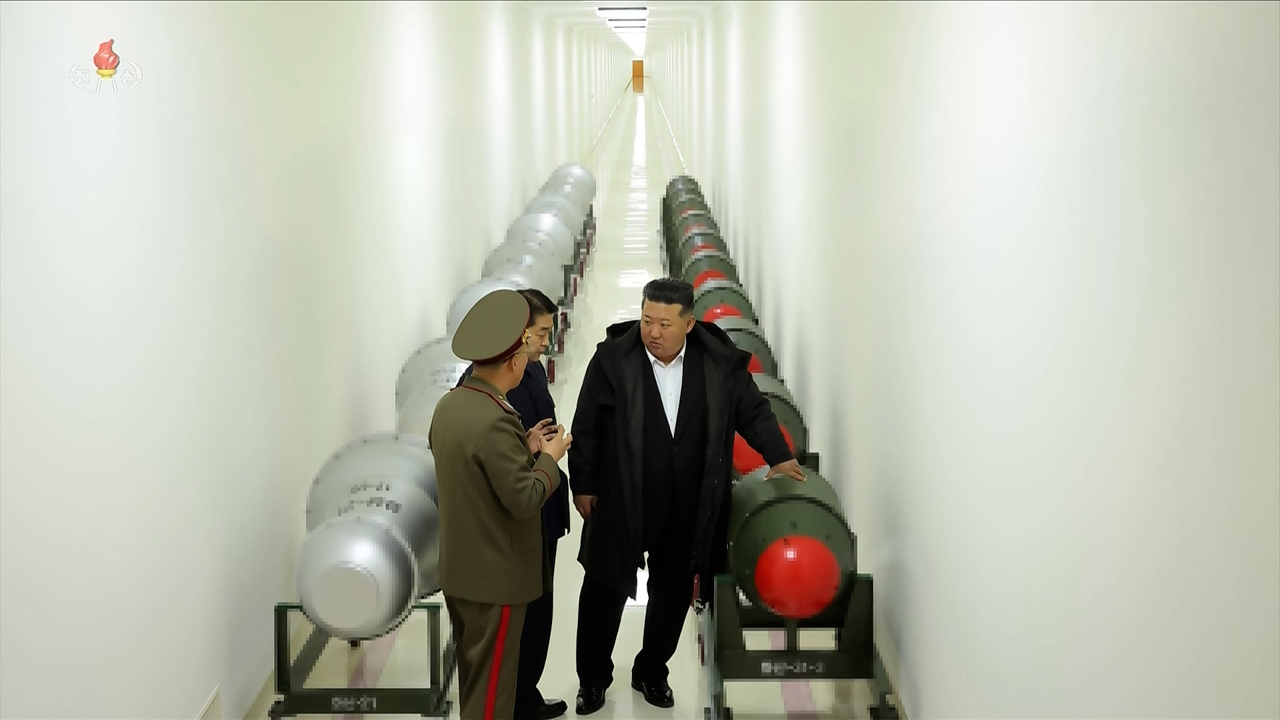
Images aired by the North's Korean Central Television showed several previously undisclosed variants of what appeared to be the North's Hwasan-series nuclear warheads, signaling efforts to diversify its nuclear arsenal.
Hong assessed that the diversification was intended in part as a response to US nuclear policy, while Kim's explicit reference to the border with South Korea highlighted the increasingly prominent role of tactical nuclear weapons in Pyongyang's military posture toward Seoul.
Kim also accused Washington of promoting nuclear proliferation through AUKUS, a trilateral security partnership between Australia, the United Kingdom and the United States, and encouraging its allies in Northeast Asia to acquire nuclear-powered submarines.
The developments have raised concerns over a potential gap between the allies' existing extended deterrence framework, underpinned by US strategic nuclear capabilities, and North Korea's increasingly diversified tactical nuclear threats.
Seoul's Defense Ministry expressed concern Thursday over North Korea's push to broaden the role of tactical nuclear weapons on the Korean Peninsula.
Ministry spokesperson Chung Bin-na, during a press briefing, urged Pyongyang to stop seeking to justify its nuclear ambitions and adhere to UN Security Council resolutions, stressing that such steps were essential to maintaining peace and stability on the peninsula and in the wider region.
Chung added that the South Korean military maintains a firm readiness posture by strengthening extended deterrence cooperation with Washington and advancing its own three-axis deterrence system.
Seoul and Washington are reportedly coordinating plans to hold the seventh meeting of their Nuclear Consultative Group in Washington next month, amid growing calls to refine their joint response to North Korea's evolving nuclear threats.
mkjung@heraldcorp.com