From post offices to convenience stores and same-day couriers, a guide to choosing the right delivery service
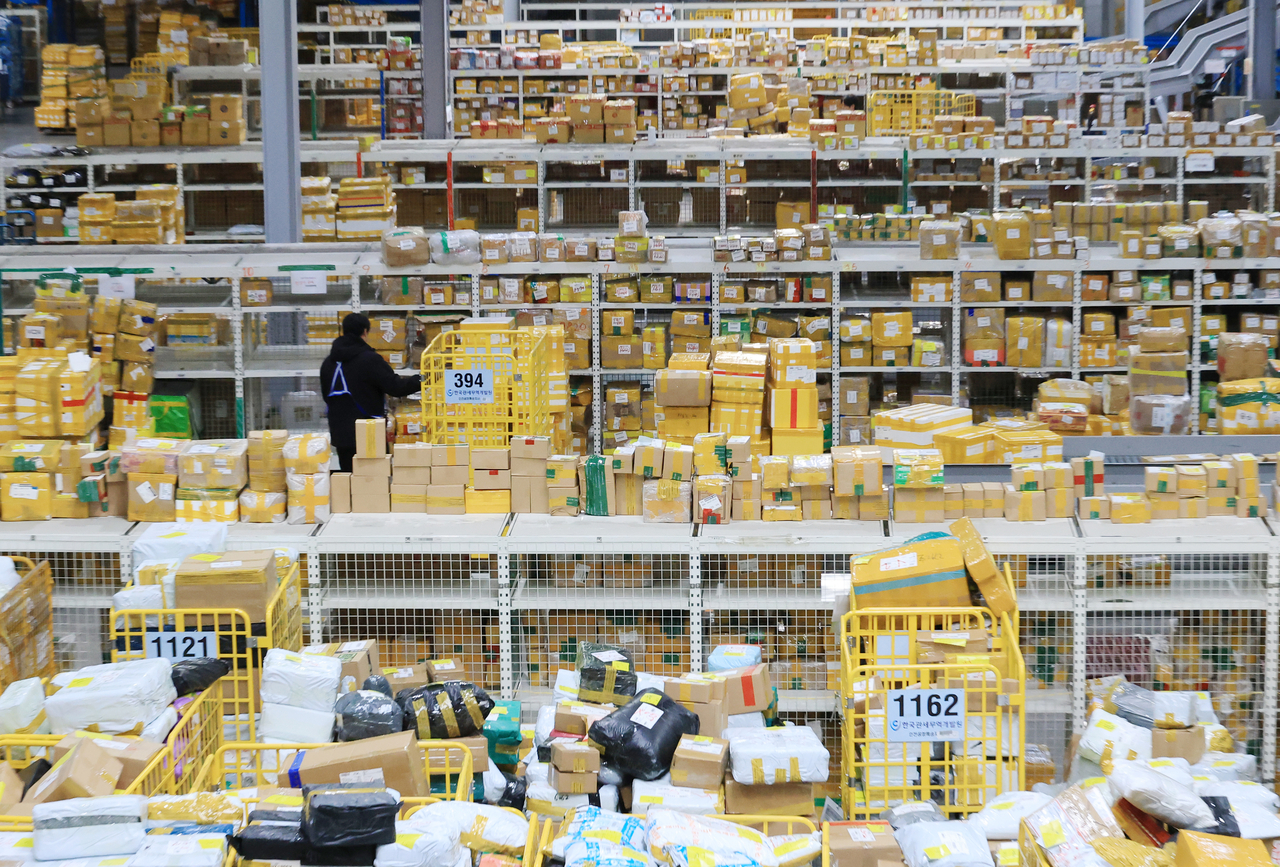
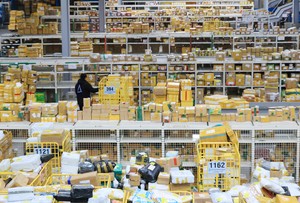
Sending a package in South Korea is relatively easy, with options ranging from the national postal service and convenience store parcel delivery to on-demand couriers offering same-day delivery.
Choosing the right service comes down to three factors: how quickly you need the package delivered, how valuable it is and how much you are willing to pay.
Postal services and taekbae
Korea Post offers two main types of parcel delivery at its counters: ordinary parcels (ilban) and registered parcels (deunggi).
Both accept packages weighing up to 30 kilograms, with the combined length, width and height not exceeding 160 centimeters. No single side may exceed 1 meter.
Fees are determined by both weight and dimensions. For packages weighing up to 3 kilograms and measuring no more than 80 centimeters in combined dimensions, ordinary parcel delivery starts at 2,700 won, while registered delivery costs 4,000 won.
Ordinary parcels are typically delivered within three business days, while registered parcels generally arrive the next business day.
Deliveries between Jeju Island and the mainland generally take two business days, although expedited next-day delivery from Jeju to the mainland is available for an additional fee. Severe weather and deliveries to remote areas may cause delays.
The biggest difference, however, is not speed but security. Registered parcels can be tracked and are eligible for compensation in case of loss, while ordinary parcels offer neither protection.
Korea Post also offers doorstep pickup (bangmun jeopsu), with fees starting at 5,000 won.
Private parcel delivery services, commonly known as "taekbae," are another widely used option. Major logistics companies accept reservations through their websites, mobile apps and customer service centers.
Major convenience store chains, including CU, GS25, 7-Eleven and E-mart24, also offer parcel delivery services.
Their biggest advantage is convenience: Customers can drop off packages around the clock at participating 24-hour stores. Collection times, however, vary by location, with earlier cutoff times typically applying on Saturdays.
Convenience store delivery services generally offer more finely divided weight-based pricing than Korea Post, making them potentially cheaper for lightweight packages.
CU and GS25 also offer discounted store-to-store delivery, where recipients collect their packages at a designated convenience store rather than having them delivered to their homes. GS25's service starts at 1,900 won for packages weighing up to 500 grams on mainland-to-mainland routes.
When speed matters: Quick service
For urgent deliveries, South Korea has an extensive network of on-demand courier services, commonly known as "quick service."
Unlike conventional parcel services, which consolidate packages for distribution, these couriers typically collect items directly from the sender and deliver them to the recipient within the same day, often within a few hours.
Motorcycle couriers are widely used for documents and small packages, while larger vehicles are available for bulkier items.
Fees vary depending on the distance, package size, vehicle type and urgency. While generally more expensive than regular parcel delivery, quick service is particularly useful for time-sensitive deliveries within a city.
What to keep in mind
Before sending a package, check the carrier's restrictions. Cash, checks, negotiable securities, hazardous materials, live animals and certain perishables, electronics and fragile items may be prohibited or subject to special conditions.
Korea Post does not accept items valued at over 3 million won, while private carriers may impose lower limits.
Make sure the recipient's address, apartment or unit number, phone number and five-digit postal code are correct. Addresses and postal codes can be verified through the government's Road Name Address website (www.juso.go.kr).
When sending valuable items, declare their actual worth on the shipping label and retain proof of purchase. Under South Korea's standard terms for private parcel delivery services, compensation for lost or damaged packages is generally capped at 500,000 won if the sender fails to declare the item's value.
Those concerned about theft or unable to receive deliveries in person can use secure parcel lockers, where available, or arrange an alternative drop-off location.
Regardless of the delivery method, keep the receipt and tracking number, if provided. Photographing valuable items and their packaging before shipping can also help support compensation claims in case of loss or damage.