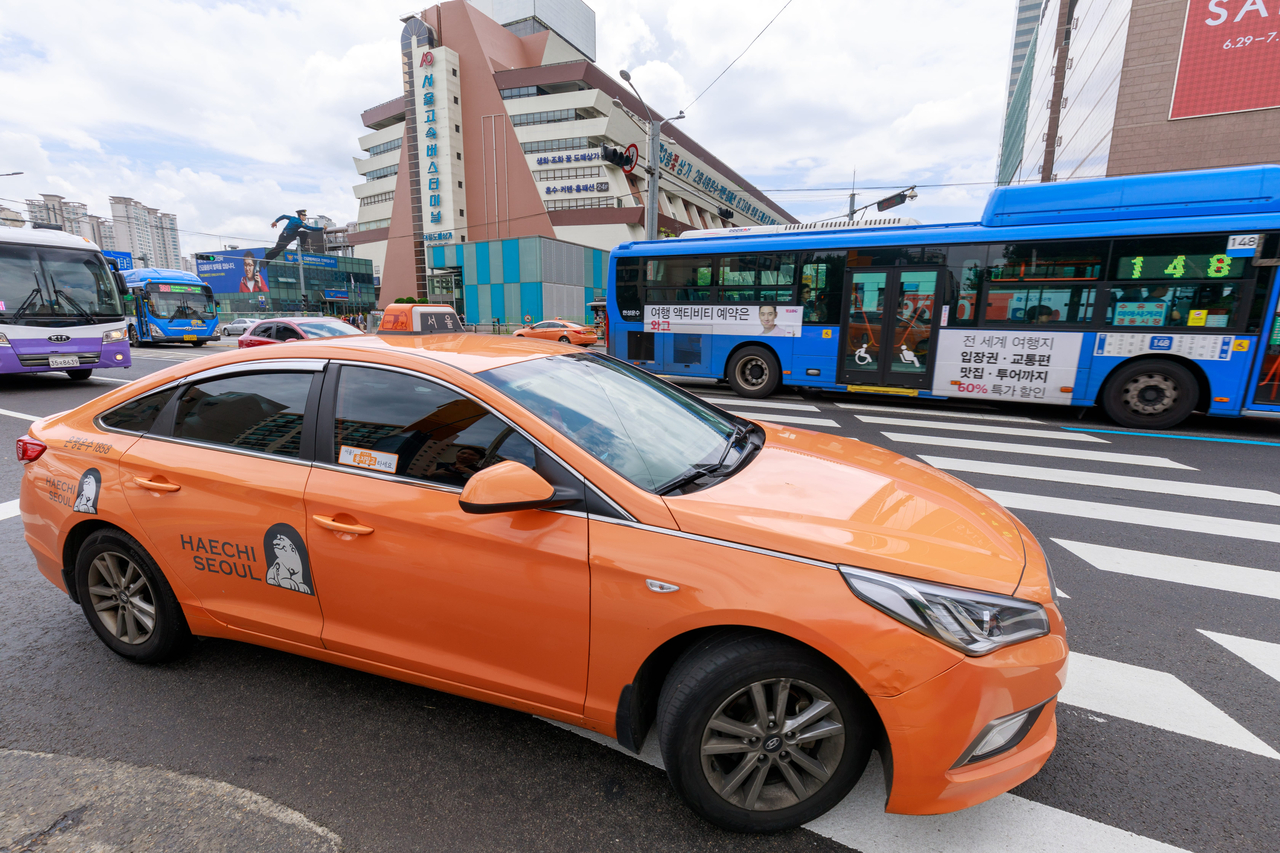
Taxi drivers in Korea cannot refuse passengers without a justifiable reason. But whether a refusal breaks the rules can depend on the circumstances, including where the taxi is licensed to operate.
Here is how to recognize a potentially unlawful refusal, report it and understand the exceptions.
Check the taxi’s status
A taxi displaying a sign saying "빈차," or “bincha,” meaning available, is ready to take passengers. The one saying "예약," or “yeyak,” means reserved — the driver may be on the way to collect someone who has booked a ride.
An unlit availability sign may indicate that the taxi is carrying a passenger or is off duty. However, turning off the sign or displaying “reserved” does not allow a driver to pick and choose passengers while still seeking fares.
What to do if a driver refuses
A driver who stops, asks your destination and then turns you away simply because the journey is too short may be committing an unlawful refusal. Seoul also lists refusing a passenger because the destination is in the opposite direction as a violation.
If you suspect a violation, record the full license plate number, the exact time and location, your intended destination and what the driver said. Note the company and driver’s name if possible.
Audio or video of the exchange can help authorities establish what happened. If the incident involves an app booking, save screenshots of the booking details and any messages from the driver.
For incidents in Seoul, contact the 120 Dasan Call Center at 02-120. Foreign passengers can also use the city’s multilingual online reporting service to submit complaints about ride refusals, overcharging and other taxi-related problems.
Elsewhere, contact the relevant local government’s taxi or transportation department.
When a refusal may be justified
A driver who is genuinely off duty or collecting a passenger with an existing reservation is not required to accept another fare.
A refusal may also be justified if a passenger is too intoxicated to communicate a destination, carries a dangerous item or tries to board where the taxi cannot safely stop.
Seoul’s guidance also lists traveling with a pet outside a carrier as a possible ground for refusal. Keep pets fully inside a suitable carrier.
At taxi stands where passengers are required to board in order, a driver may direct you to the vehicle at the front of the queue.
Traveling beyond a taxi’s operating area
Taxis are licensed to operate within designated areas, which do not always match provincial boundaries. Some neighboring municipalities share operating areas, while airports and certain other locations have special arrangements.
A driver can generally decline a trip beyond the taxi’s licensed operating area, but shared operating zones create exceptions. Crossing a city boundary alone does not establish whether a refusal is lawful.
A taxi that has taken a passenger outside its operating area does not automatically have permission to accept local fares there. Return trips and designated shared zones are subject to separate rules.
If a driver cites an operating-area restriction and you are unsure whether it applies, include the pickup point, destination and full license plate number when asking the relevant local authority to review the refusal.