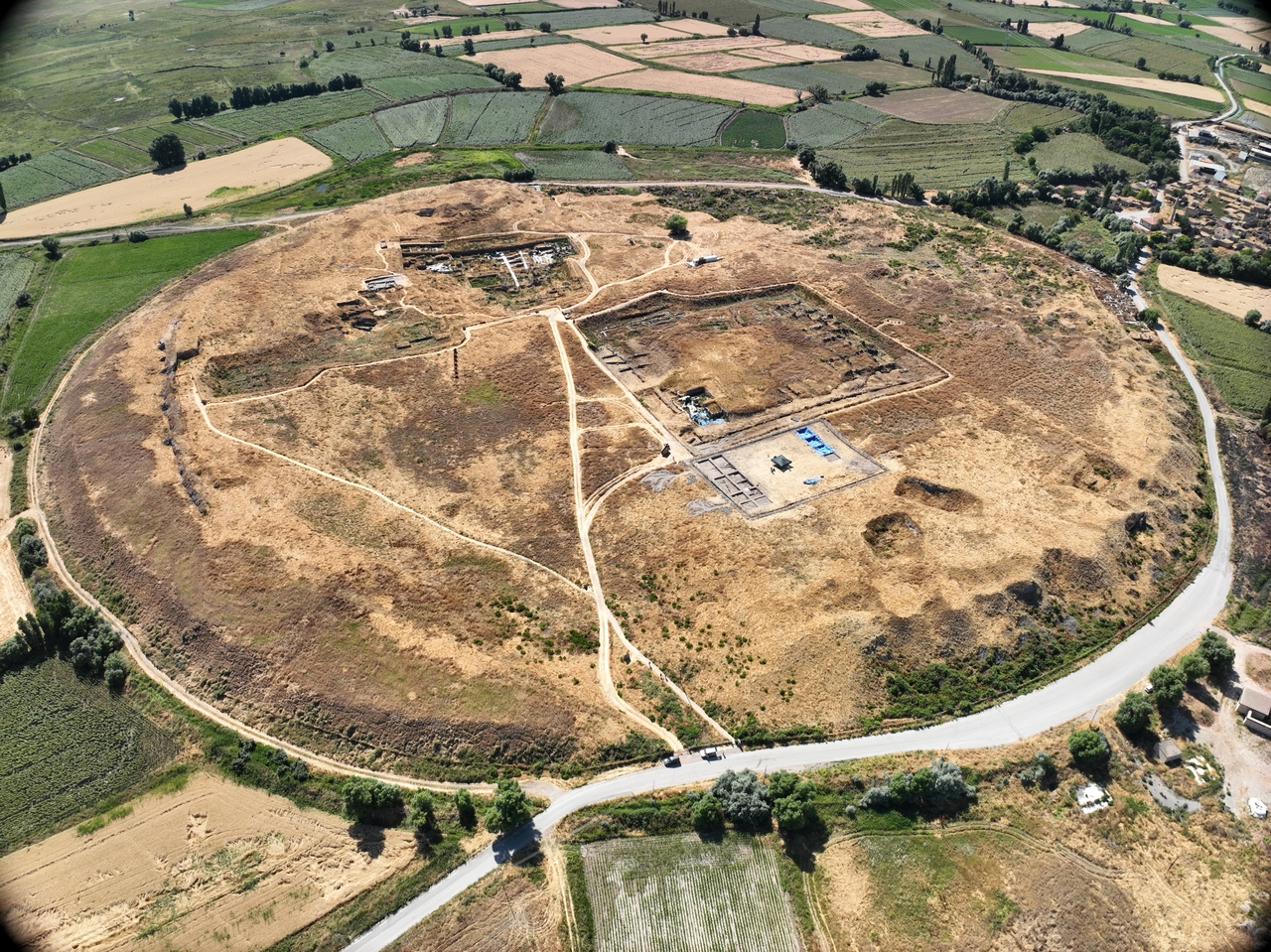
A mosaic dating to the Hellenistic period has been unearthed at the Kultepe archaeological site in Kayseri, central Turkey.
The 2.6-square-meter section of mosaic is the first discovery of remains from the Hellenistic period, from 323 to 30 BC, since excavations began at the site in 1948.
The excavation is being conducted jointly by Korea's National Research Institute of Cultural Heritage, under the Korea Heritage Service, Turkey's Ministry of Culture and Tourism, and Ankara University.
Kultepe was a major political, economic and cultural center of ancient Anatolia. The site sheds light on the Bronze Age kingdom of Kanesh, also known as Nesha, and the activities of ancient Assyrian merchants.
A major trading hub, it is also important for understanding the development of ancient cities, according to the research team. The lower city has yielded a vast collection of clay tablets documenting the commercial activities and daily lives of traders about 4,000 years ago.
Previous excavations and research at Kultepe have focused largely on the Bronze Age, which ended there in about 1,200 BC , leaving the site's development during the later Hellenistic period largely unexplored.
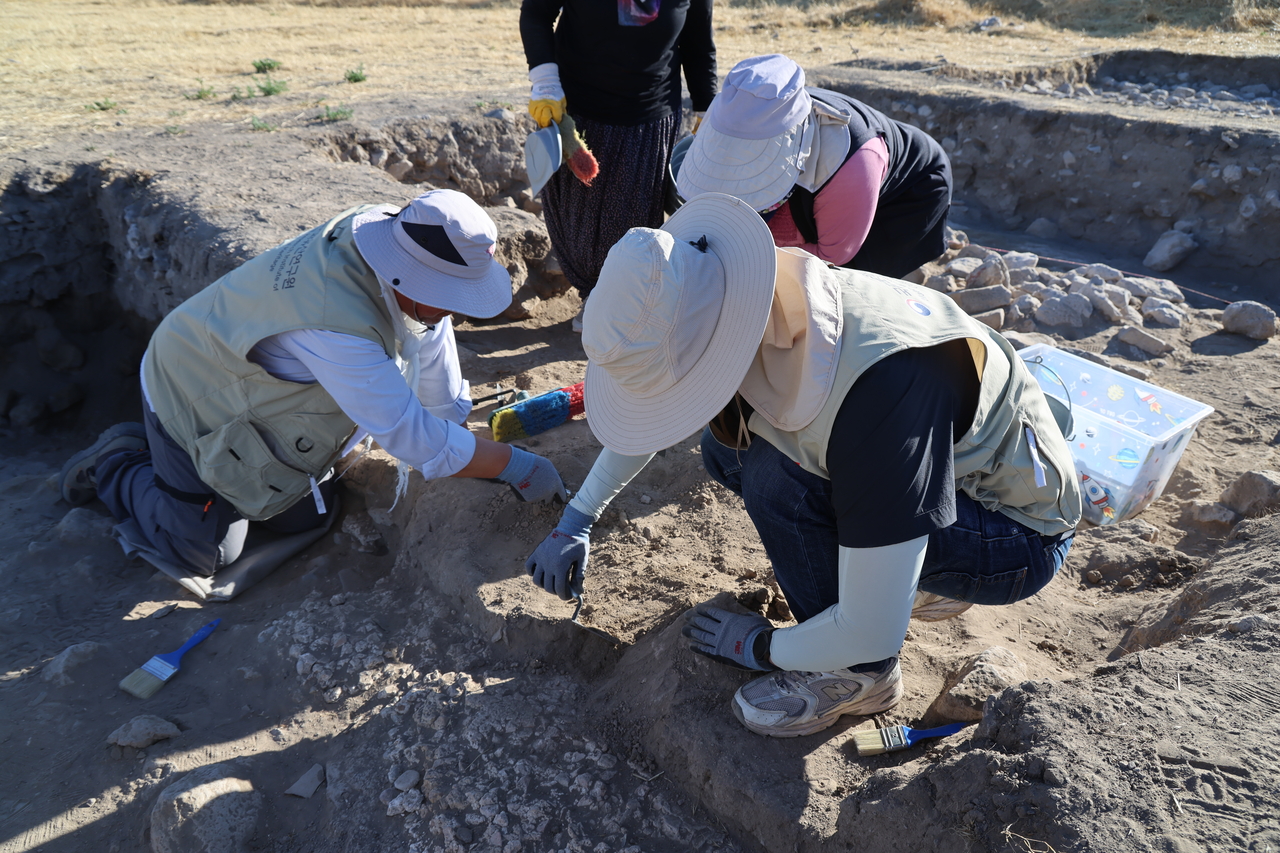
The joint research team began excavating an area east of the Warshama Palace in 2025 and identified mosaic remains believed to have formed part of a building's floor. The excavated section of mosaic measures about 163-by-165 centimeters, with only a corner exposed. Related traces found nearby suggest the original floor extended over a larger area.
The floor reflects construction techniques used during the Hellenistic period. After the ground was leveled, a foundation was laid using broken stones and fine soil. Small river pebbles were then spread over it, and pottery fragments and lime were used to create a firm, finished surface.
The discovery suggests that Kultepe had substantial residential buildings and temples during the Hellenistic period, offering new evidence of the ancient city's scale and development.
"This excavation can prove that Kultepe also had very large residential complexes and temples during the Hellenistic period, demonstrating that a major city existed here," Fikri Kulakoglu, a professor and researcher at Ankara University, said at a press conference in Seoul on Tuesday.
"It is an important discovery because, until now, surveys and excavations at sites across central Anatolia had not revealed traces of the Hellenistic period," he added.
Researchers also identified four cultural layers dating to the Hellenistic period. The findings are expected to help explain not only the newly discovered structure but also how the site evolved over time and how its spaces were used.
The project is a joint Korean-Turkish research effort that combines expertise from both countries, rather than an assistance program, said Bulent Gonultas, deputy director general for cultural heritage and museums at Turkey's Ministry of Culture and Tourism.
"Korea has a high level of expertise in archaeological excavation, detailed documentation, digital technologies and conservation science," Gonultas said. "The two countries have maintained friendly relations for a long time, and we believe that this provides a foundation for long-term cooperation in the cultural heritage sector based on mutual trust."
Researchers from both countries have participated in every stage of the project, from planning and fieldwork to analysis and the presentation of findings. Gonultas said he was particularly impressed by the Korean team's systematic field documentation, precise stratigraphic investigations and use of 3D recording technology.
The two institutions plan to expand interdisciplinary research, including studies of architecture and digital reconstruction of the site. The findings will serve as foundational data for the systematic preservation, restoration, exhibition and public use of Kultepe.
In 2027, to mark the 70th anniversary of diplomatic relations between Korea and Turkey, the two countries also plan to hold a special exhibition on Turkish culture at the National Palace Museum of Korea.
The exhibition will feature results from the joint excavation at Kultepe, along with clay tablets and other artifacts illustrating trade and daily life in ancient Anatolia about 4,000 years ago.
hwangdh@heraldcorp.com