A rule against dancing shut Busan’s best-known indie club for two months, and now the government says it will rewrite the law
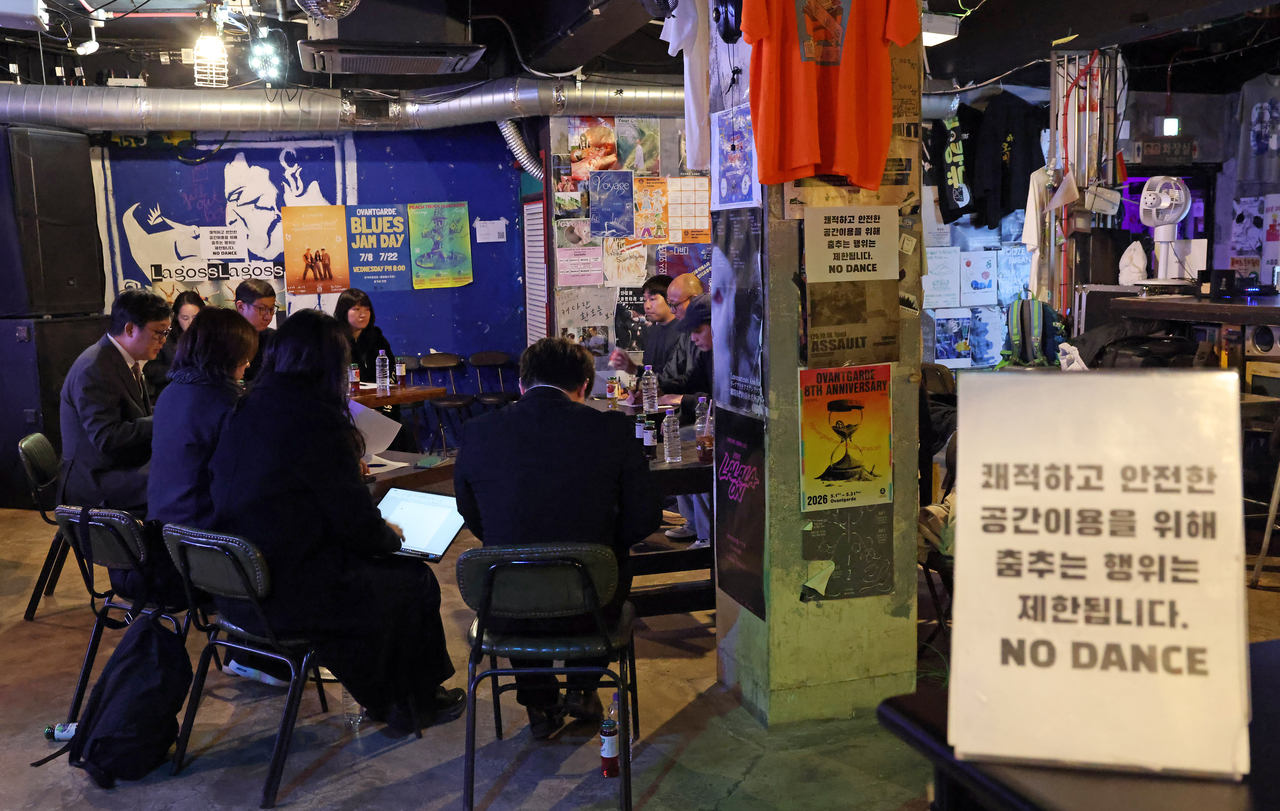
Picture a basement club in Busan on a summer night. A band is playing, the crowd has pushed the tables aside, and people are dancing. In most of the world, that’s a rock show. In Korea, it’s enough to get a venue suspended.
That’s what happened to Ovantgarde, a live club in Busan’s Nam-gu, this summer. On Friday, Culture Minister Chae Hwi-young said the government would revise the Music Industry Promotion Act to give live clubs their own legal business category.
He also promised an exemption under food sanitation rules so audiences can dance freely.
Wait, dancing is illegal?
At some venues, yes. Most small live clubs don’t fit any category designed for music venues, so they register as general restaurants in order to sell food and drinks. Under the Food Sanitation Act’s enforcement rules, general restaurants may not let customers dance, even when they host live music.
The alternatives don’t work well for small clubs either. Licensed entertainment bars, where dancing is legal, pay extra taxes of about 13 percent of sales, face stricter zoning rules and can’t admit minors. Registering as a performance hall means meeting building and safety requirements that many basement clubs can’t, and drinks can’t be served in the seats.
Then how does Hongdae get away with it?
Through a local workaround. Seoul’s Mapo-gu district, home to the Hongdae area, passed an ordinance in 2015 that lets it designate certain restaurants as “dance-permitted” venues.
A handful of other districts, including Seoul’s Yongsan-gu and Busan’s Busanjin-gu, have similar rules. But the exemption covers only dancing in seating areas. At Ovantgarde, the audience had moved the tables and chairs aside and stood to watch the show.
What happened to Ovantgarde?
The club opened in 2018 near Kyungsung University and became a home stage for Busan bands such as Say Sue Me and Hathaw9y.
Acting on a complaint, district officials confirmed in August that the audience had been dancing at an Aug. 7 show. The club was suspended from Aug. 26 to Oct. 24. A second violation would bring a three-month suspension, and a third could mean losing its license or being shut down altogether.
So can I dance at a gig this weekend?
That depends on where you are. In his Friday post, Chae said the ministry would consult local governments so that clubs can keep performing and operating until the law is revised. He acknowledged that the change will need broad support in interministerial talks and in the National Assembly.
The ministry also plans to form a consultative body with indie music stakeholders, and its 2027 budget proposal includes a new program to support the indie music ecosystem.
“Just as The Beatles started out in a small live club in Liverpool, live clubs are where musicians first meet their audiences,” Chae said during his visit to Ovantgarde on Thursday.
gypark@heraldcorp.com