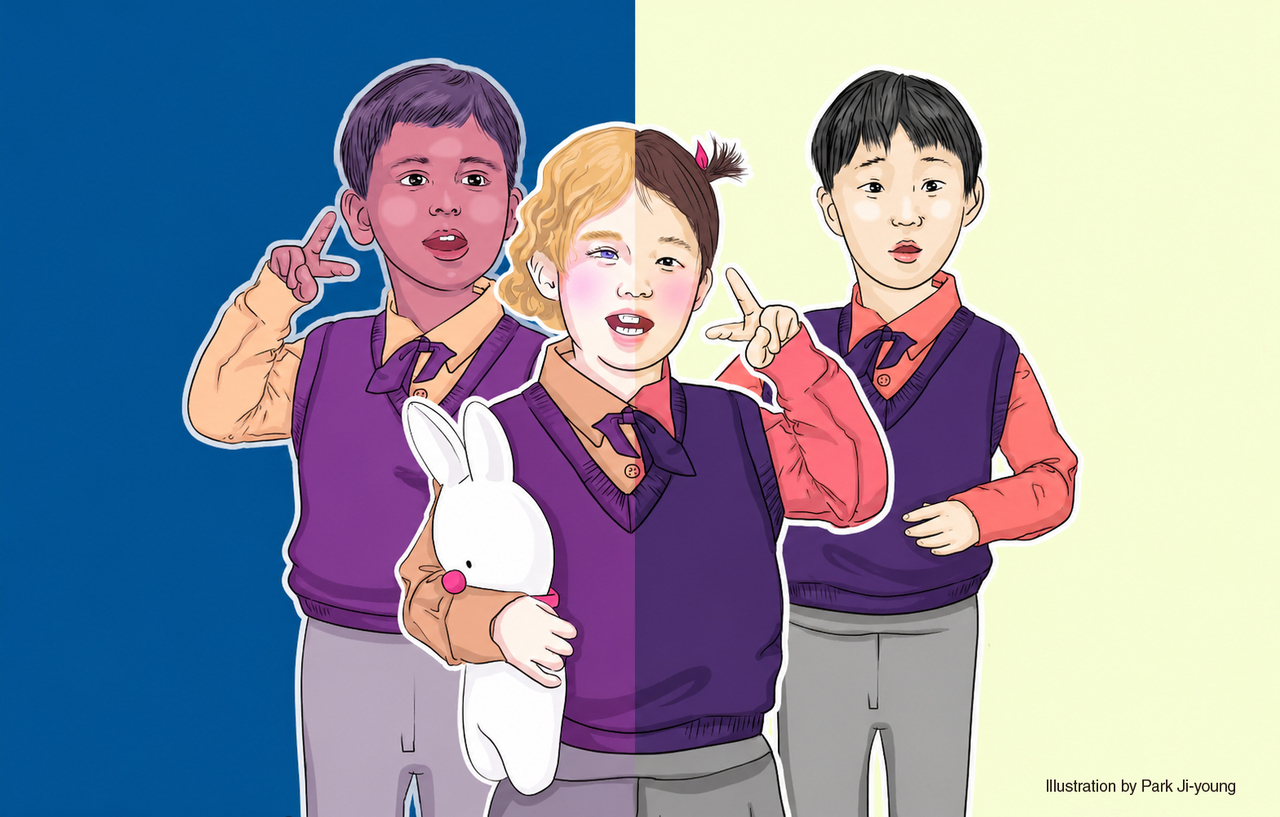
More children from multicultural families are pursuing higher education, while language barriers and discrimination persist
Zou Chunyang moved from China to South Korea 18 years ago. She and her Korean husband are raising their son here.
“I have no difficulties in everyday life. It’s not much different from being Korean,” the 42-year-old said.
She has also seen attitudes toward multicultural families change since she first arrived from China. She says she has learned a lot about Korea through the Guro-gu Family Center in Seoul.
In South Korea, a family can be legally classified as multicultural even if everyone in it is a Korean citizen.
That designation can give a child priority on a day care waiting list or help a family qualify for education or housing assistance.
It also raises a question at the heart of the debate over those programs about how much eligibility should depend on how a family’s members came to live in Korea or became Korean citizens.
Who counts as a multicultural family
Korea’s Multicultural Families Support Act, enacted in 2008, covers families formed by a marriage immigrant and a South Korean citizen. The law also covers certain families whose members already hold Korean citizenship.
A family can qualify, for example, if one parent is a naturalized citizen and the other parent and their children acquired Korean citizenship at birth.
Under the Nationality Act, a child acquires Korean citizenship at birth if either parent is a Korean citizen at the time.
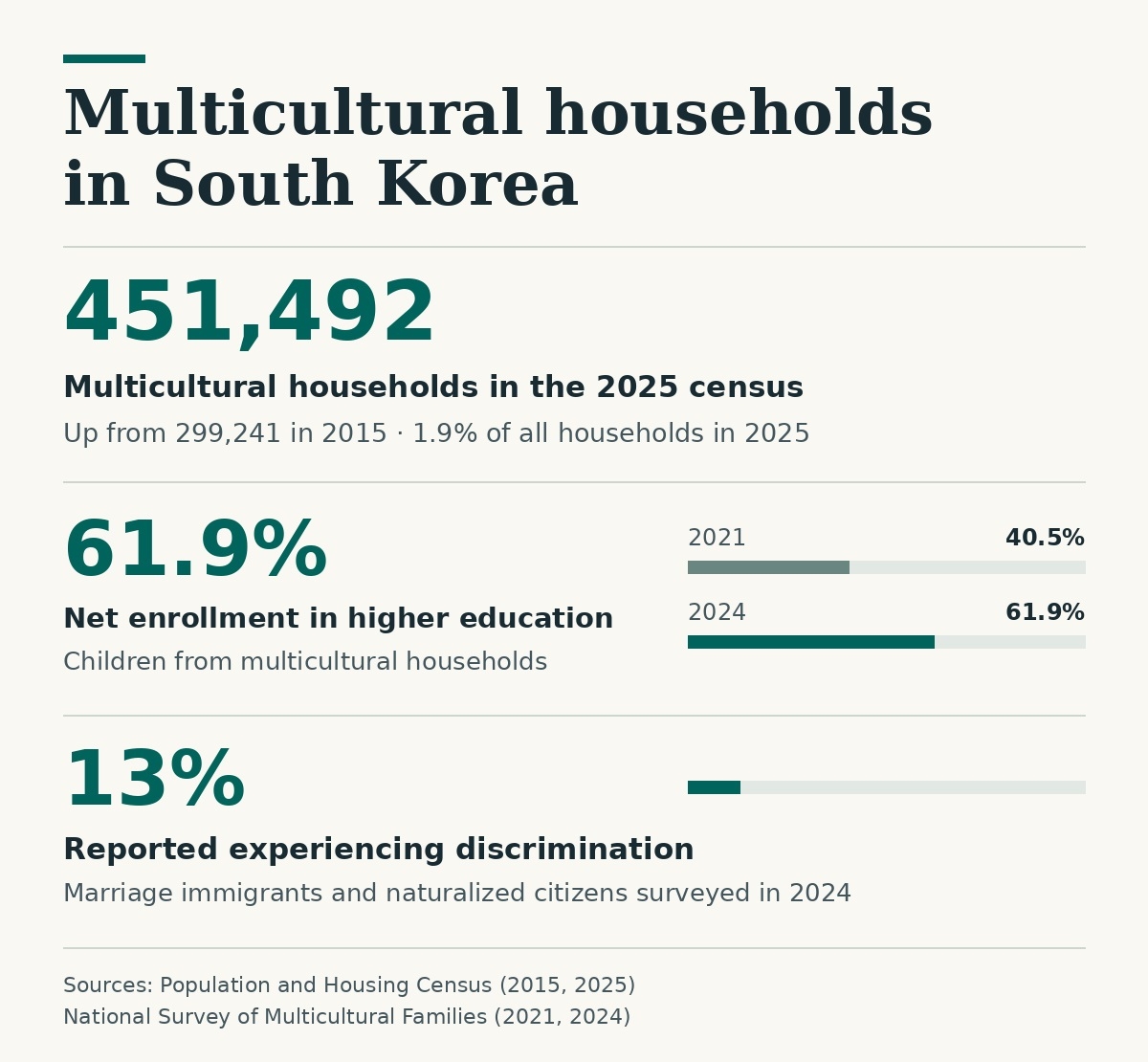
Korea’s census counted 451,492 multicultural households in 2025, up from just under 300,000 a decade earlier. They accounted for about 2 percent of all households.
The census counts households that include marriage immigrants, people who acquired Korean citizenship through naturalization or legal acknowledgment of parentage, or their children. Different support programs set their own eligibility rules.
For Wang Yue, a 38-year-old Chinese woman married to a Korean man, the clearest advantage of raising a child in a multicultural household is that her son speaks both his parents’ languages.
“That will give him more options in his education and career later on,” she said.
“One downside of being a multicultural couple is that my husband and I always argue when we watch international sporting events like the Olympics because we root for different countries,” Wang said.
Where the designation makes a difference
Child care is one place where the designation matters. Under national rules, young children from families covered by the act are in the first tier for day care enrollment, alongside groups such as children from eligible low-income and single-parent households.
Other programs use different criteria. Education subsidies for school-age children in multicultural families are subject to an income limit. Some universities offer separate admissions tracks for applicants from multicultural families, including Korean citizens.
Some local governments offer dedicated housing programs, while certain loans offer lower rates to families that meet income or asset requirements.
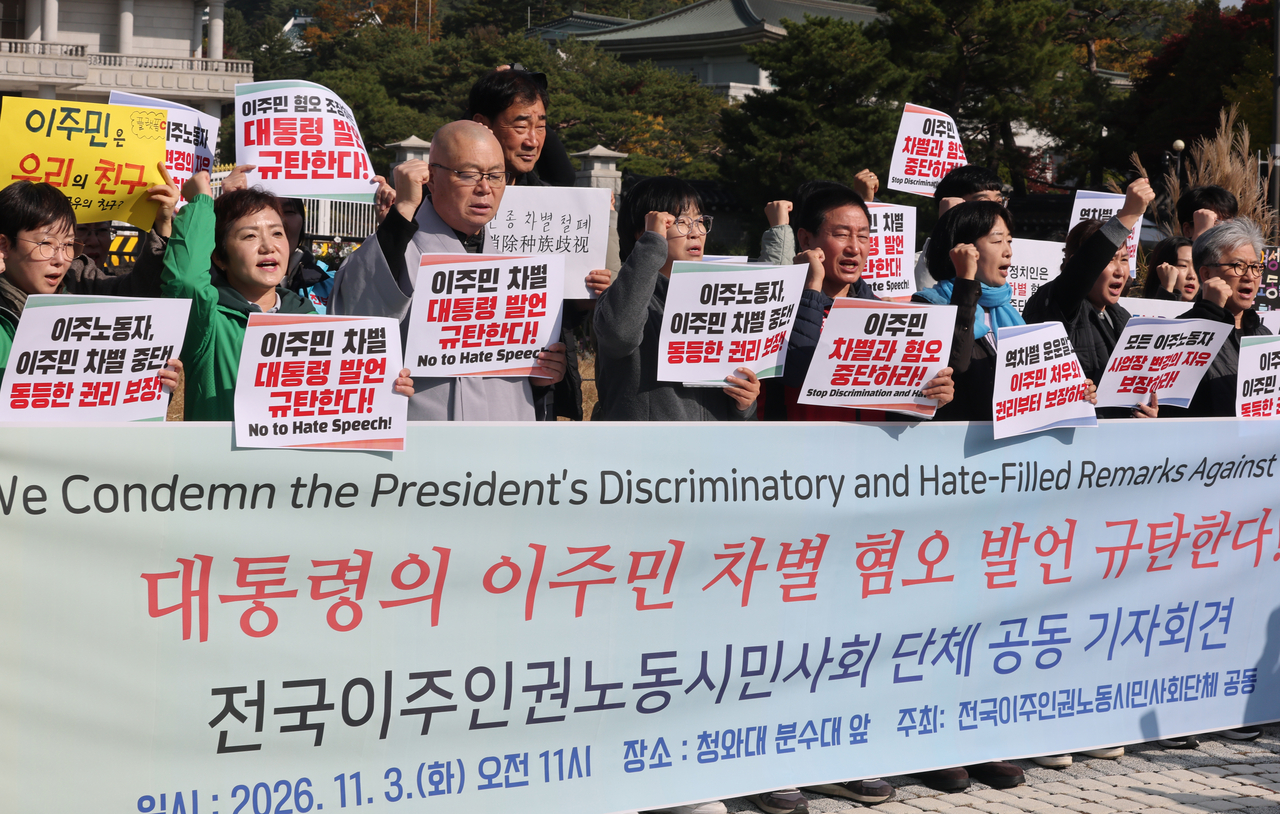
President Lee Jae Myung questioned the extent of such preferences in October, saying support should guard against discrimination while avoiding what he called “adverse discrimination” against other families.
“Policies ensuring that multicultural families are not discriminated against compared to local families are essential and must continue. But they should not be implemented excessively and result in special treatments, or adverse discrimination against local families,” Lee wrote.
What has changed for families
The clearest gains have come in education. The net enrollment rate in higher education among children from multicultural households rose from about 41 percent in 2021 to nearly 62 percent in 2024, according to the national survey of multicultural families. The gap with the national rate narrowed by more than half.
The survey also found that about two-thirds of multicultural households reported a monthly income of at least 3 million won ($2,255).
Even as more children pursue higher education, discrimination remains part of life for some family members. In the same survey, 13 percent of marriage immigrants and naturalized citizens said they had experienced discrimination.
“Support for multicultural families is not simply about their statistically lower incomes. It addresses structural vulnerabilities, including language and cultural barriers, limited access to information and discrimination,” said Lee Jae-ho, an attorney at Migrant Center Friend.
Who should qualify for support
Chang Woo-shim, a professor of social welfare at U1 University, said the kind of help a family needs can change over time.
A parent settling in Korea and a teenager preparing for college or work may need different services, even within the same household.
“Priorities should include support tailored to each stage of settlement, academic and career guidance as children grow, protection of human rights, efforts to eliminate discrimination and a stronger support system for multicultural families,” she said.
Lee, the attorney, said the government should keep supporting multicultural families and set eligibility criteria according to what each program is meant to address.
He said that could also mean extending services to migrants who face similar barriers but fall outside existing family categories.
“Policies should extend beyond families formed through marriage to Koreans, to address the difficulties people face as migrants, even though they are members of our society,” he said.
minsikyoon@heraldcorp.com
shwang9@heraldcorp.com