At least 21 titles by Korean authors are eligible for compensation under Anthropic's $1.5 billion copyright settlement
Books by South Korean authors, including Nobel laureate Han Kang and Hwang Sok-yong, were among the works listed as eligible for compensation in a copyright settlement involving Anthropic, the US artificial intelligence company behind the chatbot Claude.
The Literature Translation Institute of Korea said it had identified at least 21 English-language editions of books by Korean authors on a list of works eligible for compensation under the settlement.
The institute has notified the authors concerned and said it would work with relevant copyright organizations to help them obtain fair compensation, including by supporting legal action when necessary.
Anthropic was sued in 2024 in a class-action lawsuit known as Bartz, et al. v. Anthropic PBC, brought by three authors who accused the company of downloading copyrighted books from pirate websites to train its AI models. A US federal court ruled that Anthropic's use of books to train its AI models constituted fair use, but that downloading pirated copies of the books did not. The case was settled for $1.5 billion, with a federal judge granting final approval in July, making it the largest known settlement in a US copyright case. The settlement amounts to about $3,000 per work.
According to LTI Korea, the affected titles in the current case include: Kim Ae-ran's "My Brilliant Life" (translated by Chi-Young Kim); four books by Kim Young-ha, including "Diary of a Murderer" (tr. Krys Lee); Kim Soom's "One Left" (tr. Bonnie Oh, Bruce Fulton, Ju-Chan Fulton); three books by Shin Kyung-sook, including "Please Look After Mom" (tr. Chi-Young Kim); three books by Han Kang, including "Human Acts" (tr. Deborah Smith); Hwang Sun-mi's "The Hen Who Dreamed She Could Fly" (tr. Chi-Young Kim); and Hwang Sok-yong's "The Guest" (tr. Chun Kyung-ja, Maya West).
Alarm over suspicious bulk orders
While reports of bulk book purchases suspected to be for artificial intelligence training first emerged overseas, similar cases have recently been reported in Korea.
Kyobo Book Centre, Korea's largest bookstore operator, said it had received requests since early this year from 10 overseas companies, including those in the US and UK, to buy roughly 100,000 book titles each.
The bookseller declined the orders because it could not rule out the possibility that the books would be used to train AI models. The official said the requests stood out from the usual bulk orders, which typically come from libraries with clear purchasing purposes.
"Many of the companies introduced themselves as wholesale book distributors," a Kyobo official said. When asked about the purpose of the purchases and the final recipients, some denied that the books were intended for AI training but named data-related companies as the end recipients.
Yes24, another major Korean bookseller, said a US distributor contacted it in late August seeking to buy used books in bulk. The two sides held one meeting, but the company did not respond to further communications, and no additional discussions took place.
Yes24 said it was monitoring the situation closely and would carefully investigate the purpose of similar requests before deciding how to respond.
The Korean Publishers Association has begun surveying bookstores, distributors, secondhand bookstores and publishing houses to determine whether they have received bulk purchase requests suspected of being intended for AI training.
After the survey, the association plans to establish a coalition of publishing organizations to develop a coordinated response, an official said.
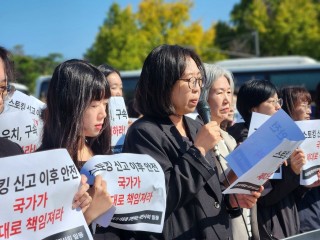
The Korea Publishers Society recently issued an appeal calling for fair compensation when published works are used to train AI systems. As of Tuesday, the statement, released on Thursday, had drawn support from about 200 organizations and roughly 570 individuals, including authors, translators, illustrators and publishing professionals.
"Without books, there would be no AI," the association said. "Yet the people who create those books do not even know when, how, or which AI systems are using their work. They cannot ask questions, refuse or demand fair compensation."
hwangdh@heraldcorp.com