As Korean companies reassess global supply chains and seek new growth platforms in Southeast Asia, the choice of investment location has become more strategic than ever.
Cost competitiveness remains important, but successful expansion now depends equally on supply-chain resilience, infrastructure, access to skilled talent, energy security, market connectivity and the ability to move quickly from investment approval to commercial production.
Malaysia already offers many of these advantages. Its mature manufacturing base, participation in ASEAN, the Regional Comprehensive Economic Partnership free trade agreement and the Comprehensive and Progressive Agreement for Trans-Pacific Partnership, and strong track record in semiconductors, electronics, machinery, automotive components, medical devices and food manufacturing make it a proven regional production platform.
For Korean companies, however, the more important question is increasingly not simply “Why Malaysia?” but “Where in Malaysia can we establish an operation that is efficient, scalable and strategically connected?”
Melaka deserves serious consideration.
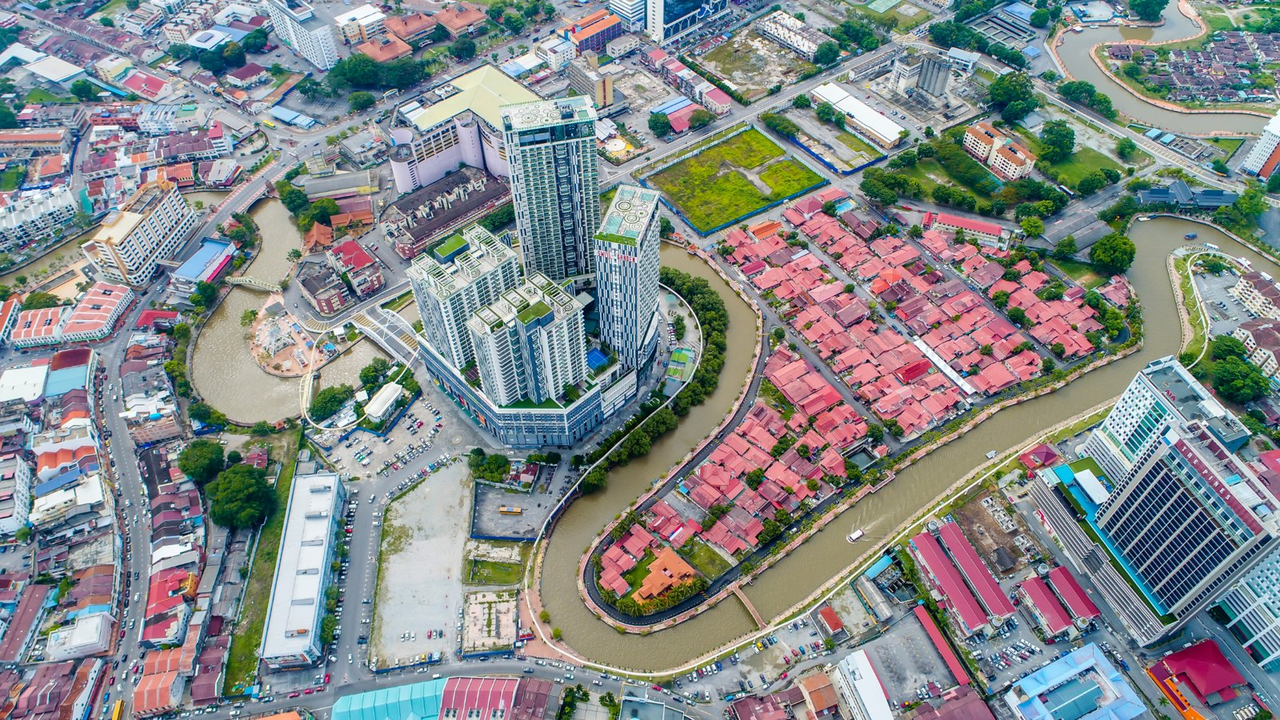
Strategically located south of Kuala Lumpur, Melaka is one of Malaysia’s most established industrial states, combining more than five decades of manufacturing experience with a compact, well-developed and business-friendly investment environment.
Its industrial base spans electrical and electronics, semiconductors, precision engineering, machinery, aerospace-related activities, pharmaceuticals, food manufacturing and supporting services.
For Korean investors, this means entering an established ecosystem rather than building from the ground up.
Melaka’s credibility is reinforced by the long-term presence and expansion of global manufacturers. Infineon Technologies began operations in Melaka in 1973 and developed the site into a major part of its global semiconductor network.
Texas Instruments, already established in the State, opened an additional manufacturing facility in November 2025. Such reinvestments are powerful signals because companies that expand existing operations already understand the local workforce, infrastructure, supplier base and regulatory environment.
Their continued commitment demonstrates confidence in Melaka as a long-term manufacturing location.
For Korean semiconductor and electronics companies, the fit is particularly strong. Korea has world-class capabilities in semiconductor equipment, electronic components, sensors, power electronics, factory automation and advanced manufacturing.
Melaka already has established strengths in backend semiconductor manufacturing, assembly and testing, power and automotive semiconductors, flexible electronics, optoelectronics and industrial automation.
This creates opportunities beyond conventional manufacturing. Korean equipment companies can establish engineering, servicing and technical-support centers close to multinational customers.
Automation firms can provide robotics, inspection systems, machine vision and smart-factory solutions. Component and materials suppliers can localize production and integrate into Malaysia’s broader semiconductor supply chain.
Investment opportunities extend across advanced packaging, test and inspection equipment, precision engineering, thermal-management technologies, industrial software and specialized semiconductor materials.
Melaka also offers a strong proposition for Korean machinery and equipment companies.
The State’s diversified industrial base creates demand for automation systems, machine tools, pumps, motors, material-handling equipment, packaging machinery, factory-control systems and engineering services. Korean SMEs and mid-sized technology companies can use Melaka both as a customer-facing base and as a launchpad into the wider Malaysian and ASEAN markets.
The opportunity is equally compelling in food manufacturing. Melaka is home to established food companies such as Mamee-Double Decker, Oriental Food Industries and Julie’s Manufacturing, demonstrating its ability to support branded, export-oriented production.
Korean food companies producing noodles, sauces, snacks, beverages, frozen foods and ready-to-eat meals can use Melaka to manufacture for Malaysia while developing halal-certified products for wider ASEAN and Muslim-majority markets.
The Melaka Halal Hub and the development of Melaka Halal Hub 2.0 further strengthen this proposition. For Korean food manufacturers, Melaka offers an environment where ingredient sourcing, production, packaging, traceability and halal certification can be developed within an established ecosystem.
This creates opportunities not only for consumer brands, but also for ingredient suppliers, OEM manufacturers, packaging companies, food-technology providers and cold-chain operators.
What may ultimately differentiate Melaka is not only its industrial assets, but the ease of doing business.
Manufacturing investments require coordination across land, power, water, telecommunications, environmental approvals, workforce recruitment, customs and logistics.
Melaka’s relatively compact administrative environment can support closer coordination between investors, the State Government, MIDA Melaka, Invest Melaka, utilities, local authorities and training institutions.
For Korean companies making their first move into Malaysia or Southeast Asia, this coordinated approach can reduce execution risk and shorten the path from investment decision to production.
Melaka should therefore be viewed not as a secondary alternative, but as a strategic entry point into Malaysia’s manufacturing ecosystem.
It offers Korean investors a practical combination of established industries, multinational customers, skilled talent, regional connectivity and government facilitation.
For semiconductor and machinery companies, Melaka can serve as a specialized manufacturing, engineering and technology node connected to Malaysia’s wider industrial corridors.
For Korean food companies, it can become a halal production gateway into ASEAN and global Muslim markets.
For Korean companies looking for a location where they can enter efficiently, localize strategically and expand regionally, Melaka offers a clear proposition: start in Melaka, connect to Malaysia, and grow across ASEAN.
For more information on investment opportunities in Melaka, or to explore how we can support your investment plans, please contact MIDA Melaka at melaka@mida.gov.my or MIDA Seoul at seoul@mida.gov.my.
By Derrick Tanggapan
Derrick Tanggapan is the state director of MIDA Melaka. He previously served as assistant director at MIDA's Seoul office. The views expressed are the writer's own. — Ed.
sanjaykumar@heraldcorp.com