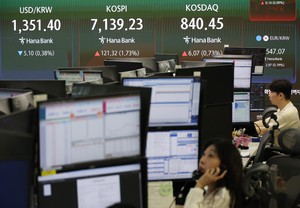
A country can have a record current-account surplus and still have too few jobs. South Korea is providing a fresh example of this awkward contradiction.
역대 최대 경상수지 흑자를 기록하고도 한 나라는 여전히 일자리가 부족할 수 있다. 한국이 이러한 기묘한 모순의 새로운 예시를 제공하고 있다.
Semiconductor exports are lifting growth forecasts toward 3 percent, while the labor market is losing momentum. The economy is accelerating on paper while slowing where people look for work.
반도체 수출로 성장예측률은 3퍼센트에 가깝게 오르고 있는 반면 노동 시장은 동력을 잃고 있다. 경제 지표만 보면 성장은 가속화하고 있지만 일자리를 구하는 곳에서는 둔화중이다.
The state-run Korea Labor Institute cut its forecast for this year's increase in employment from 210,000 to 103,000 in a report released Thursday. It expects the employment rate to fall to 62.7 percent and the unemployment rate to rise to 2.9 percent.
국책연구기관인 한국노동연구원은 목요일 발표한 보고서에서 올해 취업자 수 증가 예상치를 21만명에서 10만3천명으로 대폭 줄였다. 취업률은 62.7퍼센트로 하락하고 실업률은 2.9%로 상승할 것으로 예측했다.
If those projections materialize, the employment rate will decline for the first time since the pandemic-stricken year of 2020. Falling employment and rising unemployment have coincided only four times since 2000.
그 예상이 현실이 된다면 취업률은 팬데믹으로 타격을 입은 2020년 이후 처음으로 하락세를 보일 것이다. 2000년 이후 취업률은 하락하고 동시에 실업률은 상승한 경우는 네차례에 불과하다.
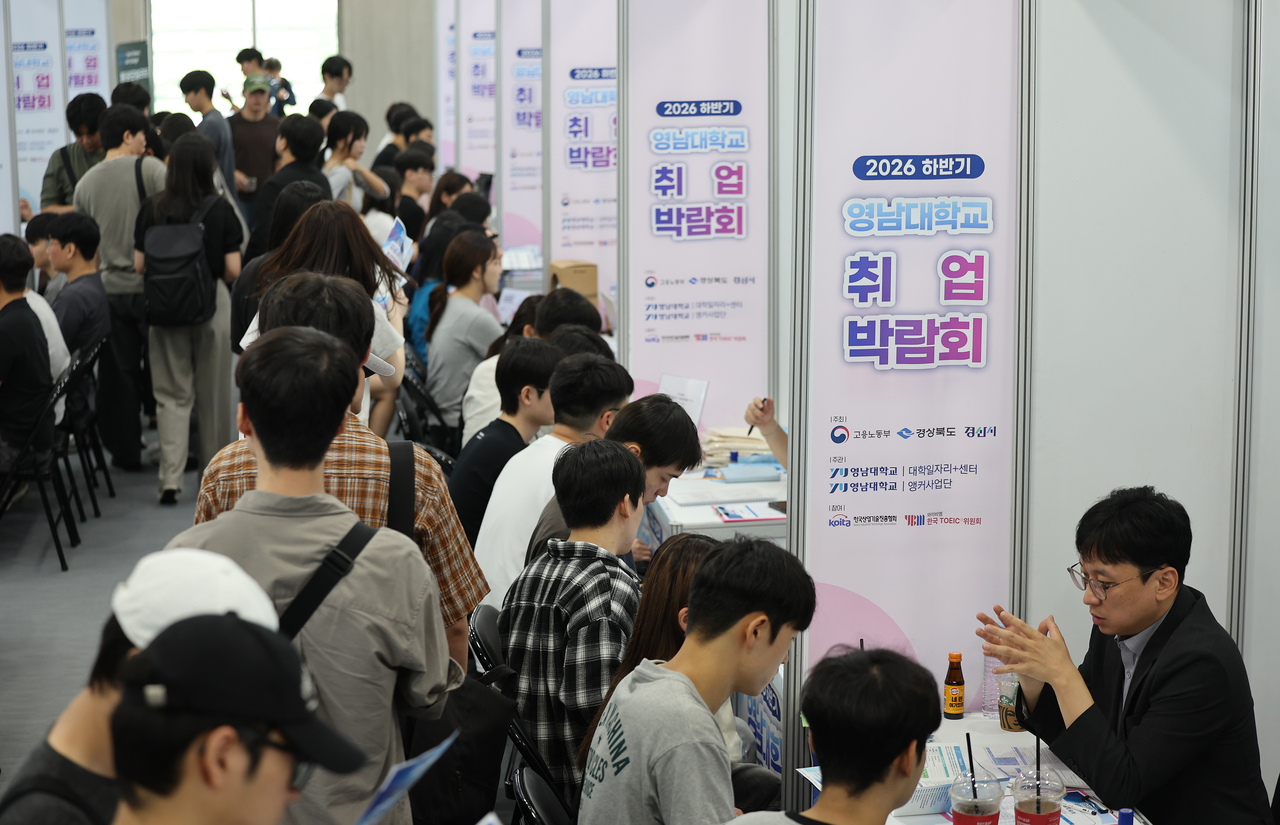
The weakness is especially troubling among young Koreans. Employment among people in their 20s has fallen for 44 consecutive months, while their employment rate dropped 1.3 percentage points in the first half from a year earlier.
이러한 부진은 특히 한국의 청년층 사이에서 두드러져 우려를 자아낸다. 20대 취업자는 44개월 연속 하락했고 상반기 취업률은 전년 대비 1.3퍼센트 떨어졌다.
The decline is concentrated at the point of entry. The number of young people with three months or less on the job has fallen sharply, while new graduates have been hit harder than the broader age group.
하락세는 노동시장 진입단계에서 가장 두드러진다. 근속기간 3개월 이하의 청년취업자가 크게 줄었고 신규 졸업자들은 청년층 전체에 비해 더욱 큰 타격을 입었다.
Demographics offer only part of the explanation. If population decline were the main culprit, the deterioration would be less concentrated among new entrants. Instead, a growing number of young job seekers are delaying graduation or remaining outside the job market as companies tend to favor experienced workers.
인구 통계학적 요인만으로 이 현상을 온전히 설명하기는 어렵다. 인구 감소가 주된 원인이라면 하락세는 신규 취업자들에 이처럼 편중되지는 않았을 것이다. 그러나 기업들이 경력자들을 선호하면서 졸업을 미루거나 구직 시장에 뛰어들지 않는 젊은 구직자들이 늘고 있다.
The broader figures point to another imbalance. By industry, manufacturing shed 62,000 jobs in the first half. Services added 300,000 jobs, yet most of the increase came from health and social welfare, while professional, scientific and technical services lost 88,000.
더 광범위한 지표들은 또 다른 불균형을 보여준다. 산업별로 제조업에서는 상반기 6만2천명이 일자리를 잃었다. 서비스업에서는 30만개가 늘었으나 대부분이 보건업 및 사회복지서비스업에 치중되었고 전문, 과학 및 기술서비스업에서는 8만8천개가 감소했다.
Meanwhile, regular employment grew at only one-third of last year's pace, and nonwage workers accounted for two-thirds of total employment growth. This is hardly the profile of a broad-based private-sector recovery.
한편 정규직은 지난해의 3분의 1 수준에 그치는 상승폭을 보였고 비임금근로자가 총 취업자 증가분의 3분의 2에 달했다. 민간 주도의 전면적인 경기 회복세라고 볼 수는 없는 수치다.
The Korea Labor Institute attributes the weak employment picture to the economy's heavy reliance on semiconductors, even as growth forecasts are being raised toward 3 percent.
한국노동연구원은 반도체에 지나치게 의존하는 경제가 고용 둔화의 원인이라고 분석한다. 성장률 전망치가 3퍼센트에 가깝게 상향조정되었음에도 불구하고다.
Chipmaking, after all, is highly capital-intensive and generates less than half as many jobs per unit of output as manufacturing overall. Since the increase in exports is largely driven by rising memory prices, the corresponding gain in physical output, which is more closely tied to employment, has been limited.
반도체 제조는 매우 자본집약적이며 취업유발계수가 제조업 평균의 절반에도 미치지 못하기 때문이다. 수출 성장을 주도하는 것이 메모리 가격 상승이고 따라서 고용과 좀더 밀접한 연관이 있는 이에 상응하는 실제 생산량의 증가는 제한적이었다.
Whether Korea’s job market can improve in the second half, therefore, depends on the recovery of domestic demand and sectors beyond semiconductors.
한국의 취업 시장이 하반기에 개선될 수 있을지 여부는 그래서 국내 수요와 반도체 이외 분야의 회복에 달려있다.
State-led cash assistance and short-term public jobs can cushion a downturn, but they cannot create a healthy labor market. Policies should put greater weight on expanding the supply of quality jobs that can absorb workers over time.
국가 주도의 현금 지원과 공공부문 단기직으로 하락세의 충격을 흡수할 수 있을지는 모르나 건전한 노동시장을 창출할 수는 없다. 정책은 점차 근로자를 흡수할 수 있는 제대로 된 일자리 공급 확대에 좀더 무게를 두어야 한다.
Services could be a good place to start. They account for more than 70 percent of employment and about 60 percent of GDP, yet Korea's service-sector labor productivity remains near the bottom of the OECD. The long-delayed service industry development bill deserves renewed attention, alongside regulatory reform that allows productive service businesses to expand.
서비스업이 이를 시작하기에 좋은 분야가 될 수 있다. 해당 업종은 전체 고용의 70퍼센트 이상, 국내총생산의 약 60퍼센트를 차지한다. 그러나 한국의 서비스 분야 고용생산성은 OECD 국가 중 최하에 가까운 수준에 머물러 있다. 오래도록 미뤄진 서비스산업 육성법안 그리고 고부가가치 서비스업 확대를 가능하게 해줄 규제 개혁에 재차 관심을 모을 필요가 있다.
Artificial intelligence adds another dimension to the job-creation challenge. Korea has abundant technological capability, but technology becomes economically useful only when firms can turn it into products and services.
인공지능이 일자리 창출이라는 과제를 한층 어렵게 만든다. 한국은 기술적 역량은 충분히 갖추고 있으나 기술은 기업들이 이를 상품과 서비스로 만들어낼 때에야 경제적으로 유용하게 된다.
Universities and research institutes need clearer routes to commercialization, while startups and smaller companies should have greater access to AI infrastructure.
대학과 연구기관들은 좀더 명확한 상용화 경로를 필요로 하며 스타트업과 중소기업들은 AI 인프라에 좀더 손쉽게 접근할 수 있어야 한다.
Semiconductors can remain Korea's main growth engine, at least for a while. They cannot, however, serve as the country's sole job provider. A healthy economy needs a transmission belt from productivity and exports to domestic demand and employment. Policymakers should repair that loop before another strong growth headline masks how little of the growth reaches workers’ paychecks.
적어도 한동안은 반도체는 한국의 주된 성장 동력이 될 수 있다. 그러나 반도체가 오롯이 나라 전체의 일자리를 책임질 수는 없다. 건강한 경제는 생산성과 수출을 내수와 고용으로 연결해줄 경로를 필요로 한다. 정책당국은 또다른 화려한 성장률 지표에 실제 노동자들의 임금 인상으로 이어지는 몫이 얼마나 적은지가 가려지기 전에 그 연결고리를 되살려야 할 것이다.
current account 경상 수지
demographics 인구 통계
culprit 범인, 장본인
attribute ~의 책임이라고 보다
khnews@heraldcorp.com