One-day holiday, travel restrictions and political rituals set North Korea's Chuseok apart, but families on both sides of the border still visit ancestral graves, share food and play traditional games
For millions of South Koreans, Chuseok means packing bags, loading up the car and joining the “great migration” as families crisscross the country to reunite with relatives.
Across the border, Chuseok looks both surprisingly familiar and markedly different.
North Koreans also make songpyeon, visit their ancestors' graves, share food with relatives and play traditional games such as ssireum and yutnori. But there is no comparable nationwide homecoming rush.
Chuseok is generally observed as a single day off in the North. Restrictions on movement and an unreliable transportation system also make long-distance family visits difficult, according to accounts published by South Korean government bodies.
The result is a holiday that preserves many traditions shared across the Korean Peninsula, but has evolved differently over more than seven decades of division.
No 'great migration'
One of the sharpest contrasts begins with getting home.
In South Korea, the days around Chuseok are synonymous with packed highways and crowded railway stations as millions travel to their hometowns. South Koreans typically have at least three consecutive public holidays around Chuseok. When weekends and other public holidays are attached, the break can become substantially longer.
North Korean defector and activist Ji Cheol-ho, who had lived in a coal-mining community, described in 2016 how holiday travel differs. Ji's account was published by South Korea's Presidential Archives, which operates under the Ministry of the Interior and Safety.
Because residents need authorization to travel to distant regions, the writer said, the mass homecoming familiar to South Koreans is largely absent in the North. Even when travel is possible, getting somewhere can itself become an ordeal. Train journeys can stretch over several days, meaning travelers must prepare food for the trip — and in hot weather may have to contend with it spoiling before they arrive, according to the account.
The National Unification Advisory Council, a South Korean presidential advisory body, has similarly attributed the lack of Chuseok travel in North Korea to the combination of a one-day holiday, poor transportation and restrictions on movement.
Same ancestors, simpler table
Once at the family grave, however, the scene may look remarkably familiar to a South Korean.
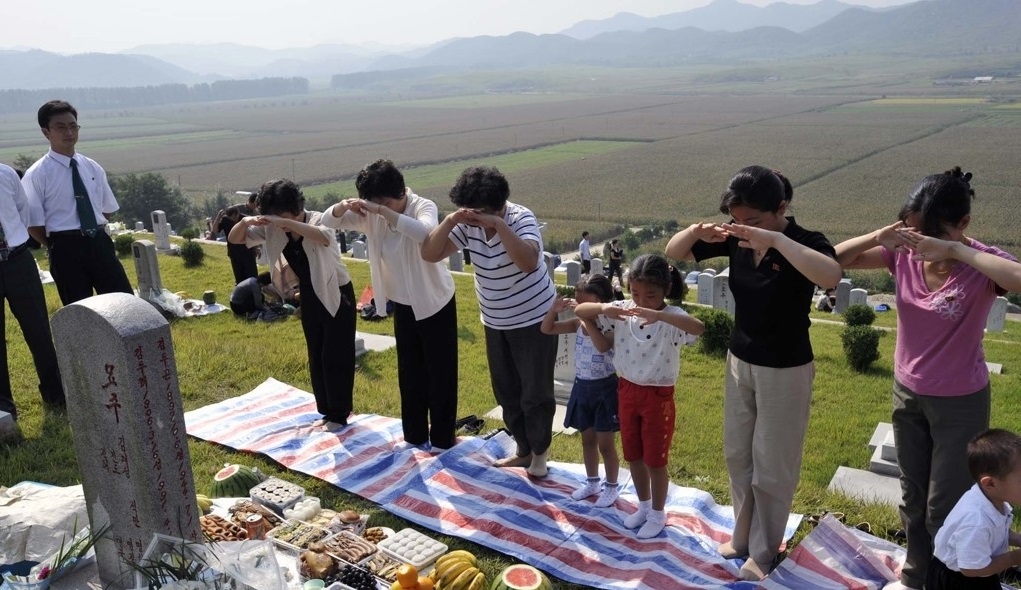
Visiting and tending ancestral graves is at the heart of Chuseok traditions in the North. Families typically prepare food early in the morning, head to their ancestors' burial sites, clear weeds and grass around the graves, and lay out food and alcohol as offerings before bowing to the deceased, according to the National Unification Advisory Council.
Afterward, relatives spread out mats near the grave and eat and drink together.
That practice has deep roots.
North Korea's ruling Workers' Party newspaper Rodong Sinmun described Chuseok in a September 2024 article as a traditional autumn holiday on the 15th day of the eighth lunar month, when Koreans historically prepared dishes using freshly harvested grain and visited ancestral graves.
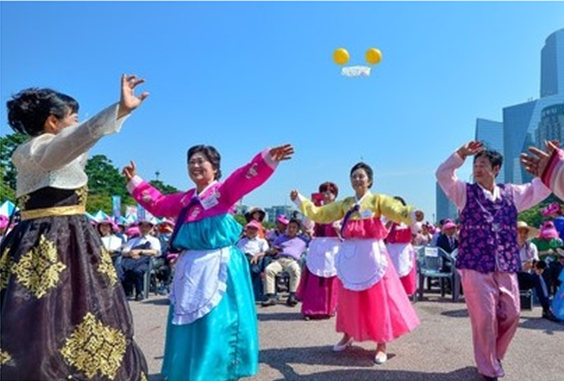
“People dressed in holiday clothes and went up into the mountains” to clear weeds, trim grass and repair burial mounds, the paper said in its description.
The food placed before the ancestors, however, can differ considerably from the elaborate ceremonial tables traditionally associated with South Korea.
South Korean ancestral tables have traditionally followed conventions governing what foods are served and where they are placed, although many families today have simplified the ritual or stopped performing it altogether.
In North Korea, economic circumstances mean the emphasis is often less on formal rules and more on putting together what a household can afford.
The National Unification Advisory Council said families often prepare foods the deceased particularly enjoyed. More affluent households might serve octopus, Atka mackerel, fruit, vegetables, white rice and songpyeon, while poorer families may save in advance simply to add another dish to the table.
The former North Korean resident's account paints an even more vivid picture of the work behind the meal.
Unlike in South Korea, where ingredients can be picked up relatively easily at supermarkets or traditional markets, preparing a Chuseok feast could require trips around the neighborhood and to the jangmadang, North Korea's informal markets.
Alcohol and tofu might be bought from private households, while meat, seafood, bean sprouts, radishes and seasonings would be sought at the market.
There was also water to carry and extra firewood to find.
And then there was the rice flour. The former resident recalled that one of the holiday chores dreaded by men was taking soaked rice to a local mill, often crowded with women, and waiting late into the night for it to be ground.
Timing mattered. If the machine had just processed darker grains such as sorghum or millet, traces could discolor the family's prized white rice flour — potentially inviting complaints when the man returned home.
Songpyeon -- but bigger
One thing North and South Koreans agree on is the star of the Chuseok table, songpyeon.
The half-moon-shaped rice cake remains one of the holiday's representative foods on both sides of the border, although North Korean versions vary widely by region.
According to the National Unification Advisory Council, songpyeon in colder northern regions such as North Hamgyong and Ryanggang provinces is commonly filled with beans, while some households use stir-fried vegetables. In the Pyongan and Hwanghae regions, fillings can include beans, chestnuts and jujubes.
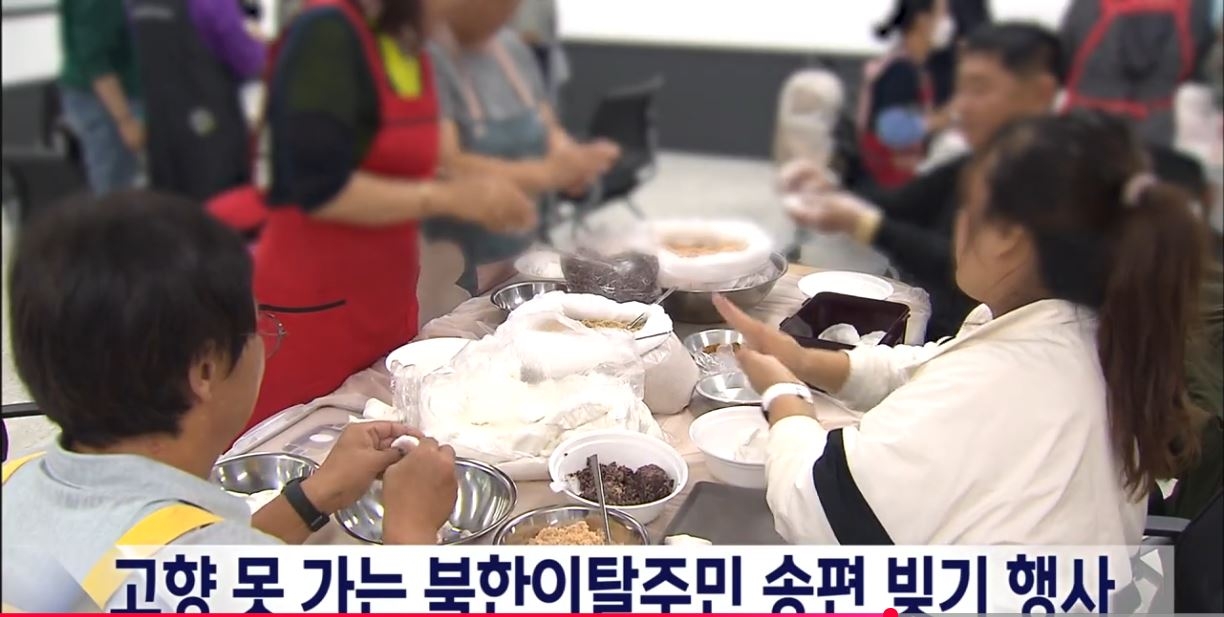
Ji recalled that songpyeon was something of a luxury in the neighborhood where the writer lived. Families with more money would make it alongside white rice cakes and share it with neighbors.
The North Korean songpyeon the writer remembered was considerably larger than the typical South Korean version and commonly stuffed with beans.
From ssireum to secret singing
Chuseok is not all solemn bows and ancestral rites. North Koreans also mark the holiday with many of the same traditional games enjoyed in the South.
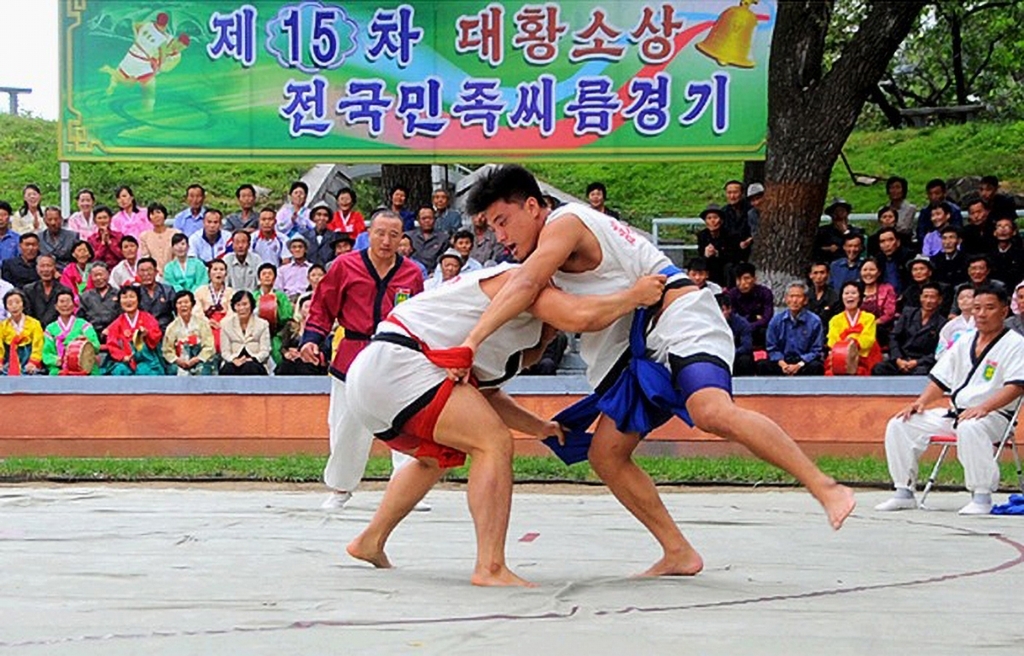
Rodong Sinmun's 2024 account highlighted swinging, tug-of-war and ssireum, or traditional Korean wrestling. The National Unification Advisory Council also lists seesaw jumping, jegichagi, archery, yutnori and janggi, or Korean chess, among holiday activities.
North Korea has promoted some of these activities at the national level. Nationwide yutnori competitions have been held since the 1990s, while a national ssireum competition traditionally staged around Chuseok has even been televised.
Ssireum provides one particularly tangible link between the two Koreas. In 2018, the traditional wrestling practice was jointly inscribed for North and South Korea on UNESCO's Representative List of the Intangible Cultural Heritage of Humanity.
But an unofficial Chuseok night among young North Koreans can apparently look quite different from the state-sponsored image of folk games.
Ji recalled young people gathering in the evening for games, playing guitars and even secretly singing South Korean songs.
Friends might use the rare leisure time to talk about life in North Korea or swap stories they had heard about China and the United States.
Some would privately try on jeans or figure-hugging clothes bought at the jangmadang that they could not comfortably wear in public, according to the account.
And, like young people almost anywhere else, Chuseok could provide an opportunity to work up the courage to approach someone they liked.
Politics still come first
Chuseok has not always enjoyed official approval in North Korea.
According to the National Unification Advisory Council, North Korea banned Chuseok celebrations in 1967 as inconsistent with the socialist way of life. Visits to ancestral graves were permitted again from 1972, and Chuseok was restored as a traditional holiday in 1988.
Even after its restoration, however, traditional holidays have remained subordinate to major political anniversaries in the North Korean calendar.
The regime devotes far greater attention to occasions such as the birthdays of state founder Kim Il-sung and former leader Kim Jong-il, the Sept. 9 anniversary of North Korea's founding and the Oct. 10 anniversary of the Workers' Party's founding.
That hierarchy was particularly visible last year. On Oct. 6, 2025, North Korean state media focused heavily on preparations for the 80th anniversary of the Workers' Party, rather than the traditional holiday itself.
Though the event only took place four days later, state media reported on participants arriving in Pyongyang for anniversary celebrations, saying the events would unfold amid the “remarkable enhancement of the absolute support and trust of all the people for the Party.”
Chuseok coverage, by comparison, was largely limited to a brief introduction to holiday customs on state radio.
Politics can enter the holiday in other ways as well.
In Pyongyang and other major cities, people may use traditional and state holidays to lay flowers at statues of Kim Il-sung and Kim Jong-il and pay respects at sites commemorating figures honored by the regime, according to the National Unification Advisory Council.
Rodong Sinmun's own explanation of Chuseok illustrates how a centuries-old family tradition has been incorporated into the state's political narrative.
After describing grave-tending, freshly harvested food and folk games, its 2024 article concluded that Chuseok today is an occasion to remember not only deceased parents, siblings, relatives and friends, but also “revolutionary predecessors and comrades” who died while following the party and the country.
Yet beneath the politics and the profound differences in daily life, much of Chuseok remains recognizable on either side of the Demilitarized Zone.
Families prepare special food they may not normally be able to afford. They clean their ancestors' graves and bow before them. They sit together afterward, eat what they brought and tell stories about parents and grandparents who are no longer there.
And, if they can afford it, there is songpyeon.
The journey to the family gathering may be very different. But many of the traditions waiting at the end of it remain strikingly familiar.
mkjung@heraldcorp.com