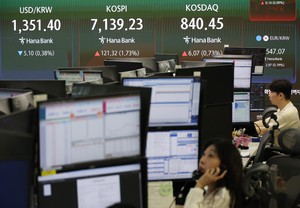
“Hypercompetitive” may be an understatement when describing Korean attitudes toward education and technology.
There is an old instinct behind it: If you do not want to fall behind, you must learn faster.
I do not believe that instinct is a product of modern South Korea. For centuries, learning and acquiring new knowledge were regarded not simply as paths to individual advancement, but as essential to society itself.
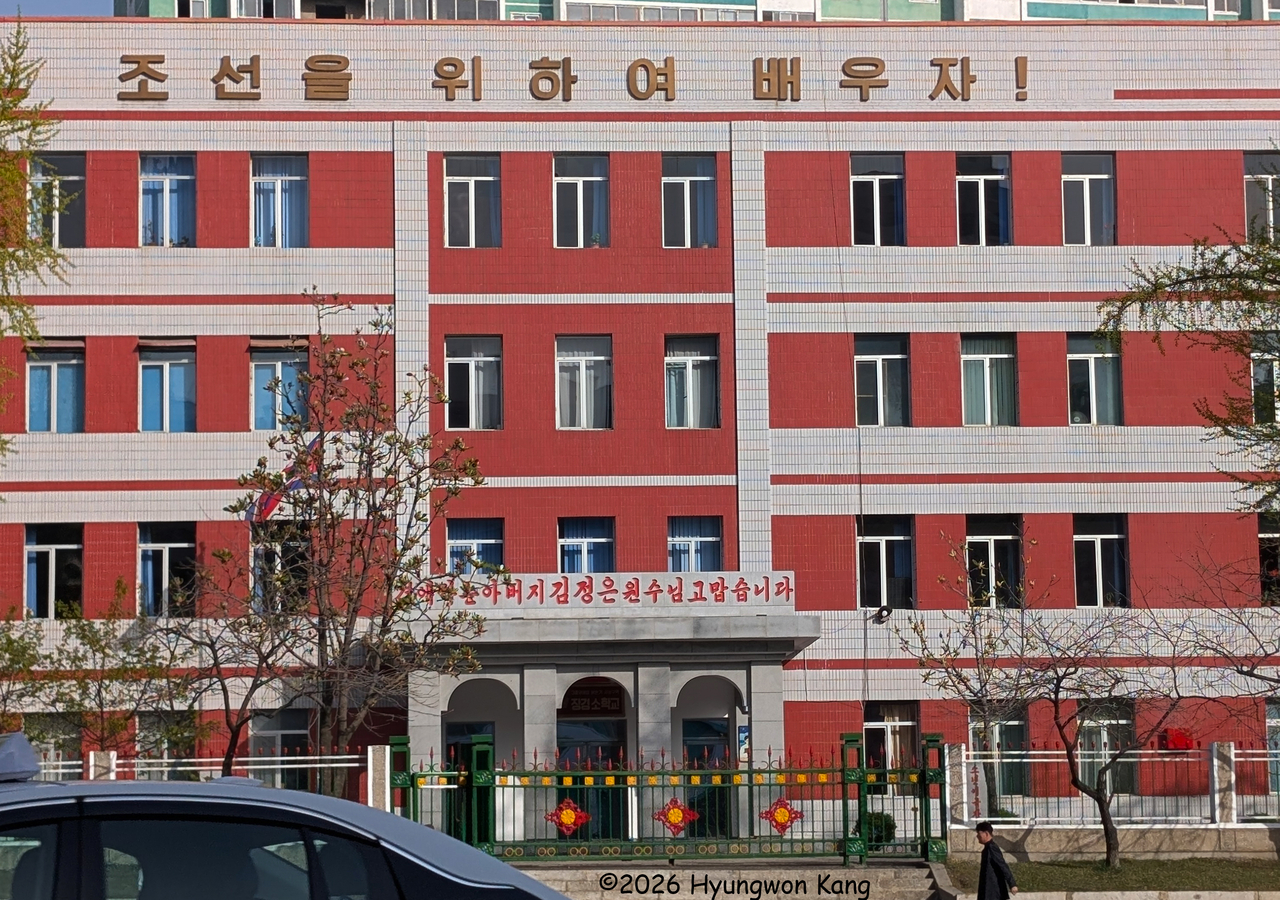
I encountered a striking reminder of that tradition in Pyongyang this April.
Across the top of a four-story school building, written in the largest letters anywhere on the structure, was a slogan:
“Let us learn for Chosun!”
The words reminded me of what foreign visitors wrote about Korea in the 19th century.
Henri Zuber, a French naval officer who participated in the 1866 French expedition to Ganghwado Island, wrote after visiting Joseon:
“One fact that one cannot help but admire throughout the Far East, and which does not flatter our pride, is the presence of books in even the poorest homes. Those who cannot read are very rare, and incur the contempt of their fellow citizens. We would have many people to despise in France if public opinion were as harsh against illiterates.”
American educator Homer B. Hulbert, who arrived in Joseon in 1886, made a similar observation:
“Joseon, a storehouse of information, worshipped learning for 1,500 years.”
Foreign accounts of Joseon often contained misunderstanding and prejudice. But one observation repeatedly appears: Koreans placed extraordinary value on learning.
That respect for knowledge became especially consequential when Korea encountered the technologies of the industrial age.
In March 1887, electric light bulbs came on inside Gyeongbokgung.
The timing is striking.
Electric lights illuminated Gyeongbokgung in 1887, four years before electric lighting reached the White House in Washington, D.C., and before electric lighting reached the Qing imperial precincts in Beijing.
A kingdom often remembered for resisting foreign intrusion was simultaneously bringing one of the world’s newest technologies directly into its royal palace.
The pattern repeated.
In 1899, electric streetcars began running through Seoul. Tokyo did not begin operating electric streetcars until 1903.
Once Koreans recognized that technology mattered, the question increasingly became: How quickly can we get it?
A century later, the newest strategic infrastructure was no longer an electric streetcar. It was an information network.
On May 15, 1982, Seoul National University and the Korea Institute of Electronics Technology in Gumi established the System Development Network, or SDN, using TCP/IP. It became the starting point of South Korea’s internet history.
In 1986, the .kr national internet domain was registered. By the 1990s, PC communication services such as Chollian and HiTEL had created a distinctly Korean online culture. High-speed telecommunications networks spread across the country.
Fiber-optic lines became the new roads. Data became traffic.
The expression “information superhighway” was particularly appropriate for Korea.
But Korea’s larger transformation was far more significant. Under President Kim Dae-jung, the government launched Cyber Korea 21 in 1999, putting broadband and information infrastructure at the center of national economic strategy.
In little more than a generation, South Korea moved from dial-up communications to broadband, smartphones and 5G.
Once again, the instinct was familiar: Do not be second.
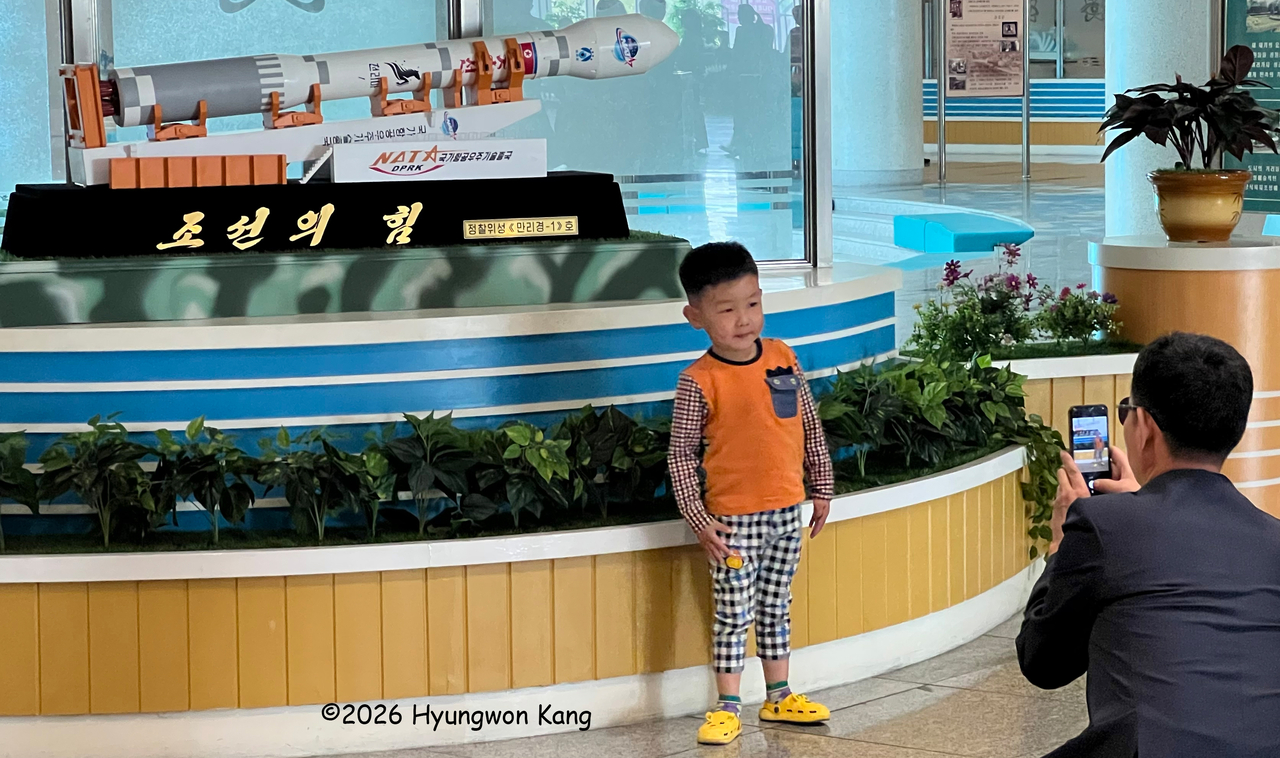
What struck me during my April 2026 visit to Pyongyang was that the desire to use technology to obtain information is not confined to the South.
North Korea is not an openly connected internet society. Most people have access instead to an internal network, or "mang," separated from the unrestricted global internet.
Yet within that restricted environment, I watched people use mobile phones to search for information, read news and check exchange rates.
One day, I noticed a conifer in Pyongyang that looked remarkably similar to Abies koreana, the Korean fir native to Hallasan mountain.
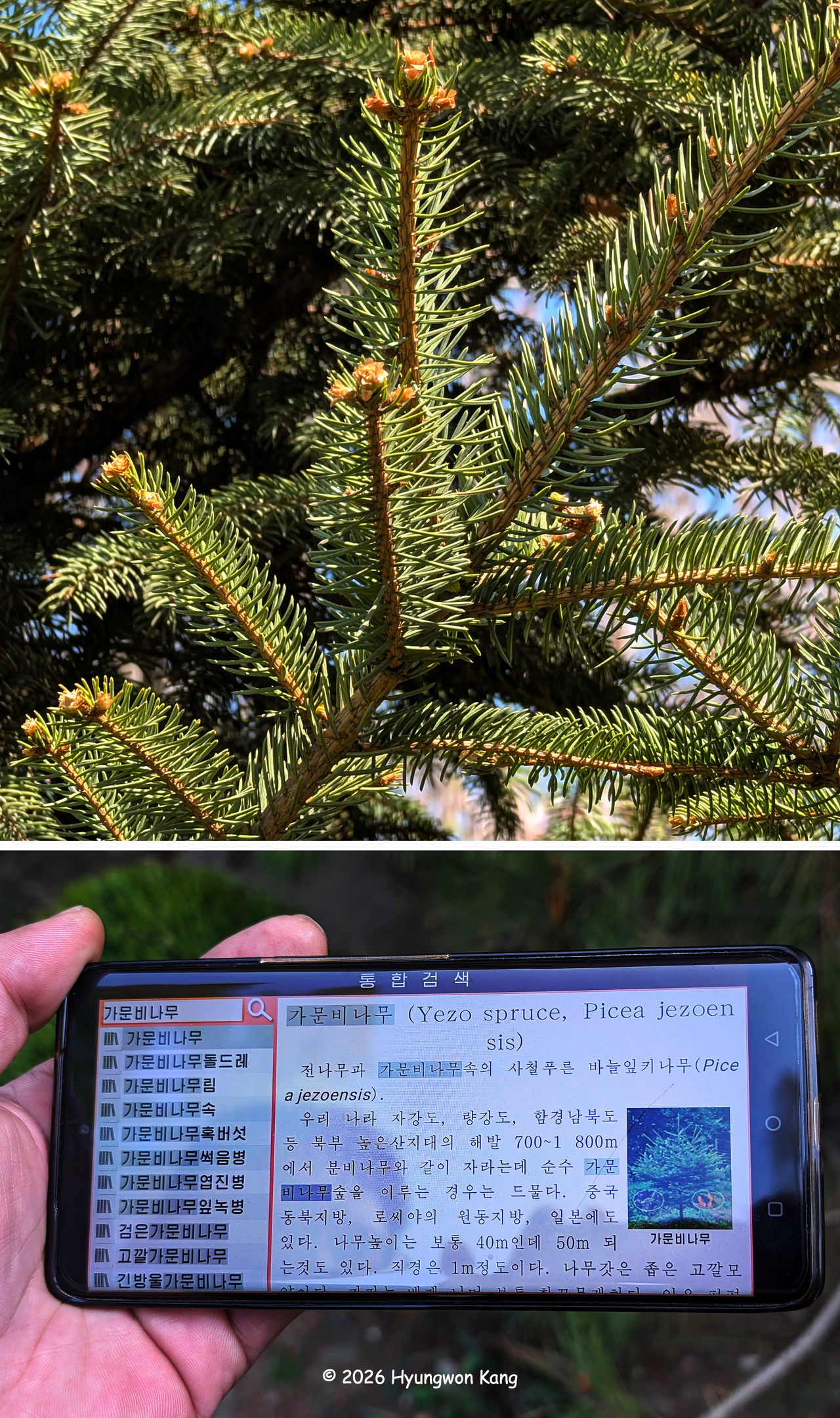
I asked people nearby what kind of tree it was. Someone immediately pulled out a mobile phone and searched. Within moments, the screen was turned toward me. It was Ezo spruce (Picea jezoensis), known in Korean as gamunbinamu. There was my answer.
It was an ordinary moment, but it stayed with me.
A European visitor in the 19th century had been surprised to find books inside poor Joseon homes. In Pyongyang in 2026, I saw search windows in people’s hands.
The quantity of information available in the two Koreas is profoundly different, as are their communication systems.
But the impulse to look something up — to search, learn and obtain information — felt remarkably familiar.
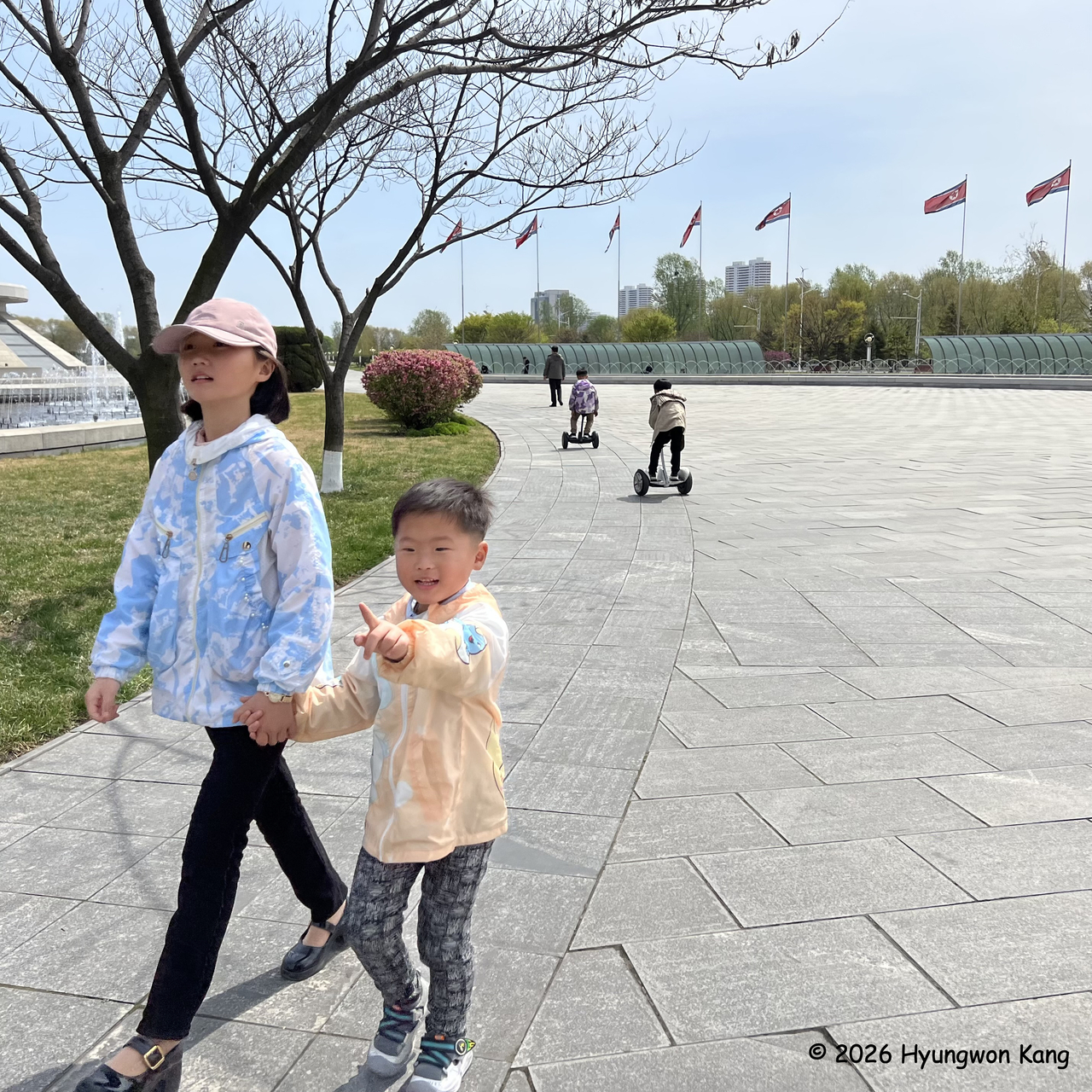
Technology changes; the human impulse behind it does not change as quickly.
In the 19th century, books stored information and electricity powered new machines. In the 20th century, telecommunications networks and fiber-optic cables connected Korea to the emerging global information superhighway. In the 21st century came broadband, smartphones, 5G and artificial intelligence.
And in Pyongyang in 2026, I watched people instinctively reach for mobile phones when they wanted to know something.
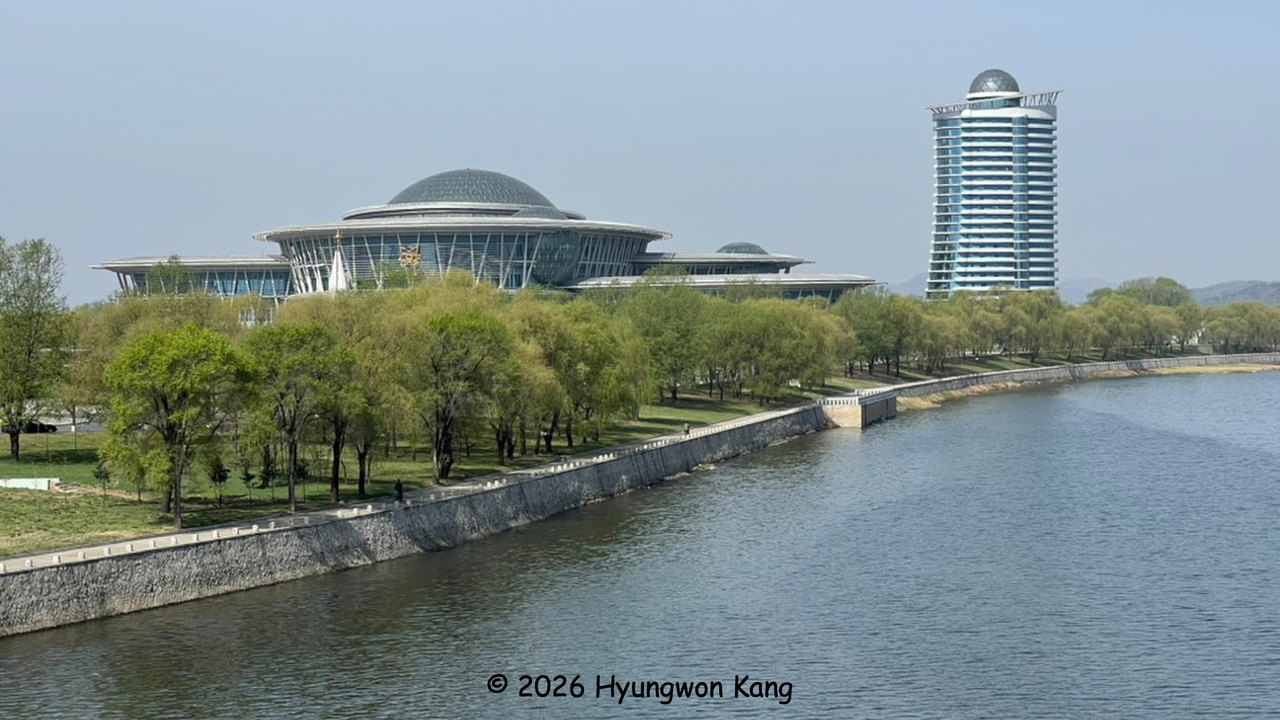
The tools have changed.
The instinct beneath them may be much older.
To learn.
To search.
To connect.
And, perhaps most Korean of all, not to be left behind.
Someday, connecting the nearly 80 million Koreans living on the peninsula through shared pathways of information may become another road that 21st-century Koreans are called upon to build.
The next Korean information superhighway may not be across the Pacific.
It may be across the Korean Peninsula itself.

By Hyungwon Kang
Hyungwon Kang is a Korean American photojournalist, columnist, author, lecturer of “Visual Literacy A to Z” at Dongguk University, and two-time Pulitzer Prize winner. He reported on North Korea in 1995, 1997 and 2026. Kang is the author of Visual History of Korea and Seonbi Country Korea, Seeking Sagehood. His ongoing Visual History of Korea project documents Korean history and culture across all of Korea for global audiences.
The views expressed in this article are the writer’s own. — Ed.
khnews@heraldcorp.com