Amid heightened volatility, questions grow over whether the market safeguard still serves its purpose
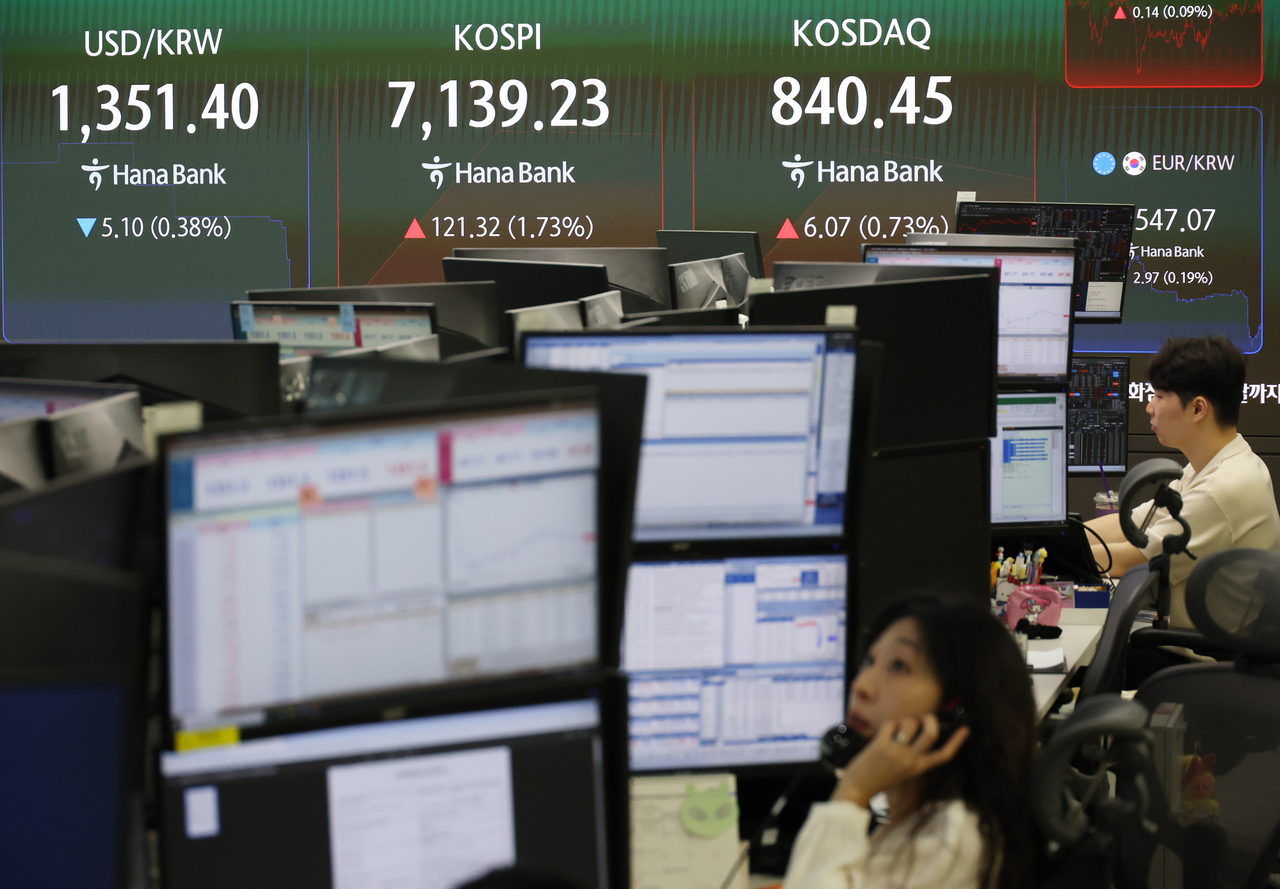
With South Korea's stock market having been the world’s most volatile earlier this year, questions are growing over whether the country's sidecar, a five-minute halt on program trading, remains effective.
Sidecars, a key market safeguard, have been triggered far more frequently this year than ever before. The benchmark Kospi has seen 49 sidecar activations, nearly double the 26 recorded in 2008 at the height of the global financial crisis. The secondary Kosdaq has also seen 32 sidecar interruptions this year, surpassing the 19 recorded in 2008.
Neither the Kospi nor the Kosdaq has recorded a sidecar trigger since the beginning of September, but a resurgence in volatility could bring another bout of sharp swings in stock prices.
While sidecars are designed to slow the spillover of sharp futures-market movements into the cash market through trading programs, market experts say the mechanism is outdated and should be revised to better reflect current market conditions.
Are sidecars enough?
Korea's current sidecar rules were put in place in 2001. On Kospi, a sidecar is triggered when the Kospi 200 futures price rises or falls by 5 percent or more from the previous day’s close and the move persists for at least one minute. For Kosdaq, a sidecar is triggered when the Kosdaq 150 futures price moves 6 percent or more and the spot index moves 3 percent or more in the same direction for at least one minute.
When the sidecar system was designed, its primary focus was on preventing program trading triggered by sharp swings in futures prices from amplifying volatility in the spot market.
The market environment, however, has changed significantly since the current rules were put in place more than two decades ago, with high-frequency and algorithmic trading becoming increasingly prevalent.
This has raised questions over whether the current system, which suspends program trading orders for only five minutes, is sufficient to curb market volatility.
The mechanism alone also makes it difficult to distinguish whether the price movement reflects a genuine risk of a market disruption, a temporary price adjustment between the cash and futures markets or a short-term imbalance in supply and demand caused by a large program trade.
Different approaches
Sidecar mechanisms are relatively uncommon in major overseas stock markets. Instead, other markets rely more heavily on circuit breakers, which halt all trading across the market. Korea also has circuit breakers in place, which suspend marketwide trading for 20 minutes.
The US abolished sidecars in 1999 about 10 years after their introduction, with the US Securities and Exchange Commission citing that the system had not had a clear effect in mitigating market volatility.
In the US, circuit breakers are currently used to address sharp declines across the broader market, while the Limit Up-Limit Down mechanism is applied to sharp price movements in individual stocks. Hong Kong operates a similar volatility control mechanism.
In Japan, when Nikkei 225 futures reach their upper or lower price limits, trading is halted for at least 10 minutes under a circuit breaker, while the price limits are gradually widened.
Crying wolf?
Market experts are calling for the sidecar rules to be redesigned to reflect the changed trading environment. Possible measures include widening the threshold or revising the scope of the mechanism to better reflect the market environment.
Industry officials have pointed out that the frequent activation of market curbs could make market participants less sensitive to the safeguard.
"The threshold for triggering a trading halt needs to be raised to ensure the system remains effective," an official from a local asset manager said.
For instance, Korea doubled its daily stock price limit to 30 percent from 15 percent in 2015, reflecting the changes in the market environment.
Some are calling for the sidecar measure to be scrapped altogether. A researcher at a local think tank said the current system is not effective in curbing market volatility and could, in some cases, amplify it.
"It would be desirable to abolish sidecars, as the US has done," he said.
silverstar@heraldcorp.com