Norwegian songwriter who co-wrote Ive's 'Kitsch,' 'Rebel Heart' says embracing fun over formulas changed way she approaches K-pop
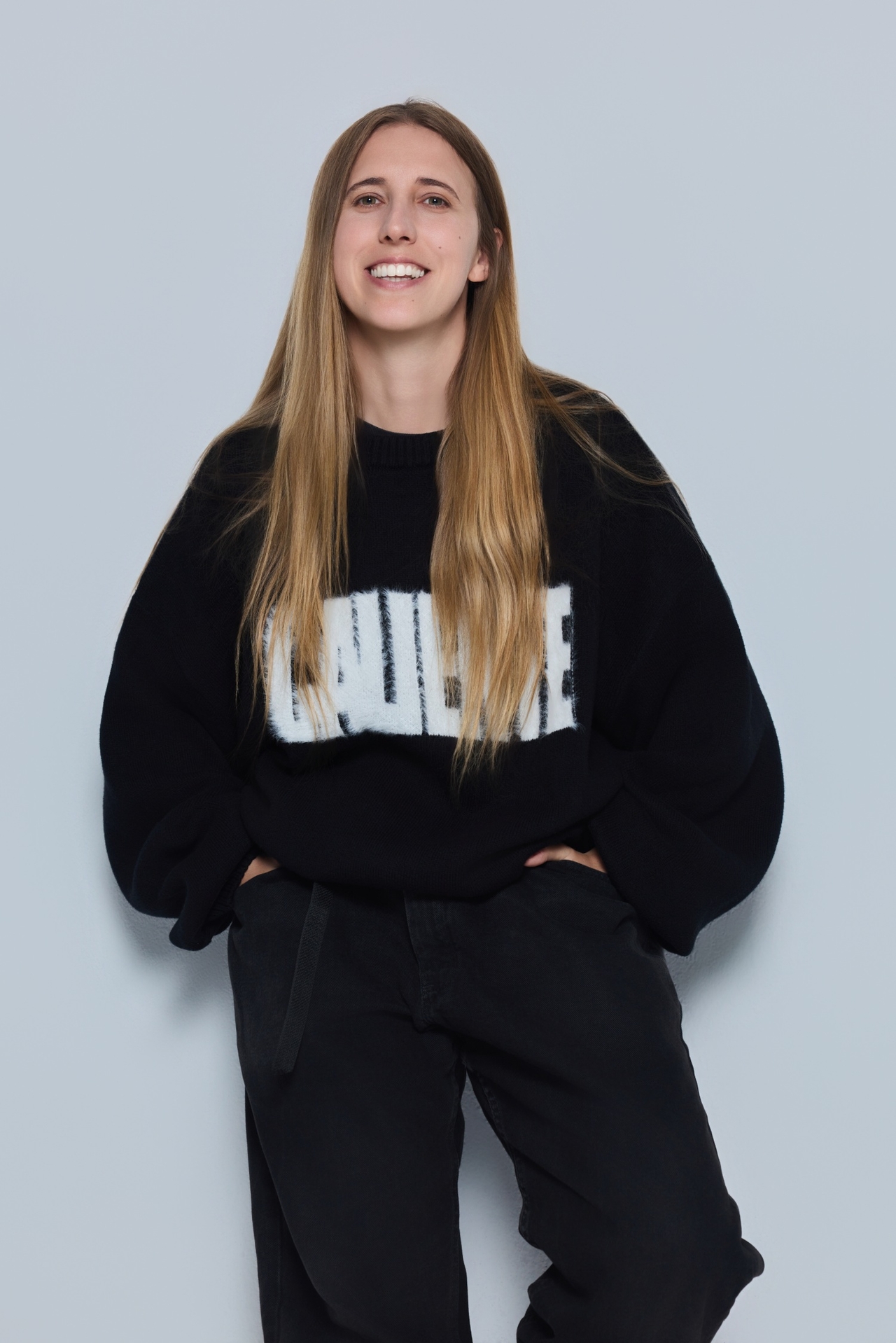
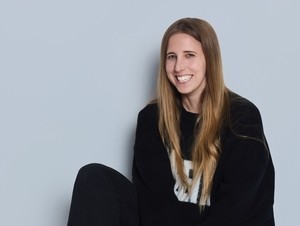
Norwegian songwriter and producer Gucci Caliente has helped shape some of the most distinctive recent songs from K-pop girl groups Ive and KiiiKiii.
The 32-year-old, whose real name is Emily Harbakk, co-wrote Ive's 2023 hit "Kitsch" and later co-wrote and helped produce "Rebel Heart." She also co-wrote and arranged "Fireworks" and "Hot Coffee" in February.
Her credits extend to KiiiKiii's recent "Candy Pink Magic Hole Flip Phone," which she co-wrote and produced, as well as songs for artists outside K-pop, including Canadian pop singer Tate McRae and Swedish singer Felicia.
Yet when Caliente first tried writing K-pop, she wondered whether she was good enough for it.
The genre seemed almost intimidatingly sophisticated, filled with complex chords, harmonies and structural changes that made her question whether she had the musical vocabulary to pull it off.
One song left a lasting impression on her: Tomorrow X Together's "Crown."
"I heard it and thought, 'I can't do that. That's so impressive. That's incredible. You need to be Mozart to make it, because I don't know half of these chords,'" Caliente told The Korea Herald in an interview in Seoul on Monday.
Her early K-pop writing sessions did little to dispel that impression.
"I used to not really enjoy K-pop sessions because I felt like people were thinking in maths," she said. "It was like walking into Microsoft Excel. I was thinking, 'I might as well have an office job, the way you guys are looking at chords and stuff like that.'"
The irony is that her breakthrough in K-pop came when she stopped trying so hard to figure out how K-pop was supposed to be made.
"Kitsch" became the turning point.
"What I loved about 'Kitsch' was that it was just fun," she said.
"After 'Kitsch,' I learned that no, it's just people having fun," she said. "I realized I don't have to put myself in a prison to make K-pop. It's the most freeing and fun genre I can think of."
What had once intimidated her became the kind of music she now most enjoys making.
"It's the most exciting thing for me to produce and write because it's really, 'How can we make this unique? How can we make it cool? How can we make it interesting?'"
Finding her path
Caliente's route into music was largely self-taught.
Growing up in Norway, she played guitar and eventually began producing her own music, teaching herself Ableton — a music production software — while working night shifts at a home for people with disabilities.
"I didn't really have a concept of what a songwriter or producer was," she said. "It was just this sense that music needed to come out."
Her career took a professional turn in 2018 when she entered Lillehammer Institute of Music Production & Industries, founded by Tor Erik Hermansen of the Grammy-winning production duo Stargate.
The experience taught her to stop thinking of music as something she was merely trying to pursue.
"It's not, 'I'm trying to be a songwriter.' It's, 'You are a producer. That's your identity now,'" she said.
Her first major international songwriting credit followed with Tate McRae and Ali Gatie's "Lie to Me."
Freedom in K-pop
Caliente first encountered K-pop through social media platform Tumblr, seeing Big Bang and later BTS around 2015 and 2016. But it was only around 2019 when she began receiving requests for K-pop songs and started seriously listening to the genre as a songwriter.
"The musicality, the craftsmanship, the chords, harmonies and melodies," she recalled. "It was such a vast musical landscape that I felt like I didn't know how to do it."
Her experience with "Kitsch" changed that relationship. Subsequent projects taught her to embrace K-pop's room for experimentation rather than search for a formula.
Her work on "Rebel Heart" also reinforced the importance of collaborators who could push her beyond what she would create alone.
"It's through discomfort, pushing yourself and having other people push you that you get better," she said. "Working with people who are better than you is what elevates you."
The same philosophy carried into KiiiKiii's unusually titled "Candy Pink Magic Hole Flip Phone."
Rather than calculating what a KiiiKiii song should sound like, Caliente and her collaborators focused on the song itself.
"We weren't thinking about artists. We were thinking song," she said.
That approach has become central to how Caliente writes K-pop. Instead of beginning with a predetermined formula for a group, she asks a simpler question.
"How can we make this the most fun song?"
Her relationship with the Korean music industry is also becoming more direct. Caliente, who is spending more time in Korea, said she has recently begun writing with Korean artists specifically for their projects, though she declined to name them.
Asked whom she hopes to work with in the future, she singled out Ive's An Yu-jin and girl group Aespa.
"I love Yujin from Ive. I think her solo stuff is super incredible," she said. "I think Aespa is super cool, so I would love to be in that universe."
Caliente still wants to make "the biggest song in the world." But for a songwriter from a small Norwegian town who can now walk through Seoul and hear songs she helped create playing from shops, much of what she once aspired to has already become part of everyday life.
"Any day I get to do this is incredible," she said. "I'm from Norway, from a small town, and I'm in Seoul hearing my songs when I walk past shops."
"Everything else is a bonus. I'm already living the peak human experience."
jaaykim@heraldcorp.com