If AI can do it all, why do we still read?
Artificial intelligence can summarize an entire book in seconds and answer questions almost instantly.
So, in an age when information is increasingly available at the touch of a screen, why do we need to read?
"Will we still be reading books the way we do now 10 years from now?"
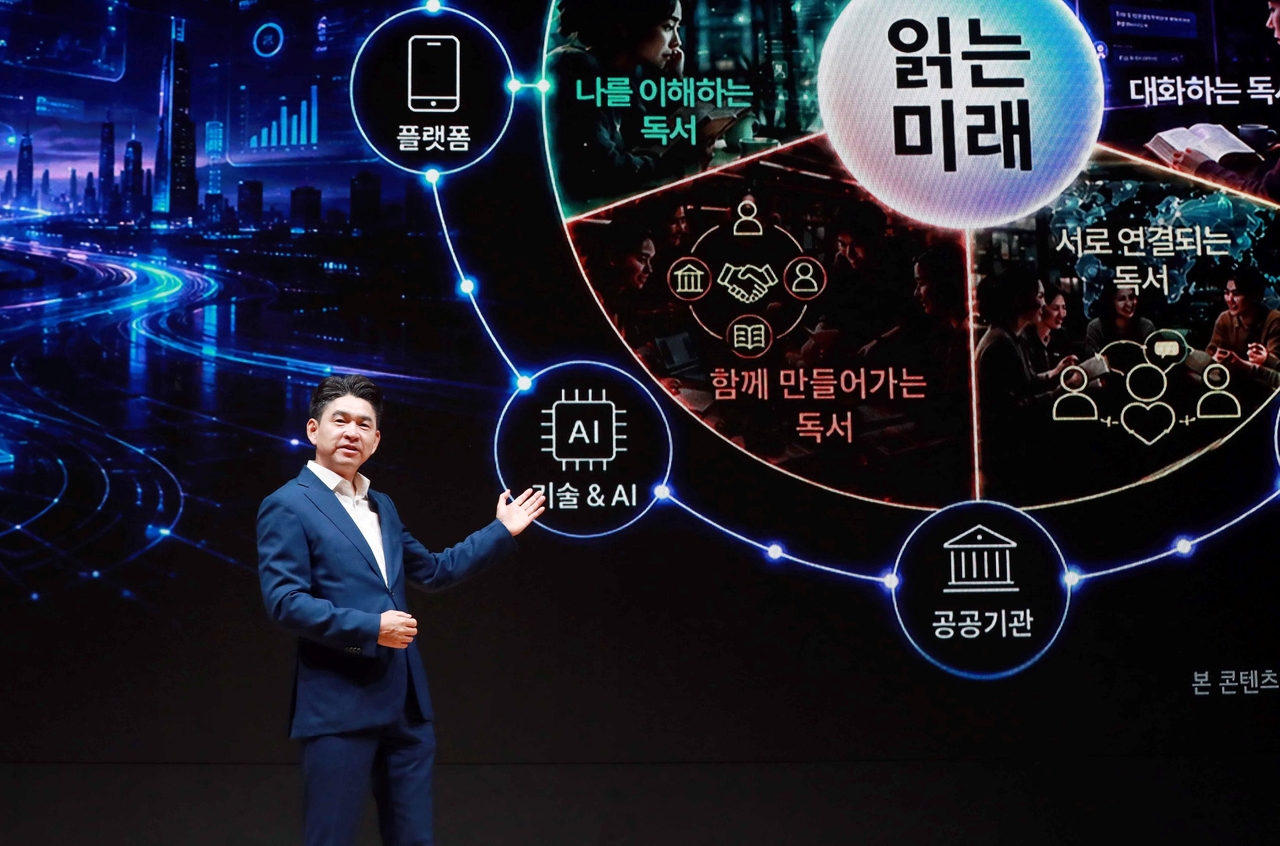
Jung Jae-wook, CEO of Millie's Library, posed the question Thursday in Seoul at the company's 10th anniversary conference, "The Future of Reading."
His answer was clear: The way we read will change, but reading will remain.
"How we read will change, but we will still be reading books. AI creates answers, but reading creates questions," Jung said in his keynote speech.
Founded in 2016, Millie's Library operates a subscription-based digital reading service that gives users access to a wide range of e-books and other content.
Over its first decade, the service has surpassed 10 million subscribers, with members logging more than 19.87 billion minutes of reading time. Each member reads an average of 6.8 books a month, according to released data.
Far from signaling the end of reading, Jung argued, the rapid rise of AI could make reading more valuable than ever.
"Just a few years ago, we had to piece together search results from portals to find an answer. Now, if you ask AI a question, it can generate a summary and an answer within seconds," he said. "In an era when the way we find information has changed, AI gives us answers, but reading prompts us to ask new questions."
Looking ahead, Jung envisioned reading becoming less about owning books and more about accessing them, while also becoming more social and interactive. AI and wearable technologies could expand reading into experiences that are heard and seen, help readers discover their tastes and connect people across generations, regions and languages.
The conference went beyond celebrating the platform's 10th anniversary to ask broader questions about the meaning and value of reading. Bringing together experts and writers from fields including philosophy, data science, cognitive psychology and literature, the event explored how the significance of reading may change in the future.
'Not as hopeless as we think'
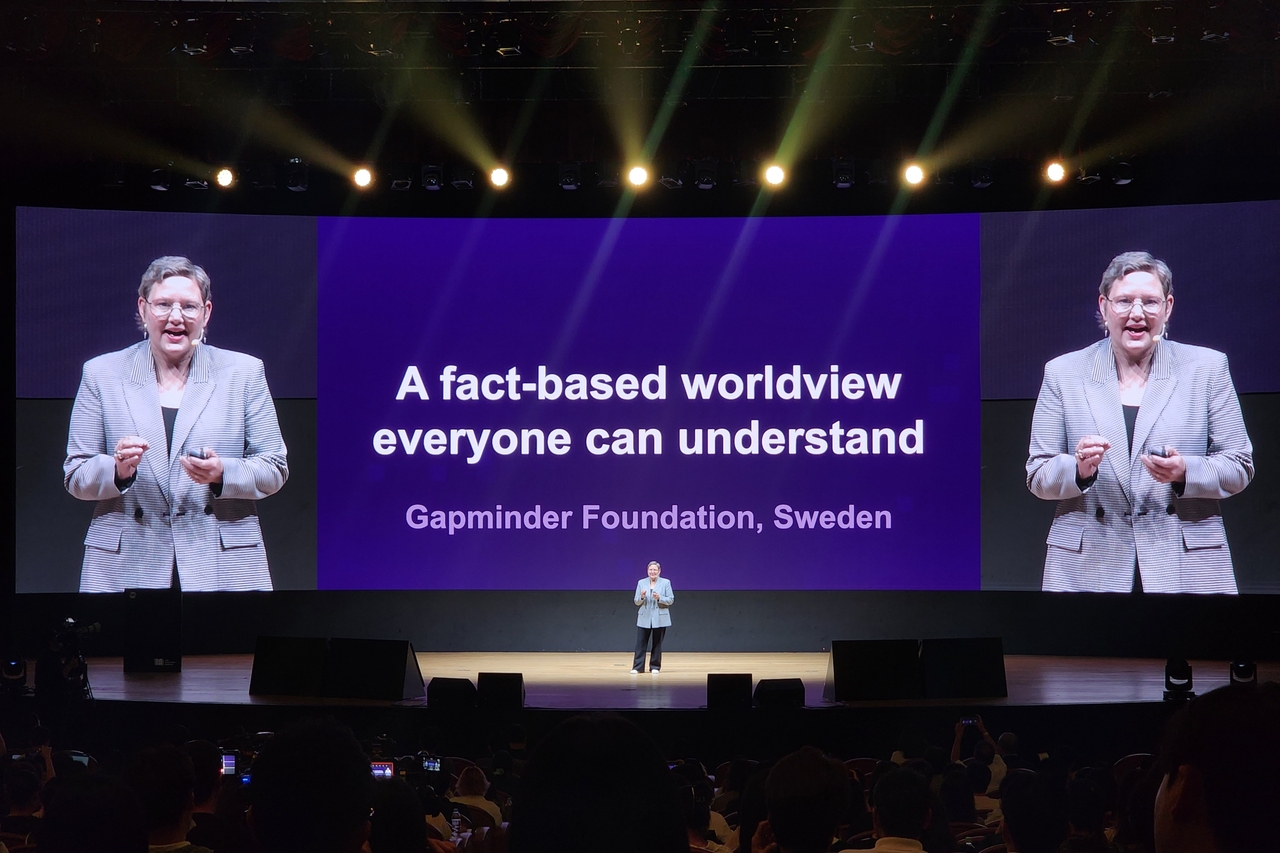
Anna Rosling, a data expert, co-founder of the Gapminder Foundation and co-author of the international bestseller "Factfulness," argued that people see the world through assumptions rather than facts — creating a striking discrepancy between how we perceive the world and what the data shows.
"People are generally very wrong about the world they live in, systematically wrong in the same way," Rosling said Thursday in Seoul during a conference marking the 10th anniversary of Millie's Library.
She added that the pattern is remarkably consistent across countries, audiences and age groups.
"We have stereotypes when it comes to people in other places. When we ask questions about human progress, quite often that is underestimated. We are overly pessimistic about what has happened to humanity. But when we ask questions about technology, then we are usually overestimating how far it has advanced."
Rosling demonstrated the point with a series of questions about global development, including literacy, education, access to basic needs and income levels. Across countries and audiences, people consistently underestimated human progress.
She also pointed to a striking comparison with AI. When the same multiple-choice questions were given to several AI chatbots, they scored above 80 percent, while only 17 percent of human respondents performed better than random guessing.
"We are highly educated humans. We've never been more educated than today — and still we end up behind randomness and behind AI."
That, she argued, could free people to spend more time understanding, interpreting, putting information into perspective, analyzing and innovating, and ultimately making wise decisions.
"We no longer have the burden of having to learn everything by heart. We can now rely on AI to help us gather the information," she said. "AI changes how we find knowledge, but it does not change how we do wisdom. Humans will still be needed to do the wise thinking.”
Data can also offer something people increasingly need: hope.
News tends to highlight dramatic events and crises, while slow, steady improvements rarely make headlines. Looking at the underlying data can reveal a world that is changing for the better in many ways.
"If we feel hope, I think we will have the energy to continue to make the world the place we wanted to be."

Connecting the dots
Reading is becoming less about acquiring information and more about learning how to connect it, cognitive psychologist Kim Kyung-il said, arguing that reading remains a crucial human skill in the age of AI.
Kim, a professor of psychology at Ajou University, made the remarks during a lecture titled "Reading Therapy: Building Mental Strength," in which he explored the role of reading and imagination.
"Information reduces brain activity when it is too complete. When there is too little information, it makes us anxious. Our brains are most active when information is limited," Kim said.
Unlike information delivered in complete, polished forms, books often leave gaps that readers must fill with their own imagination.
That is why, he argued, books can stimulate a form of imagination that video cannot. When people read literature, they constantly make inferences, connecting ideas and images that may appear to have little relation to one another.
That process is increasingly important as AI becomes better at handling knowledge and recognizing established patterns.
"Humans are overtaken by AI when it comes to information. But if there is one last door left for us: the ability to break out of established patterns. That is why we need imagination."
Many of humanity's greatest inventions and strategies, Kim said, have emerged from the ability to make unexpected connections.
"The common thread among great scientists, scholars, strategists and businesspeople is their ability to make such analogies. Metaphors provide the bridge that makes those connections possible."
This explains why people who come up with unconventional ideas have so often immersed themselves in poetry, novels, painting and other forms of art, said Kim. Such experiences expose the mind to metaphors and help develop the ability to connect seemingly unrelated ideas.
"So we need to read to train ourselves to 'connect' knowledge," Kim said, urging readers to seek out books rich in metaphor.
"To develop that ability, people need to become comfortable with ambiguity and incomplete information — and reading provides a space to practice."
hwangdh@heraldcorp.com