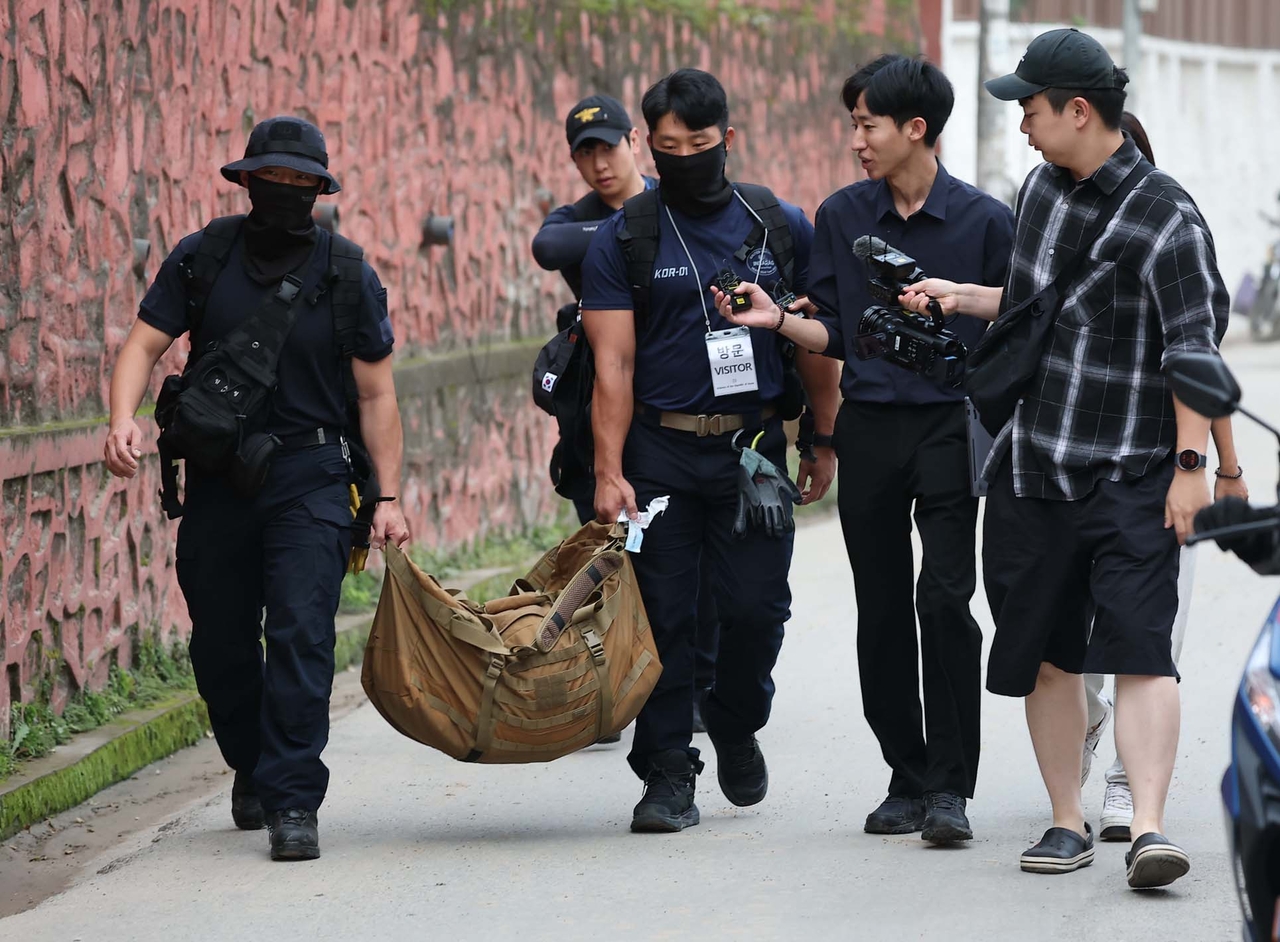
The South Korean government rapid response team on Monday launched a ground operation to search for nine Koreans missing following Nepal's devastating floods, while aerial search efforts also resumed with helicopters chartered by the government and Doosan Enerbility taking to the air.
"The ground search team will attempt to reach the Ramche area, about 1 to 2 kilometers from the disaster site, and plans to camp there overnight," a Foreign Ministry official, requesting anonymity, told reporters Monday.
The ground operation marks an expansion of South Korea's search efforts after repeated attempts to deploy helicopters were thwarted by poor weather and restrictions imposed by Nepali authorities.
A helicopter chartered by Doosan Enerbility took off at 11:03 a.m. local time, or 2:18 p.m. in South Korea, marking the company's first successful deployment since it began attempting to operate aircraft last week.
The helicopter was deployed first to search the upstream weir area, where one of Doosan's missing employees had been working, before moving downstream toward the main office and camp area.
Later Monday, a helicopter chartered by the South Korean government's rapid response team also joined the search, taking off at 2:08 p.m. local time, or 5:23 p.m. in South Korea, according to the Foreign Ministry.
Four people were aboard — three members of the government rapid response team, including one Foreign Ministry official and two National Fire Agency personnel, as well as one Doosan representative.
The government-chartered helicopter was set to begin its search around a weir dam identified by the families of the missing workers as one of their possible locations, before moving to Dhunche, a mountainous town in Rasuwa district, and the area surrounding the powerhouse of the hydroelectric power project.
The flights marked the resumption of helicopter searches after some two-day gap. A helicopter chartered by the government rapid response team conducted two search flights Saturday but found no sign of the missing workers.
Doosan had kept two helicopters on standby since Thursday, but attempts to deploy them were repeatedly thwarted by weather conditions and difficulties securing authorization from Nepali authorities.
The company's second helicopter had yet to receive flight clearance as of Monday afternoon.
Six Doosan Enerbility employees and three Korea South-East Power employees have been missing since massive floods and landslides struck Nepal's northern Rasuwa district Wednesday. They had been working at the Upper Trishuli-1 Hydropower Project.
On Sunday, members of the rapid response team conducted a preliminary survey of the Batar area, located along the route to the disaster site, to assess whether it could be approached by road. The government team, comprising Foreign Ministry, police and fire officials, was dispatched to Nepal last week to support efforts to locate the missing workers.
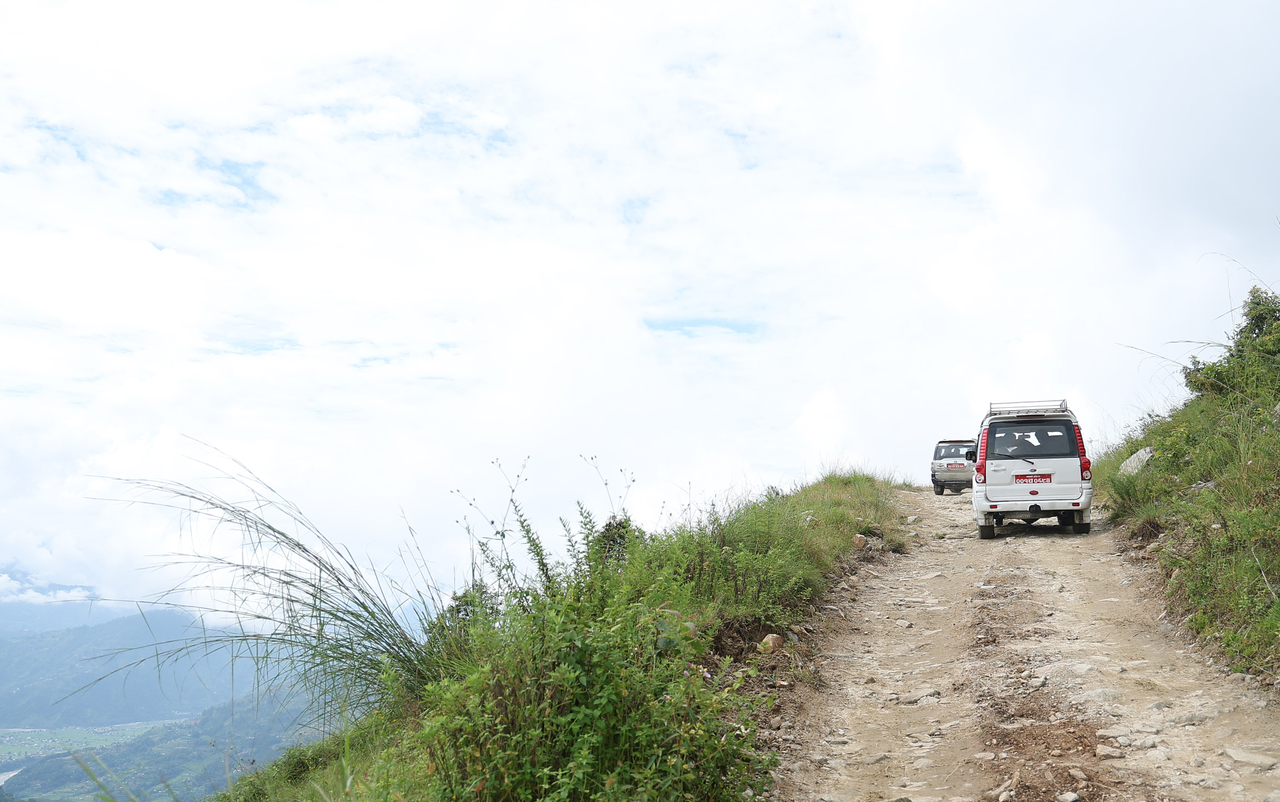
After reviewing conditions on the ground, the team determined that Ramche could potentially be reached overland and formed a ground search unit to attempt to enter the area Monday, according to the official.
Ramche is one of the main access points to the Upper Trishuli-1 Hydropower Project, where the missing South Koreans had been working.

Alongside the ground operation, Seoul is continuing preparations for more detailed aerial searches using helicopters and drones, although both require approval from Nepali authorities. The rapid response team is also seeking permission to deploy a drone to search areas that are difficult to reach from the ground.
"If we receive clearance for helicopter takeoff and operations, we plan to search the weir dam and Dhunche areas mentioned by the families," the ministry official said.
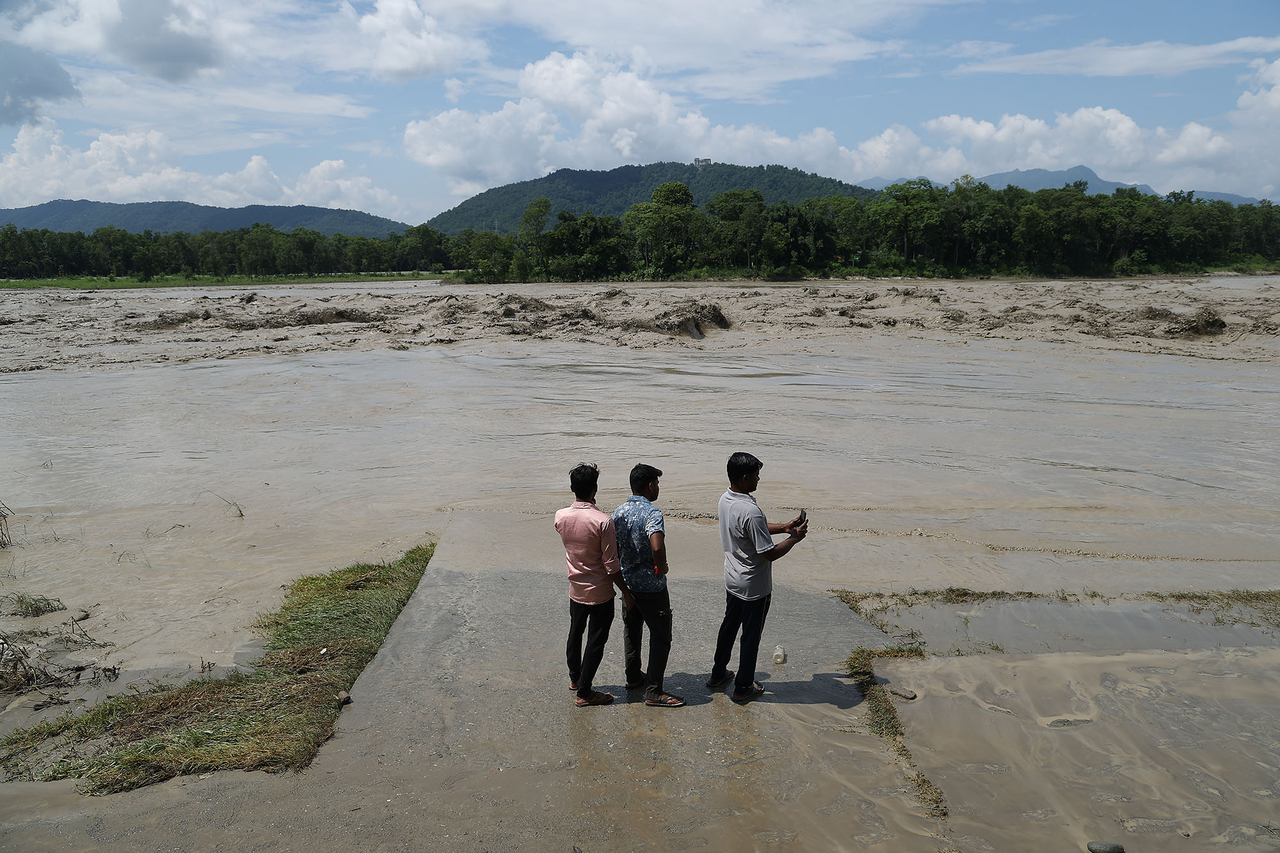
Air access has emerged as a major obstacle to the search, with roads and bridges leading to the flood-hit area severely damaged or washed away.
The Foreign Ministry official said Nepal has decided to broadly not accept international search and rescue assistance, instead relying primarily on its own military and police, as well as limited resources, including helicopters, to cover the vast disaster area.
"The Nepali military and police have deployed resources to areas where the South Koreans are believed to be located and are conducting search and rescue operations for the nine missing Koreans, even as thousands of their own citizens remain missing," the official said.
Seoul has continued to press Nepali authorities for cooperation, contacting the chief of the Nepal Police and representatives of the Nepal Army on Sunday to request continued search efforts.
The South Korean response team is also interviewing Nepali survivors in an effort to reconstruct the movements of the nine missing workers and narrow down their possible locations.
Meanwhile, the Foreign Ministry and the South Korean Embassy in Nepal are continuing negotiations with Nepali authorities over access to the disaster area.
Nepal has tightly controlled access amid concerns about further landslides and potential confusion if large numbers of foreign rescue personnel and equipment converge on the affected areas, South Korean lawmakers said after receiving a government briefing Monday.
Rep. Song Seok-jun, chairperson of the National Assembly’s Foreign Affairs and Unification Committee and a member of the conservative People Power Party, said Nepali authorities remain at the center of search and rescue operations, while activities by South Korea and other countries have yet to begin in earnest.
"The Nepali government is strictly controlling access to the site due to the risk of further landslides and concerns about confusion that could arise if equipment and personnel from multiple countries converge on the area," Song told reporters after the committee visited the Foreign Ministry in Seoul.
Song said search operations involving China and India were also being conducted only on a limited basis in connection with rescue efforts at a tunnel.
Rep. Koh Dong-jin of the People Power Party said Nepal's cautious approach partly reflects its experience following the devastating 2015 earthquake, when an influx of personnel and assistance from multiple countries caused considerable confusion on the ground.
South Korea nevertheless has equipment and military aircraft ready for deployment if permission is granted, Koh said.
The parliamentary committee said it would explore ways to support the search through additional personnel, equipment and funding, as well as possible cooperation with the Nepali parliament.
"We will determine what the National Assembly can do to support the government and make every effort to help resolve the situation through close cooperation between the South Korean and Nepali parliaments," Song said.
Rep. Hong Kee-won of the Democratic Party of Korea stressed that any aerial or ground search at the site requires approval from Nepali authorities.
"The Foreign Ministry and our embassy on the ground are serving as the main channels and actively coordinating with the Nepali authorities," Hong said.
The committee urged the government to make every effort to determine the whereabouts of the nine South Koreans and secure their rescue as quickly as possible.
mkjung@heraldcorp.com