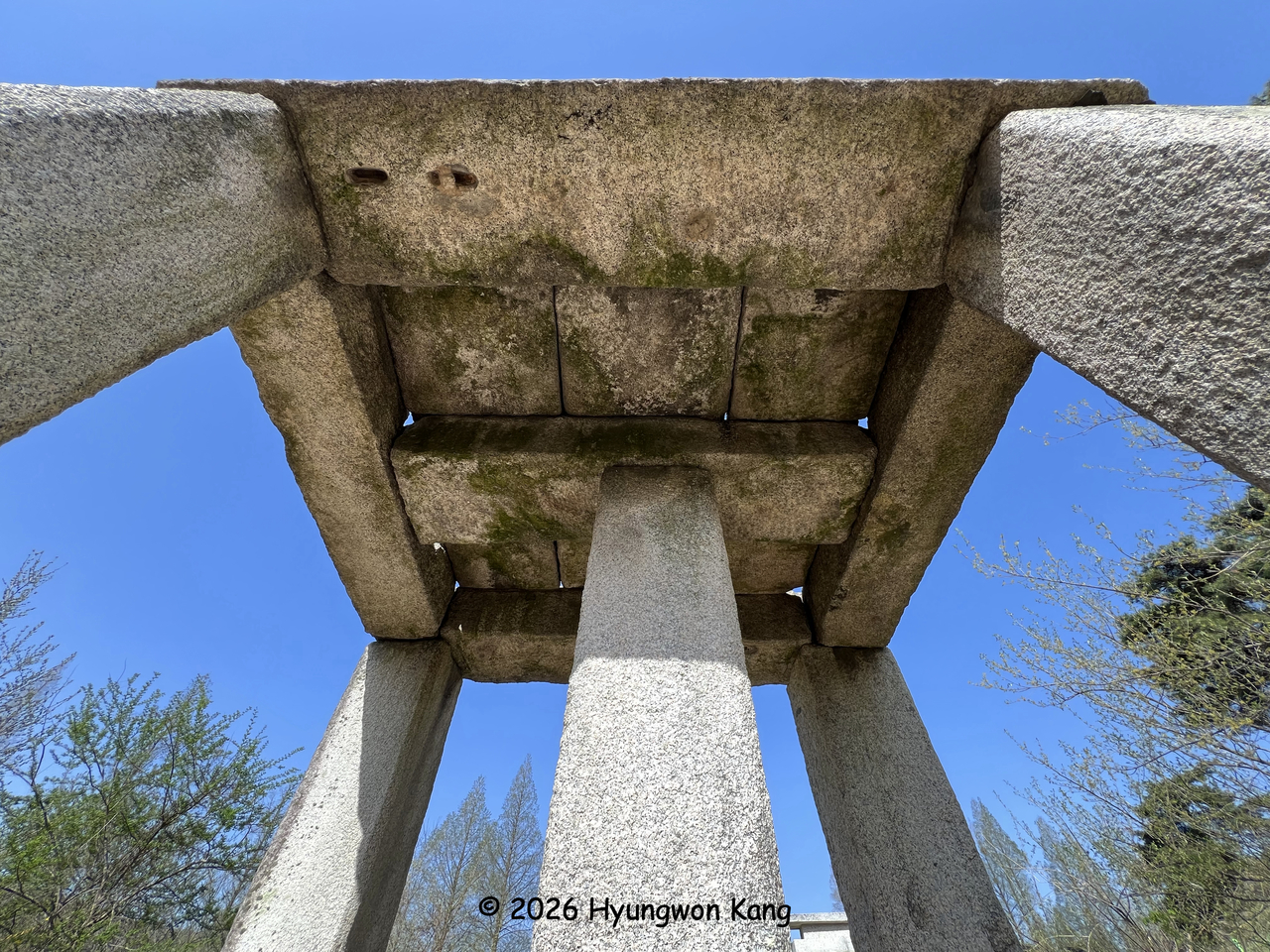
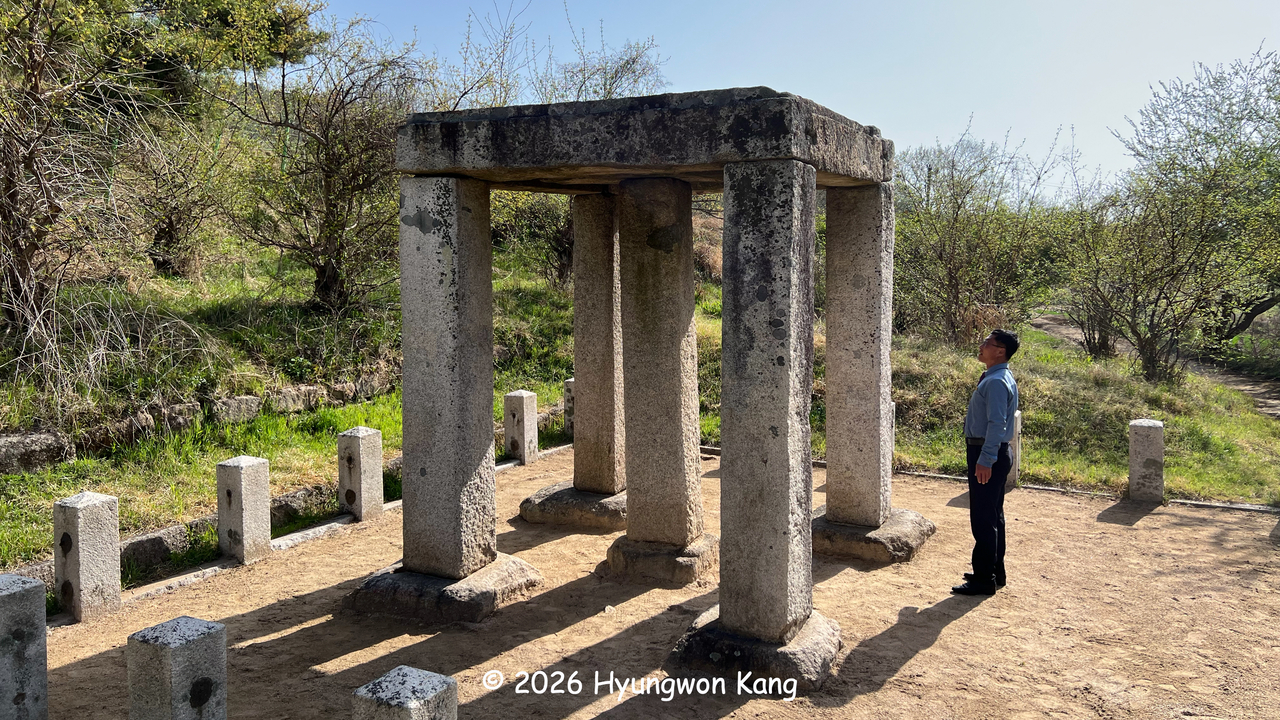
In April, I stood before the Goryeo Kingdom's Cheomseongdae in Kaesong, once known as Hwangdo, the imperial capital of Goryeo, and now one of the UNESCO World Heritage Historic Monuments and Sites in Kaesong, North Korea.
Unlike the towering 9.17-meter stone Cheomseongdae observatory built during the Silla Kingdom in Gyeongju, Kaesong's Cheomseongdae appears almost understated, standing only 2.47 meters tall.
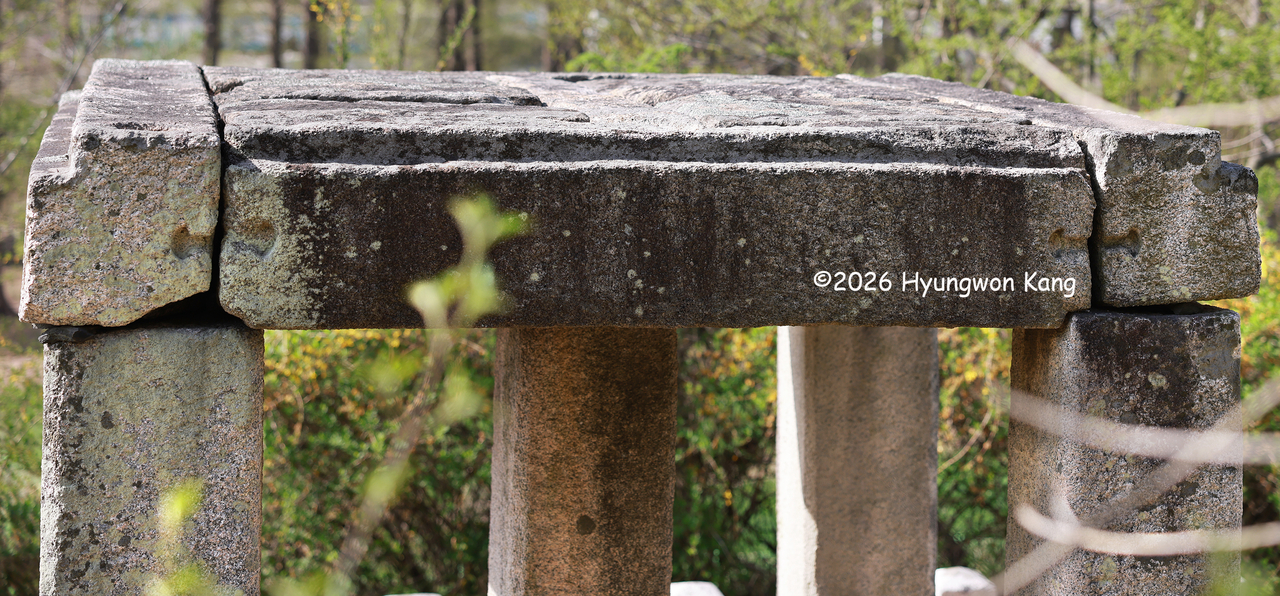
Yet appearances are deceiving. Four square granite pillars, together with a central support pillar, uphold eight granite lintels — five supporting lintels with three spanning across them — to form a broad, flat platform. Grooves carved into the summit once anchored a wooden superstructure, allowing the observatory to serve both astronomical and meteorological functions for the Goryeo court.
It stands as a testament to one of the world's oldest continuous traditions of astronomical observation.
Heaven's guiding signs
For ancient Koreans, the night sky was the language of heaven. The movements of the sun, moon, planets and stars were believed to shape earthly events. Comets foretold political upheaval; meteors signaled the passing of a great figure or the birth of one destined for greatness. According to tradition, a great star fell on the night the Goryeo Seonbi Kang Kamchan (948-1031) was born, giving Nakseongdae ("Place Where the Star Fell") its name. Kang later led Goryeo to victory over the Khitans in 1019, ending the Third Goryeo-Khitan War — a clash of empires. Eclipses demanded careful interpretation, while the annual movement of constellations guided the agricultural calendar.
Astronomy and meteorology became essential instruments of government.
Generations of court astronomers observed both the heavens and the weather, producing increasingly accurate calendars that guided planting and harvesting. Their work enabled Korean farmers to align agricultural activities with the seasonal cycle, contributing to more reliable harvests and the prosperity of one of East Asia's oldest civilizations.
This scientific tradition stretches back thousands of years.
Bronze Age dolmens across the Korean Peninsula bear carved celestial motifs, suggesting that astronomical observation formed part of Korea's earliest cultural heritage. During the Three Kingdoms period, astronomy became institutionalized as a function of the state. The celebrated Cheomseongdae in Gyeongju, built during the seventh-century Silla Kingdom, is widely regarded as the oldest surviving astronomical observatory in East Asia.
The observatory at Kaesong continued this tradition under the Goryeo Kingdom (918-1392).
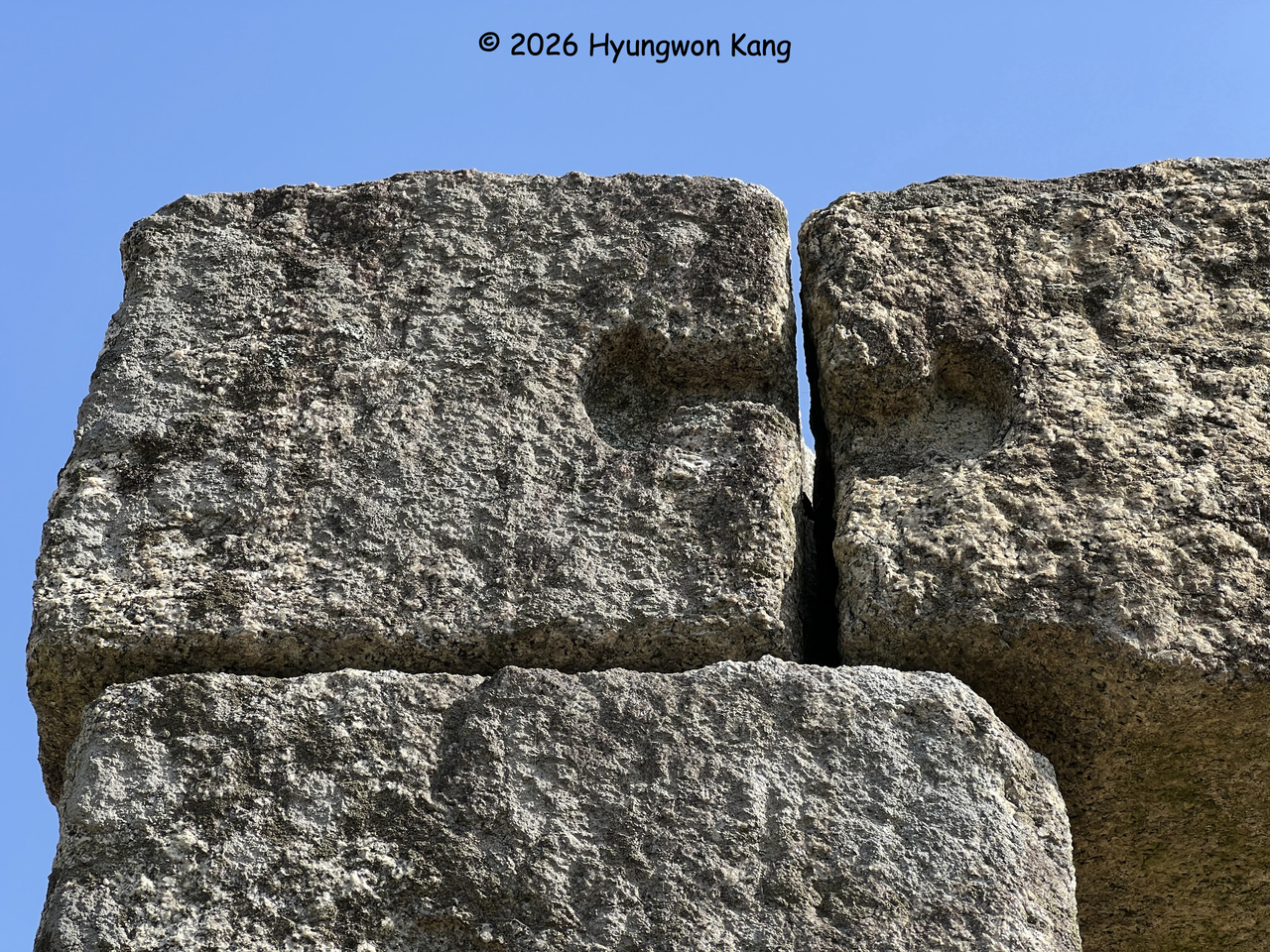
Astronomers attached to the Royal Bureau of Astronomy carefully recorded eclipses, planetary movements, comets, novas and even sunspots. These observations accumulated over centuries, creating a sophisticated body of astronomical knowledge.
Joseon's celestial legacy
The culmination of that tradition appeared shortly after the beginning of the Joseon era.
In 1395, only three years after Yi Seong-gye founded the Joseon Kingdom and moved the capital from Kaesong to Hanseong (modern Seoul), court astronomers engraved the Cheonsang Yeolcha Bunyajido, or Chart of the Constellations and the Regions They Govern. Containing approximately 1,467 stars arranged into nearly 300 constellations, it remains one of the world's oldest and most sophisticated surviving stone star maps.
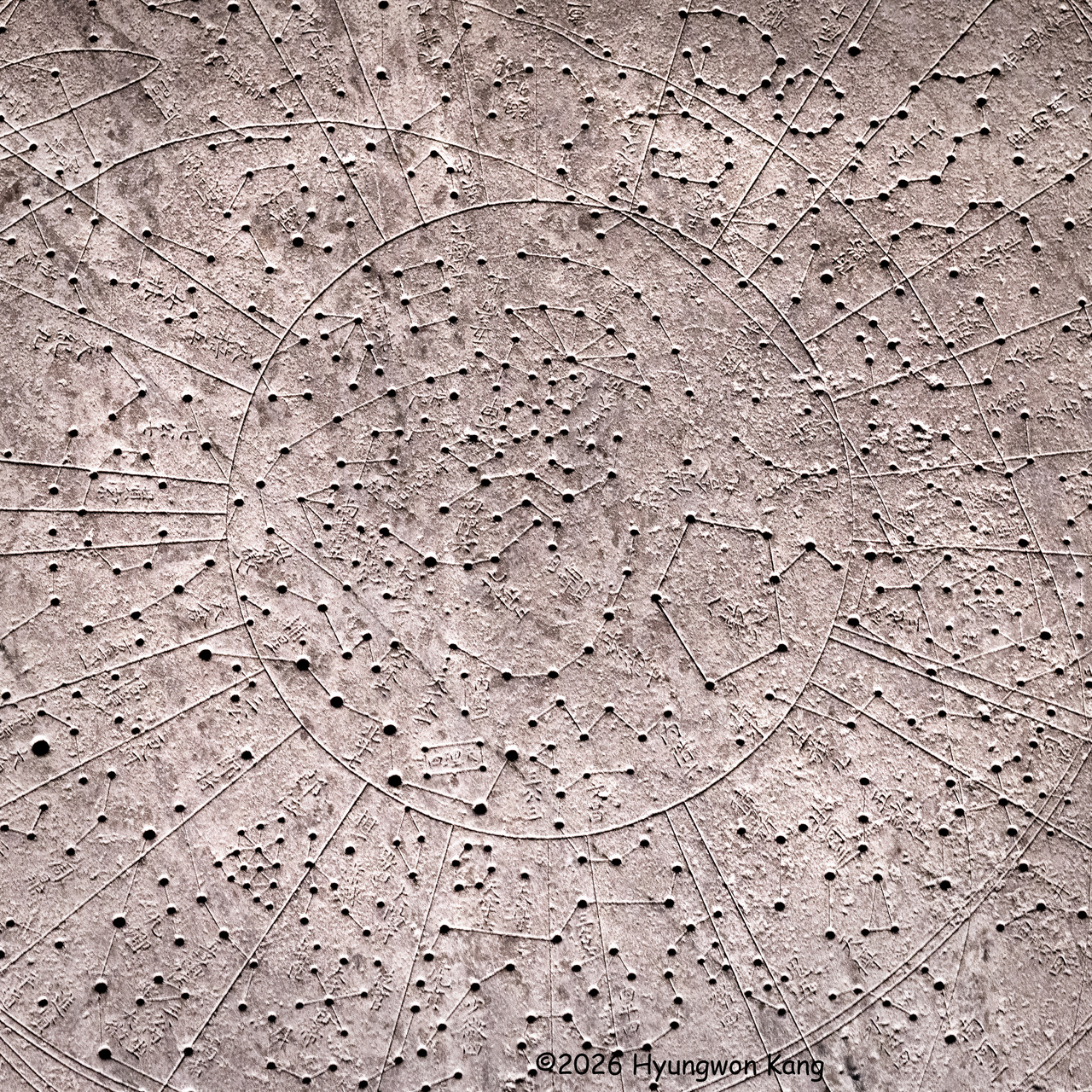
The star chart did not emerge suddenly; it preserved astronomical measurements inherited from successive Korean kingdoms.
One constellation is labeled Ipseong instead of Geonseong, reflecting the Korean tradition of royal name avoidance. Because Geon was the given name of Goryeo founder Wang Geon, astronomers substituted the synonymous Hanja character Ip. This subtle substitution preserves evidence that the chart's underlying observations originated during the Goryeo period.
Modern analysis further shows that its celestial coordinates were calibrated for an observer at a latitude of approximately 38 degrees north — the latitude of both Kaesong and Seoul.
Standing atop Kaesong's Cheomseongdae, it is easy to imagine generations of astronomers observing the same constellations that still shine above Korea today. The celebrated astronomical achievements of King Sejong's reign in the 15th century — including armillary spheres, sundials, celestial globes and self-striking water clocks — were built upon centuries of careful observation by earlier Korean astronomers.
Together, the observatories of Gyeongju and Kaesong, culminating in the creation of the Cheonsang Yeolcha Bunyajido in 1395, represent one of humanity's longest continuous traditions of astronomical observation.
Despite the division of the peninsula, that scientific legacy remains a shared inheritance of all Koreans beneath the same night sky.
By Hyungwon Kang

Hyungwon Kang is a Korean American photojournalist, columnist, author and two-time Pulitzer Prize winner. Kang reported from North Korea in 1995, 1997 and 2026. He is the author of "Visual History of Korea and Seonbi Country Korea: Seeking Sagehood." His ongoing Visual History of Korea project documents Korean history and culture across the entire Korean Peninsula for global audiences.
The views expressed in this article are the writer’s own.— Ed.
mkjung@heraldcorp.com