At the National Theater of Korea this month, Shakespeare's comedy of disguises and mistaken identities will gain another layer of misunderstanding: Sign language itself becomes part of the joke.
From May 28-31, the theater will stage "As You Like It" at the Daloreum Theater as a barrier-free production featuring Korean subtitles, audio description and live sign-language interpretation.
The production is the first comedy in the National Theater's barrier-free series, which since 2021 has largely focused on weightier dramas centered on disability and social issues, including adaptations of Michael Lew's "Teenage Dick," Shakespeare's "Macbeth" and Saou Ichikawa's "The Hunchback."
This time, the director Park Ji-hye said she wanted something lighter — something audiences could laugh at as they like it.
"I wanted to make a performance where people could simply laugh comfortably," Park said in a group interview Thursday. "Human beings are both tragic and comic, and when I thought about working with disabled artists, I wanted to explore their sense of comedy too."
"In comedy, people open up more. There's a spontaneity that emerges. I wanted to create a show where no one feels anxious about whether it's acceptable to laugh."
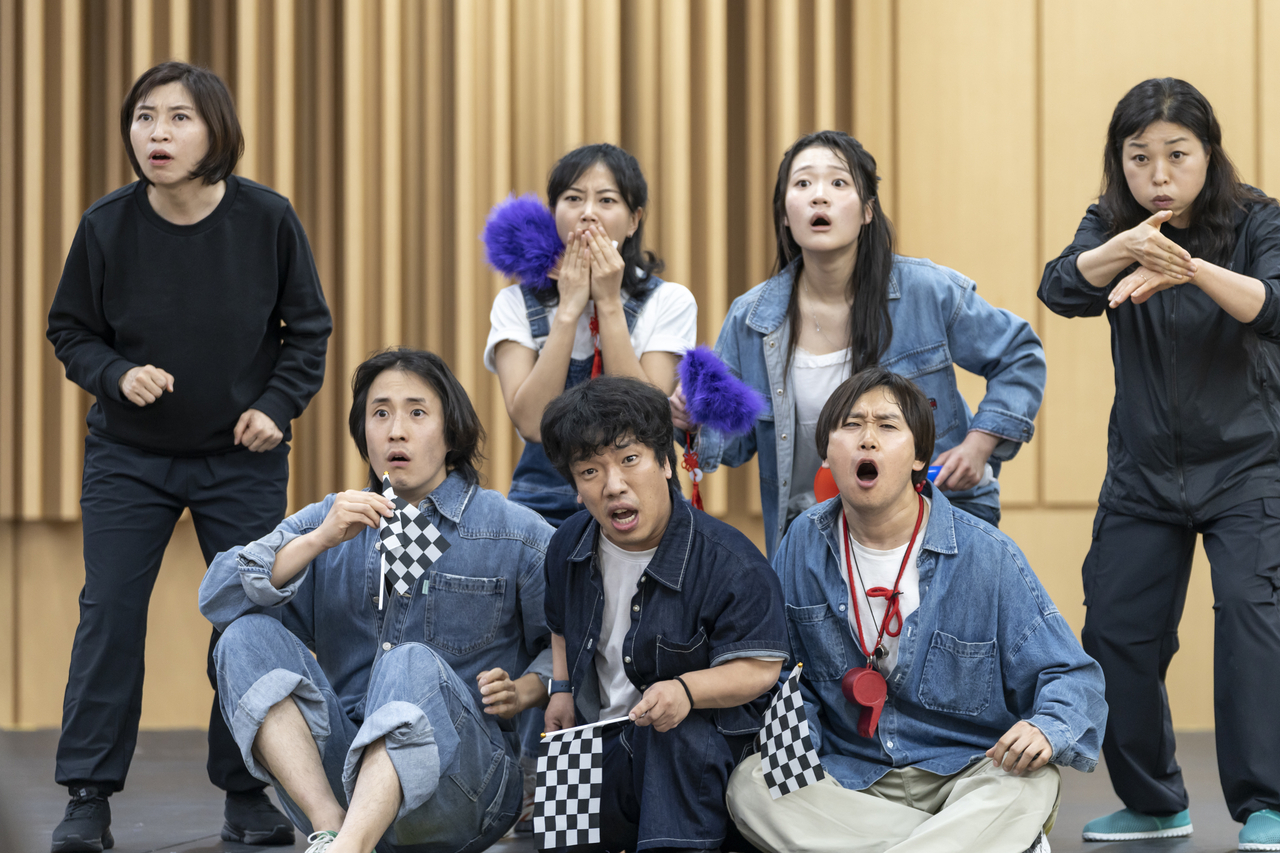
Based on Shakespeare's "As You Like It," the story follows Rosalind, the banished duke’s daughter, who escapes into the Forest of Arden disguised as a man, where lovers wander, identities blur and transformations unfold.
This adaptation frames the story as a traveling troupe’s performance, with a narrator who moves fluidly between stage and audience.
Sign language here will also function as part of the comedy itself. In one scene, a performer misunderstands a signed expression and responds with an entirely different gesture, setting off a chain of comic miscommunication that is then reinterpreted aloud by an interpreter.
Park said the deeper theme is love — not strictly romantic love, but the collaborative bonds that allow people to live alongside one another.
"I wanted to talk about love as a relationship of coexistence. A relationship where actors, or actors and audiences, can express what they need from one another and offer help."
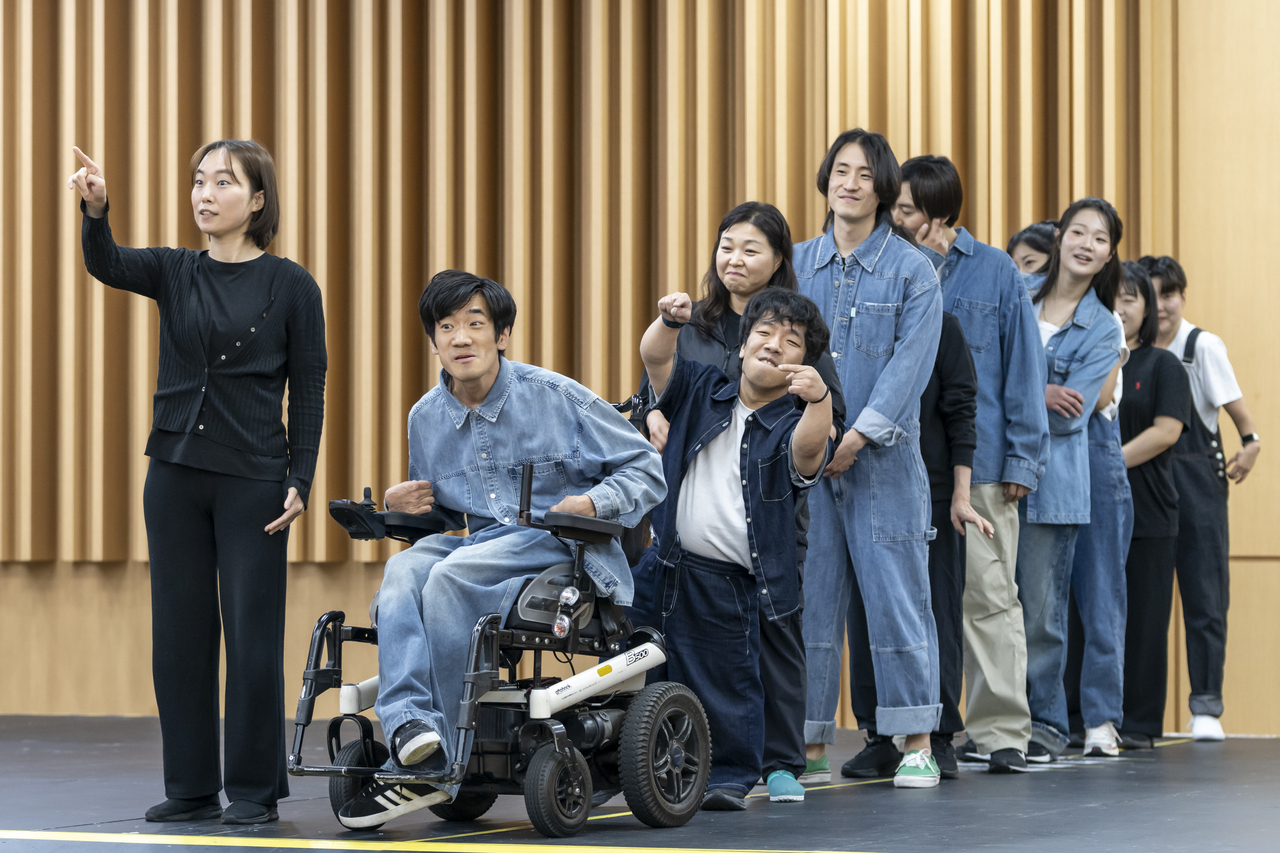
Rather than relying on a single interpreter for the entire show, the production assigns four dedicated sign-language interpreters to individual characters, allowing emotions and rhythms to be conveyed with greater nuance.
The interpreters mirror the actors physically as well as linguistically: When an elderly character stoops, the interpreter beside him bends too, remaining fully inside the scene even in moments without dialogue.
"If there’s distance between the actor and the interpreter, immersion becomes difficult," said Kim Hong-nam, one of the production's sign language interpreters.
"We analyze how the actor breathes, where they look, how they deliver a line and try to move within the same frame and rhythm."
For the actress Jang Hye-jin, who plays Rosalind, the significance of the production lies in its sense of shared participation.
"The focus is on the idea that all of us can experience this together."
hwangdh@heraldcorp.com