South Korea plans to expand the counterterrorism center under the Prime Minister’s Office, officials said Friday, as authorities move to strengthen responses to security threats ranging from online extremism to drone attacks.
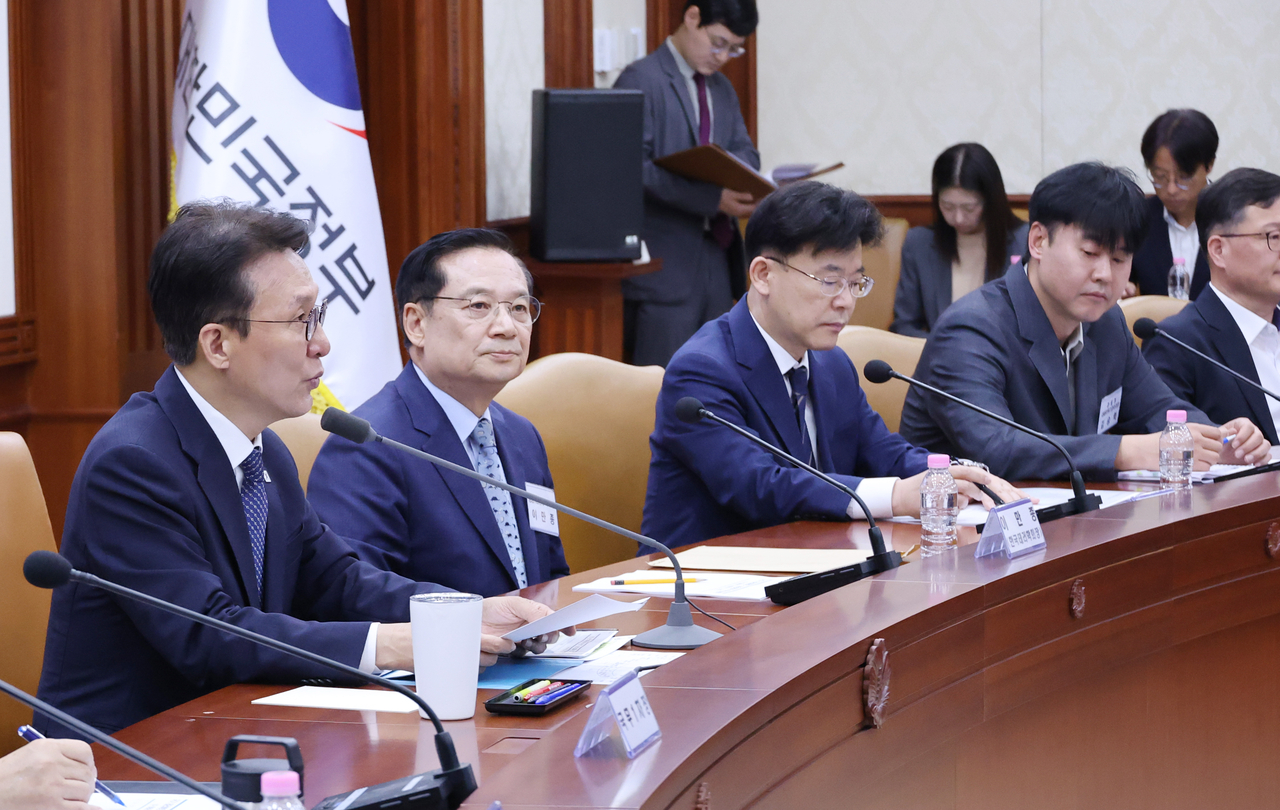
The proposed overhaul, under which the center will coordinate terrorism responses across government bodies, was among the key issues discussed at the final meeting of the public-private Task Force for Innovation in Counterterrorism Operations, chaired by Prime Minister Kim Min-seok at the Government Complex Seoul.
“The government will establish a national counterterrorism response system capable of proactively addressing changing terror threats so that the public can feel safe in their daily lives,” Kim said at the meeting.
The task force, launched in January, has spent the past four months reviewing reform measures related to the country’s overall counterterrorism framework through divisions focused on laws and regulations, counterterrorism expertise, and organizational and budgetary systems.
Friday’s meeting brought together 33 participants, including officials from agencies such as the National Intelligence Service, the Defense Ministry, the National Police Agency, the National Fire Agency, the Korea Coast Guard and the Office of the Counterterrorism Human Rights Protection Officer, along with civilian experts.
Kim warned that South Korea was facing increasingly complex and evolving threats both domestically and internationally.
“In addition to traditional terrorist threats, new forms of risks are continuously increasing, including the spread of extremism through online spaces, random crimes targeting unspecified individuals and threats involving new technologies such as drones,” he said.
He stressed that no single agency could effectively address such threats alone, calling for “an organic response system” involving cooperation among government agencies as well as civilians and local communities.
Officials said the envisioned “national counterterrorism headquarters” would serve as a practical control tower coordinating nationwide counterterrorism activities.
The government also plans to streamline on-site command systems under police leadership during terror incidents and improve the efficiency of counterterrorism equipment procurement systems currently dispersed across multiple agencies.
Authorities said more systematic procurement procedures reflecting operational field demands would be introduced, while counterterrorism-related budgets would be coordinated through the National Counterterrorism Committee to better align spending with national policy priorities.
The meeting also discussed expanding the use of advanced technologies such as artificial intelligence, data analysis and drones in counterterrorism operations.
Officials said the government is considering revising regulations to explicitly classify drone-related and other emerging technological threats as forms of terrorism.
Participants additionally discussed measures to strengthen the authority of the National Counterterrorism Committee, headed by the prime minister, including granting it the power to designate domestic terror organizations.
Other proposals included expanding the role of counterterrorism human rights protection officers and improving protections for individuals considered at a higher risk of terrorism.
Kim emphasized that preventive measures were just as important as post-incident responses, highlighting the need for early detection of warning signs, information sharing and education and training.
“To ensure that today’s discussions lead to tangible outcomes, follow-up measures will be critical,” Kim said. “We must continue updating related laws and manuals to reflect reality, while improving field education, training and interagency cooperation systems in a practical manner.”
mkjung@heraldcorp.com