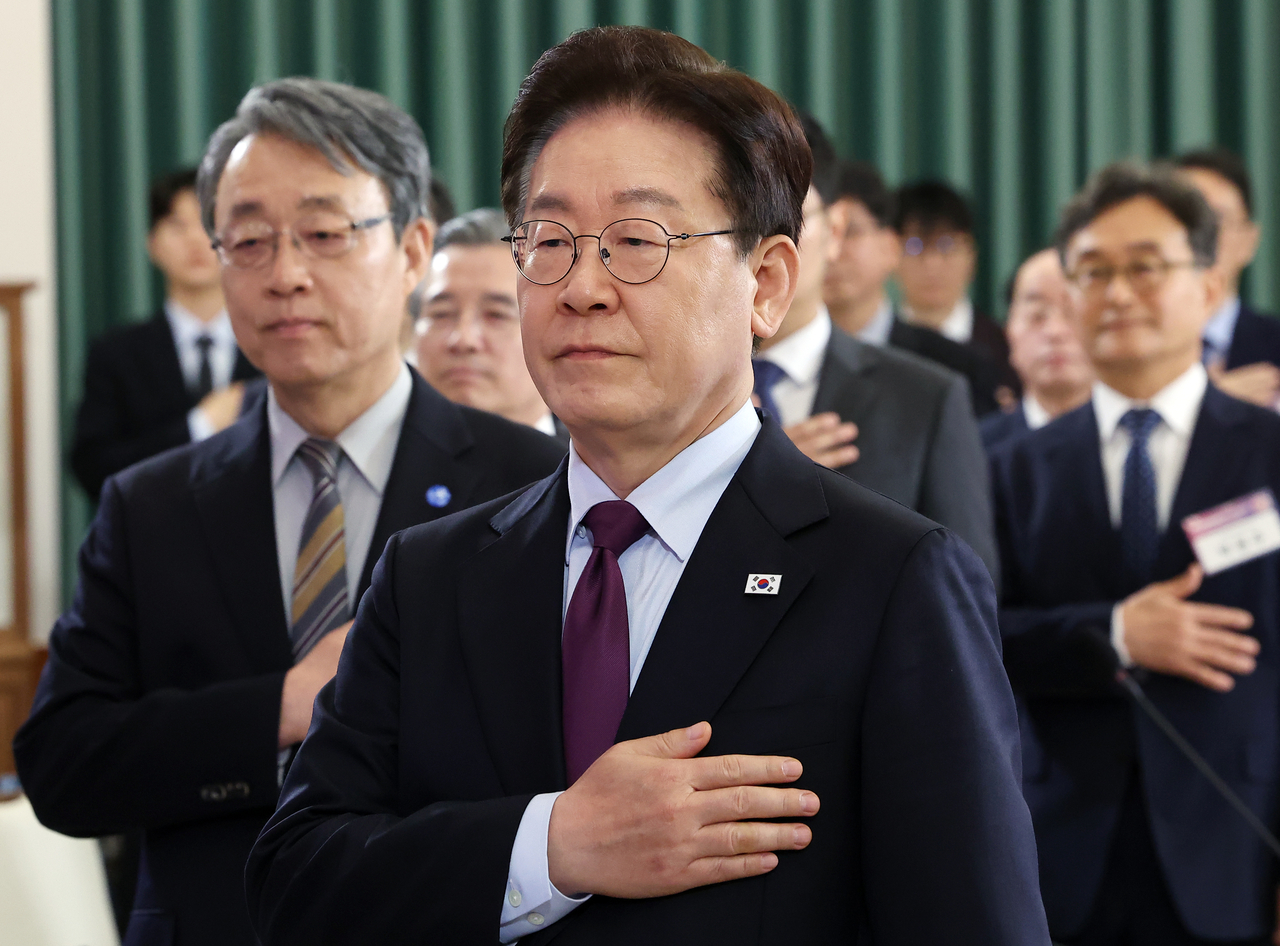
With some 50 days to go until South Korea’s June 3 local elections, the vote is shaping up to be a critical test for President Lee Jae Myung and his administration, with the outcome likely to shape the government’s momentum heading into its second year.
The elections — the first nationwide vote since Lee took office in July last year following the impeachment of former President Yoon Suk Yeol — will see voters choose around 4,000 officials, including 16 metropolitan mayors and governors.
While local elections traditionally focus on regional leadership, party dynamics and presidential approval ratings are expected to weigh heavily on the outcome.
Sweep vs. defense
The election is increasingly being framed as a contest between the ruling Democratic Party of Korea's push to consolidate power and the main opposition People Power Party’s effort to defend its existing strongholds.
The People Power Party currently holds 12 of the country’s 17 metropolitan governments, a legacy of its landslide victory in the 2022 local elections.
A strong showing by the Democratic Party would give the ruling party control over both the National Assembly and local governments, potentially strengthening policy execution and coordination. Conversely, a weaker-than-expected outcome could embolden opposition calls for greater checks on the administration and dampen its legislative momentum.
Recent polling has buoyed the ruling party’s outlook. A Gallup Korea survey conducted from Tuesday to Thursday showed Lee’s approval rating at a post-inauguration high of 67 percent.
Notably, support has risen even in typically conservative regions such as Daegu, Busan, Ulsan, and the North and South Gyeongsang provinces.
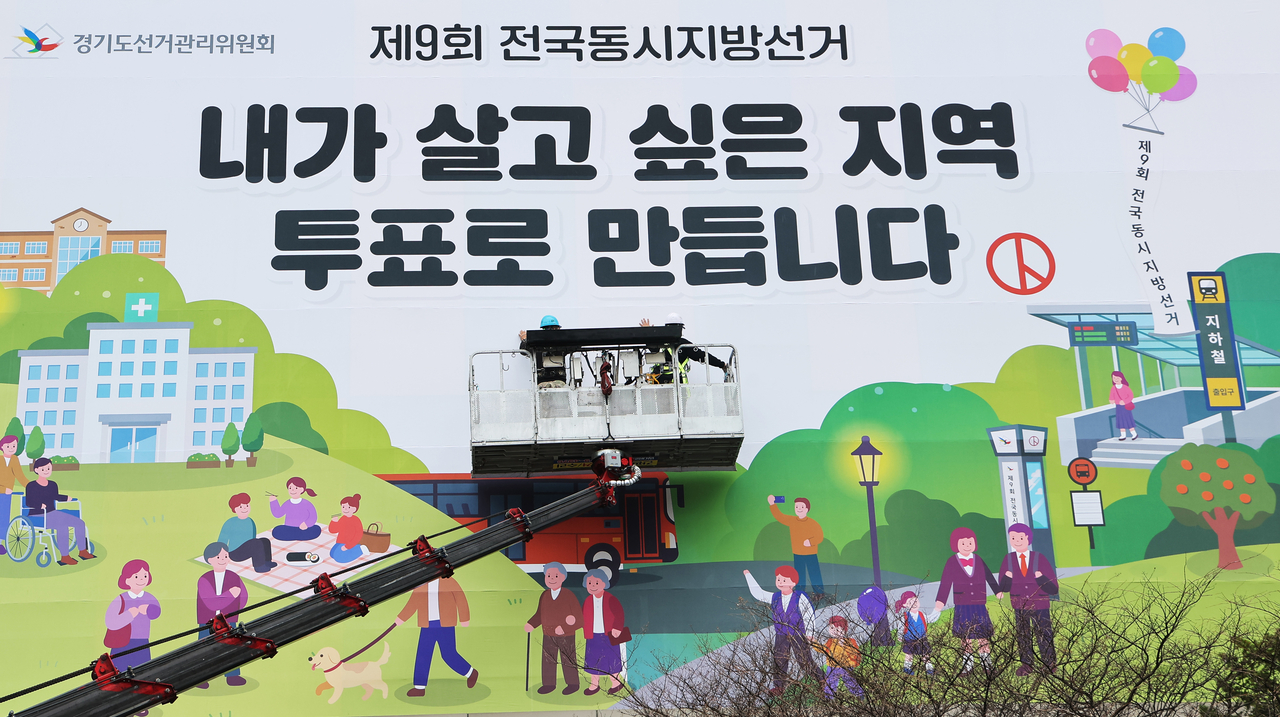
Park Myoung-ho, a political science professor at Dongguk University, said in a phone interview with The Korea Herald that the election would serve as “the first nationwide midterm evaluation of the Lee Jae Myung administration.”
“With public opinion currently leaning toward political stability, the existing advantage is likely to be a significant factor,” he said, suggesting that the Lee administration may enter the election with a relative edge.
“At the same time, the race will hinge on how centrist voters assess the government’s performance and whether candidates can expand beyond their core support bases,” he added.
Candidate lineups take shape amid internal strife
The Democratic Party and the People Power Party are accelerating candidate selections, though both sides continue to grapple with internal disputes.
The Democratic Party has so far finalized candidates in 11 regions, while the People Power Party has done so in nine. Head-to-head matchups have been confirmed in the five regions of Incheon, Busan, Gangwon Province, South Gyeongsang Province and Ulsan.
In Busan, incumbent Mayor Park Heong-joon of the People Power Party will face Democratic Party Rep. Jeon Jae-soo. Busan has emerged as a key battleground with Jeon having shown an early edge, but the People Power Party’s dominant performance in the 2024 general election suggests the race remains fluid.
In Incheon, Democratic Party Rep. Park Chan-dae, a former floor leader under President Lee’s party leadership, is set to challenge incumbent Mayor Yoo Jeong-bok.
Gangwon Province will see Woo Sang-ho, former senior presidential secretary for political affairs and confirmed Democratic Party candidate, take on incumbent Gov. Kim Jin-tae.
Seoul, the most closely watched race, remains unsettled on the People Power Party side. The Democratic Party has selected Chong Won-o, a former chief of Seoul's Seongdong district, while the People Power Party is expected to finalize its candidate this week among a three-way contest that includes incumbent Mayor Oh Se-hoon.
Park of Dongguk University explained that the race in Seoul would hinge on “the clash between the existing advantage of Mayor Oh and the ruling party’s early-term momentum.”
The Democratic Party has largely transitioned into full campaign mode, staging coordinated outreach efforts and emphasizing party unity.
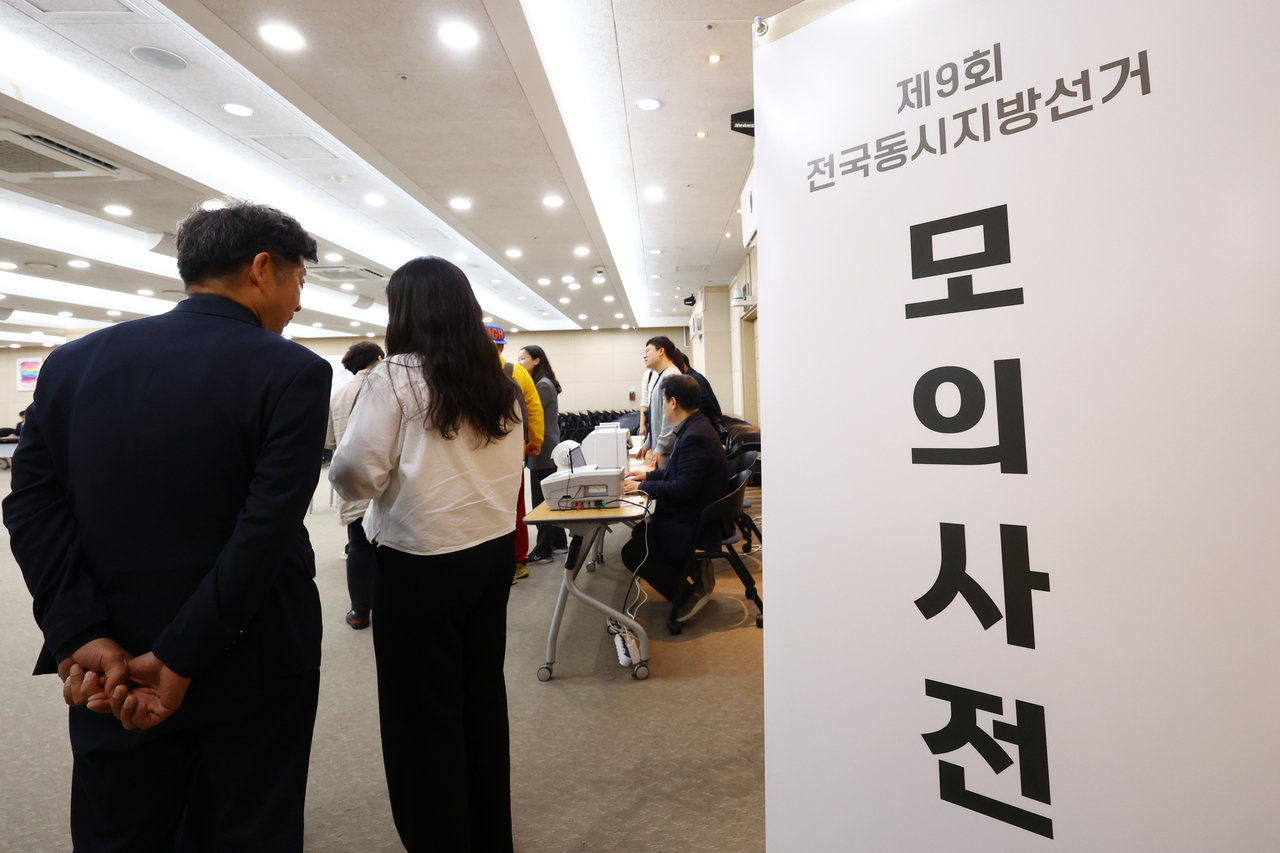
However, internal tensions persist, particularly in North Jeolla Province, where a primary dispute has triggered a hunger strike and allegations of rule violations.
The People Power Party is facing similar friction.
In Daegu, excluded primary contenders are weighing independent bids, raising concerns about vote splitting in a key conservative stronghold. Internal disagreements over candidate recruitment have also spilled into public view among party leadership.
Daegu, long considered a conservative bastion, has become an unexpected variable. Internal divisions within the People Power Party and the possibility of independent runs have raised the prospect of a more competitive race, boosting expectations for Democratic Party candidate Kim Boo-kyum, a former prime minister.
By-elections, reform vote add complexity
The local elections will coincide with a growing number of parliamentary by-elections, with the number of constituencies expected to rise to around 10 or more.
The figure could rise further as more lawmakers enter gubernatorial races, raising the prospect of a “mini general election” that could reshape the National Assembly balance.
Key districts include Incheon Gyeyang B, South Chungcheong Asan B, Gyeonggi Ansan A and Pyeongtaek B, and North Jeolla Gunsan-Gimje-Buan A, along with seats vacated by candidates running for local office.
Attention is also focused on whether a constitutional revision referendum will be held alongside the elections, a move that could further elevate voter turnout and political stakes.
Meanwhile, People Power Party Chair Jang Dong-hyeok described the upcoming election as “a major front in defending freedom and democracy” while on a trip to Washington on Saturday ahead of the vote.
“South Korea is at a critical juncture where freedom, rule of law and market order are being shaken,” Jang said in a Sunday Facebook post, defending his trip as part of broader efforts to safeguard national interests.
The ruling party is expected to campaign on political stability and governance efficiency, while the opposition is likely to emphasize the need to check what it calls excessive concentration of power.
With economic concerns — including Middle East-related uncertainties and housing pressures — looming large, observers say the election outcome will ultimately hinge on how voters balance stability against accountability.
The official campaign period for the local elections will run from May 21 to June 2. Early voting will take place over two days from May 29 to 30, followed by the main vote on June 3.
mkjung@heraldcorp.com