North Korea on Tuesday said it plans to introduce a formal police system, a move observers say may be aimed at reshaping its global image and institutional framework to resemble that of a “normal state.”
North Korea has traditionally relied on a public security system typical of socialist states. Centered on the Ministry of Social Security, it combines conventional law enforcement with broader functions of social control and surveillance. These forces operate with limited institutional independence and are closely aligned with regime interests, while working alongside a powerful secret police apparatus.
Against this backdrop, Pyongyang’s explicit adoption of the term “police” marks a notable shift in both terminology and institutional signaling, observers say.
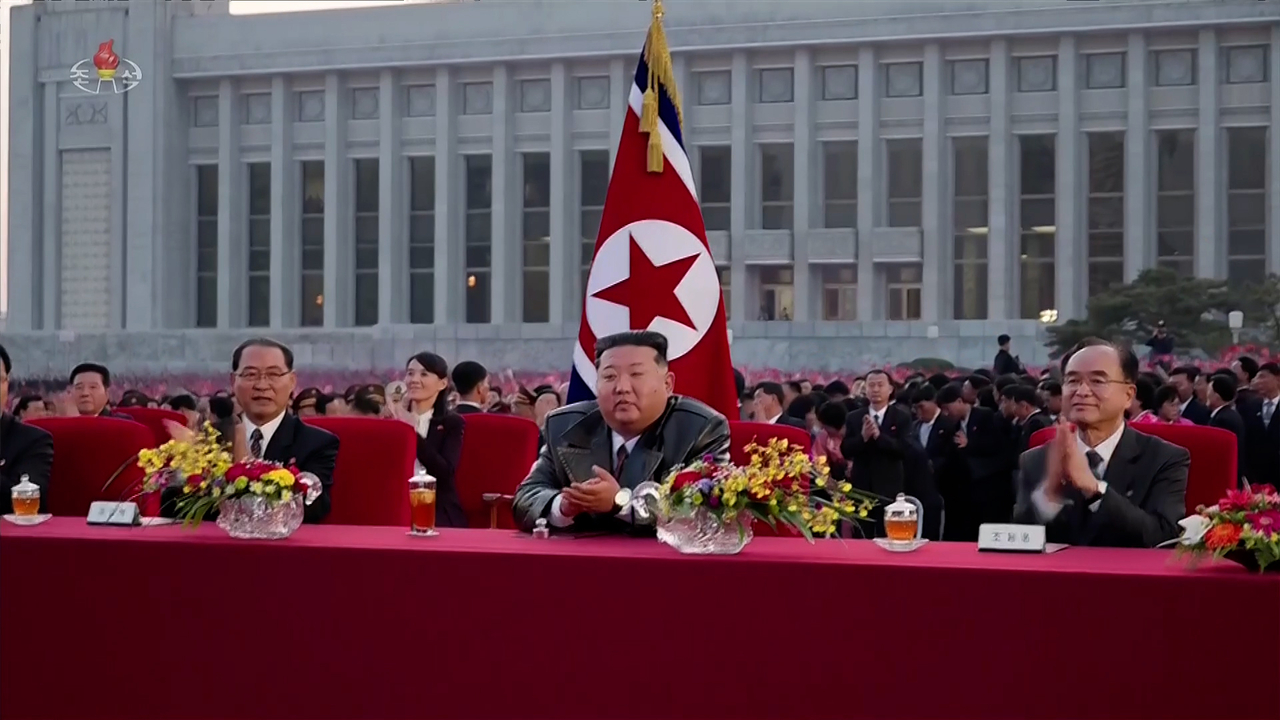
North Korean leader Kim Jong-un unveiled the plan Monday during a speech on the second day of the first session of the newly-elected 15th Supreme People's Assembly, according to the Korean Central News Agency on Tuesday.
Kim said the move is aimed at “further solidifying and developing our legal and social systems by revamping legal regulations and establishing more effective and practical organizational systems to guarantee national security and social stability.”
The assembly is expected to formally review the introduction of the “police system” at a future session.
He described the police system as an “essential” for state governance, stressing the need to elevate public order management to a higher level.
Kim also called for thorough preparations to reorganize existing internal security forces into a police structure once the system is formally adopted, signaling that the Ministry of Social Security — which currently handles law enforcement — could be transformed into a police body.
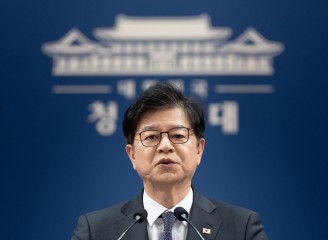
An official at Seoul’s Unification Ministry, requesting anonymity, says the move may reflect Pyongyang’s effort to adopt institutional frameworks common in other countries, potentially signaling an attempt to shed its image as an isolated state.
In a related development, North Korea has recently renamed the Ministry of State Security — responsible for monitoring and suppressing dissent — as the “State Information Bureau." The Unification Ministry official believes the change is intended both to strengthen intelligence functions and to project the image of a “normal state" as well.
Experts say these moves point to a broader effort to institutionalize governance under legal frameworks.
“Through emphasizing rule-based administration, introducing a police system, and reorganizing sectoral laws, North Korea appears to be signaling its intent to operate the state within a legal system rather than through ad hoc measures,” said Lim Eul-chul of the Institute for Far Eastern Studies.
mkjung@heraldcorp.com


![[Legal updates in Korea] New insurance mandate protects firefighters on the job](https://wimg.heraldcorp.com/news/cms/2026/10/01/news-p.v1.20261001.76835f19eb424f18814ac3bb65d896a9_T1.jpg?type=h&h=800)