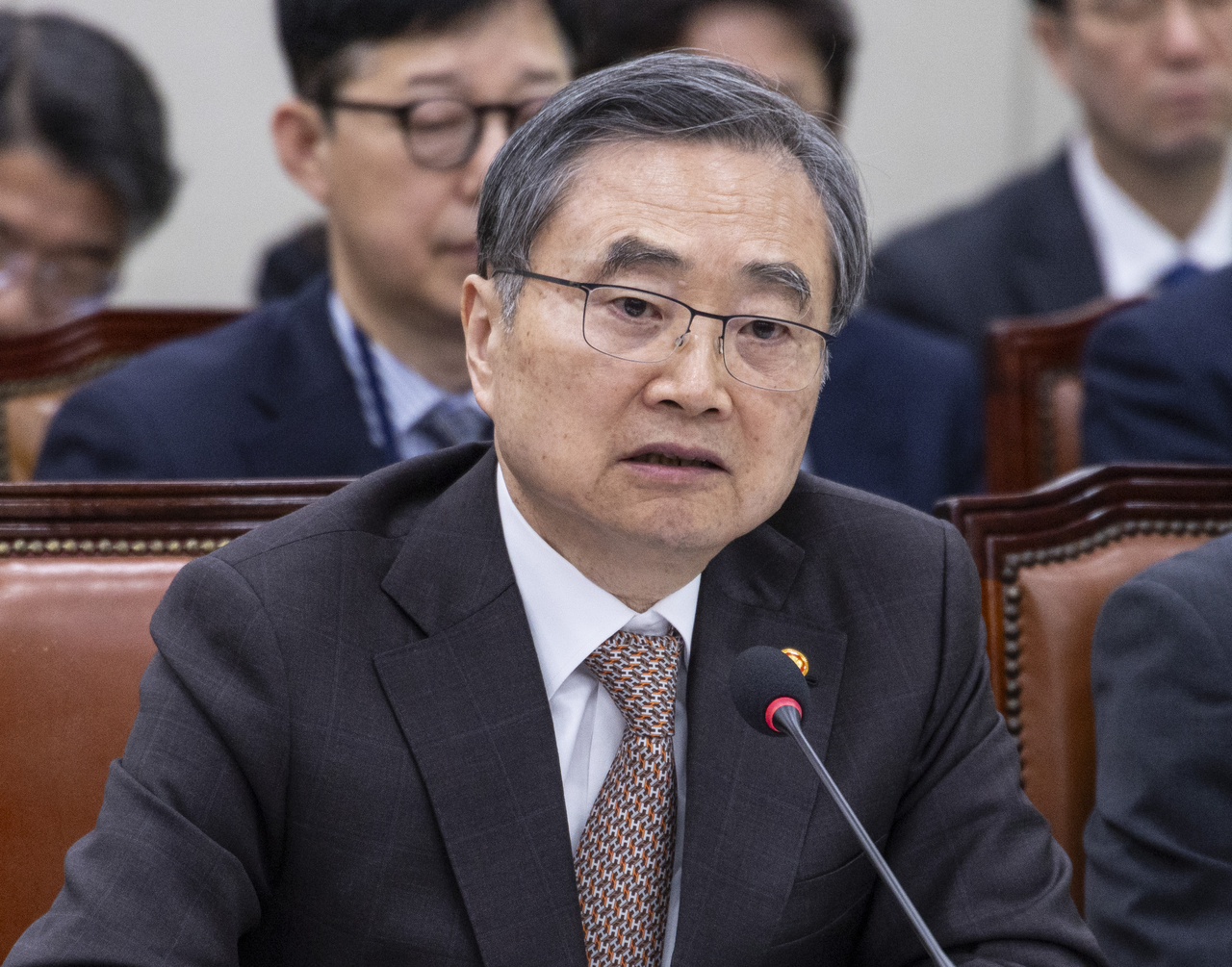
South Korea will send a delegation to Washington for consultations with the United States on uranium enrichment and spent nuclear fuel reprocessing after a planned visit by a US negotiating team to Seoul was delayed by the ongoing war in the Middle East, Foreign Minister Cho Hyun and officials said Friday.
“The schedule had already been delayed due to logistical issues, and the outbreak of the war made further delay unavoidable,” Cho said during an emergency parliamentary session of the National Assembly’s Foreign Affairs and Unification Committee. “After close consultations with the US side, we agreed that our team would visit Washington first.”
A senior Foreign Ministry official said earlier that a planned visit by a US delegation to Seoul — expected in late February or early March — had been postponed as Washington focuses on escalating tensions in the Middle East.
The upcoming talks will be conducted by a government task force on nuclear cooperation led by Rim Kap-soo, South Korea’s ambassador to Romania, according to the Foreign Ministry. The consultations will focus on issues related to uranium enrichment and spent nuclear fuel reprocessing.
Officials said the Rim-led team is separate from the broader interagency group handling the overall security “package” negotiations with the US, which include discussions on nuclear-powered submarines and other defense-related issues.
Cho's remarks come as US officials concentrate on developments following Saturday’s joint US-Israeli strike on Iran, which included the killing of Iranian Supreme Leader Ayatollah Ali Khamenei.
The Trump administration has pursued a so-called “package deal” approach that links security cooperation with economic negotiations. Under agreements reached during last year’s summit between Lee and Trump, Seoul pledged major investment in the US and other economic concessions in return for reduced tariffs on South Korean exports and Washington’s support for key security initiatives. These include South Korea’s push to build nuclear-powered submarines, expanded rights to uranium enrichment and spent fuel reprocessing, the North Korean nuclear issue and the transfer of wartime operational control.
Cho also said South Korea had not received any request from the US for support related to the recent US and Israeli strikes on Iran.
When asked by a lawmaker whether Washington had sought military or nonmilitary assistance from Seoul, Cho responded simply, “No.”
However, Cho emphasized that the allies remain committed to maintaining a strong combined defense posture.
“Even in such circumstances, we are making it clear that the South Korea-US combined defense posture will remain fully intact,” he added.
On the possibility of relocating certain US Forces Korea personnel or equipment to the Middle East, Cho said “It would be difficult for me to confirm matters related to the operational employment of USFK forces."
Cho added Seoul and Washington have been maintaining “close communication” on the matter.
Separately, Unification Minister Chung Dong-young said during the same parliamentary session that the Middle East crisis has increased uncertainty surrounding the prospects for a summit between US President Donald Trump and North Korean leader Kim Jong-un.
“It is true that uncertainty has grown,” Chung said. Still, he expressed hope that issues related to peace and stability on the Korean Peninsula could be discussed during a planned US-China summit.
Some analysts say a potential meeting between Trump and Kim could take place during Trump’s planned visit to China in April, which could provide an opportunity for renewed diplomacy between the two countries.
Meanwhile, Cho said the government is also working to ensure the safe return of South Korean nationals in the Middle East.
Following talks with the UAE’s foreign minister the previous day, Cho said commercial flights from the United Arab Emirates to Incheon were expected to resume starting Friday, with one flight per day planned.
Seoul is also preparing charter flights to evacuate South Koreans from the UAE if necessary. The government is currently identifying citizens wishing to return among the roughly 20,000 South Koreans residing across the Middle East.
“We are assessing how many people wish to return,” Cho said. “There appear to be enough to warrant operating charter flights.”
mkjung@heraldcorp.com