North Korean military forces are gaining unprecedented experience in uncrewed aerial warfare through the ongoing war in Ukraine, exposure that is likely to influence Pyongyang’s future drone development and production, according to a new analysis by a Washington-based research group.
According to a report released by Beyond Parallel, a Center for Strategic and International Studies project that monitors North Korea, North Korean forces are learning from the conflict both as operators and targets of drone missions, while also encountering Iranian-made Shahed uncrewed combat aerial vehicles widely used on the battlefield.
"The unprecedented experience being gained by North Korean military forces during the ongoing war in Ukraine, as both operators and targets of UAV missions and their operational exposure to the Iranian Shahed uncrewed combat aerial vehicles (UCAV), will undoubtedly influence future North Korean UAV development and production," the report read.
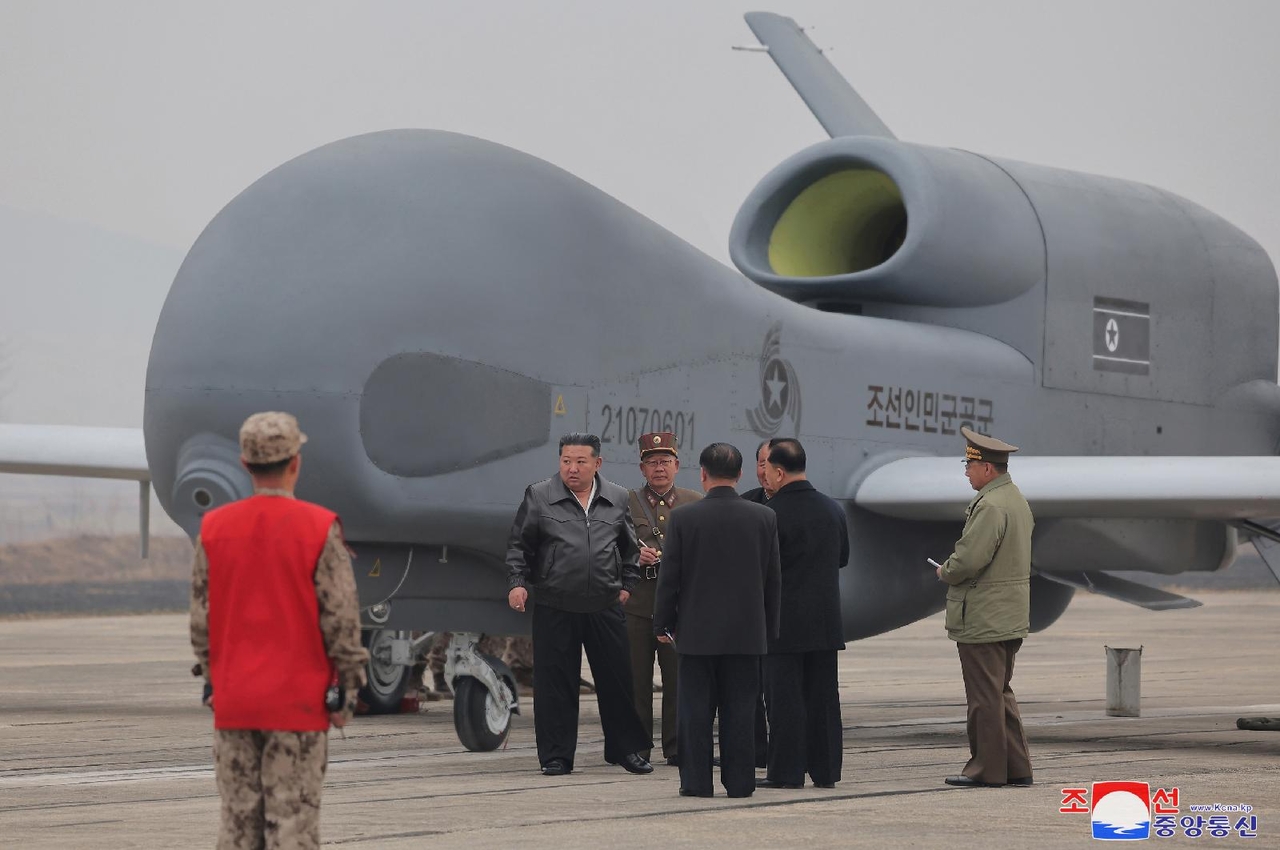
Such operational exposure is expected to inform the development of North Korea’s own uncrewed systems, including its recently unveiled strategic drones, the report said.
However, analysts said it remains unclear when or how such battlefield experience may be incorporated into the Saebyeol-4, Saebyeol-9 or other future North Korean UAV programs.
The assessment came in alongside new satellite imagery showing two North Korean drones positioned together at Panghyon Air Base.
Satellite images taken Feb. 25 showed a Saebyeol-4 and a Saebyeol-9 drone sitting on the taxiway of the base’s UAV research, test, development and engineering facility, with a small number of personnel and equipment nearby.
“This is the first time both UAVs have been observed simultaneously at the facility,” the report said.
The two drones, first unveiled by North Korea in 2023, resemble US-made platforms such as the RQ-4B Global Hawk and MQ-9 Reaper, though analysts say the North Korean versions likely lack comparable advanced sensors and systems.
The reason the aircraft were positioned outside their hangars remains unclear. Researchers suggested the move could indicate ongoing flight and weapons testing or preparation for a possible flyover linked to a political event.
Beyond Parallel noted that satellite imagery over the past two years has revealed minor modifications to the drones’ airframes and changes in their weapons configurations.
Those changes suggest the aircraft are still undergoing development.
“Rather than being fully operational systems, they appear to be prototype or pre-production models undergoing routine RTD&E testing,” the report said.
The Panghyon Air Base, located in North Pyongan Province, has long been associated with North Korea’s aerospace and missile development programs and is believed to serve as a key site for drone testing and research.
mkjung@heraldcorp.com