Plans to launch three megacities and elect their leaders in June have hit a snag, pushing the main rival parties into another round of the blame game.
Only the bill for merging Gwangju and the surrounding South Jeolla Province was tabled at the National Assembly's plenary session that started Tuesday, while other similar megacity bills fell short.
The bill for a megacity in South Korea's southwest, which is a liberal stronghold, is likely to be put to a vote later this week, with a series of opposition-led filibusters expected before. However, two other proposed megacities in South Chungcheong Province and North Gyeongsang Province failed to get the green light from the parliament's Legislative and Judiciary Committee on Tuesday, just before the plenary session.
While Prime Minister Kim Min-seok set the timeline for the three bills to the end of February, two of the three megacities face increasingly slimmer chances of being established in time for June's local elections.
The Democratic Party of Korea has laid the blame on political opponents.
Rep. Jung Chung-rae, chair of the ruling Democratic Party, on Wednesday blamed the People Power Party and claimed that the conservative opposition will face the "harsh judgment" of voters, vowing to continue the merger push.
However, incumbent leaders of Daejeon and South Chungcheong Province, affiliated with the conservative People Power Party, said the Democratic Party is to blame.
Conservative Daejeon Mayor Lee Jang-woo argued in a press conference Wednesday that his party had never opposed a megacity plan. Instead, he blamed the Democratic Party for coming up with "a ridiculous bill."
Kim Tae-heum, the right-leaning governor of South Chungcheong Province, echoed the Daejeon mayor, saying that the bill concerning the region "lacked key elements," such as ways to ensure financial support and empowerment of the local government, and instead was filled with vague language to obscure commitment.
Kim's remarks echoed People Power Party Floor Leader Rep. Song Eon-seog. In a Facebook post on Tuesday, he pointed out that, unlike the megacity bill for Gwangju that detailed basic plans and regulatory exemptions for strategic industries such as artificial intelligence and energy, as well as ways to ensure the autonomy of the local government, other megacity bills related to the expansion of Daejeon and Daegu lacked corresponding details.
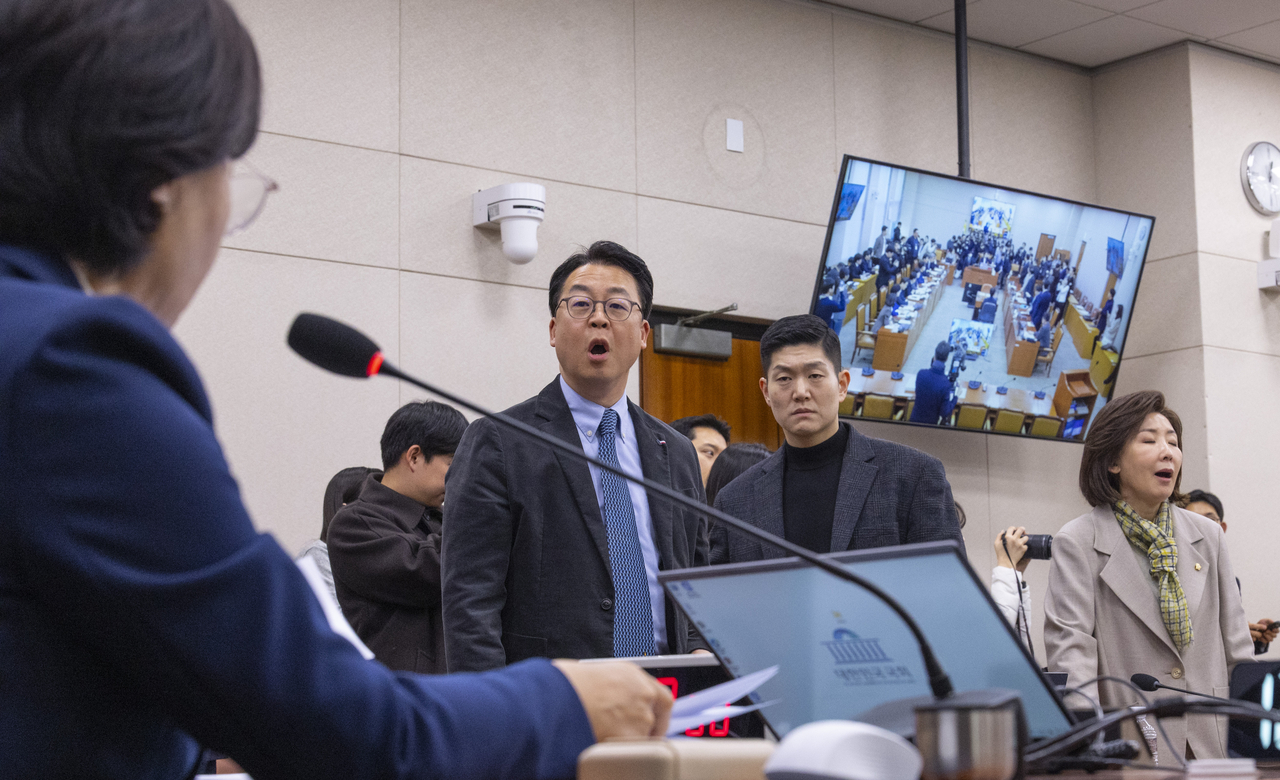
This came as the Legislation and Judiciary Committee, chaired by the Democratic Party's Rep. Choo Mi-ae, selectively approved a megacity bill for Gwangju.
Halting the progress of the other two megacity bills, Choo said the committee would prioritize the integration of Gwangju and South Jeolla Province because it faced no opposition from residents.
Following the decision, President Lee Jae Myung said on his X account Tuesday that the merger "cannot be unilaterally pushed through without sufficient consensus," citing opposition from the People Power Party and local council. Lee, in December, had floated the idea of regional integration to achieve balanced national growth and tackle economic polarization in the Greater Seoul area, which includes Incheon and Gyeonggi Province.
In January, Prime Minister Kim suggested that a new megacity be granted up to 20 trillion won ($14 billion) in state budget support over four years and "special status" equivalent to Seoul. At the time, the expansions of Daejeon and Gwangju were high on the agenda.
Conservative lawmakers joined the bandwagon, suggesting the integration of Daegu and North Gyeongsang Province in the southeast, which is a conservative stronghold. The plan to turn Daegu into a megacity, however, faced opposition from Daegu councilors on Monday, as they called for more binding commitments to central government support and local autonomy.
Rep. Joo Ho-young, a conservative heavyweight who has expressed his intention to run in the Daegu mayoral election, said in a statement Tuesday that both the Democratic Party and the People Power Party are liable.
He criticized the Democratic Party for "instigating regional division" by showering their political stronghold with privileges, adding that the People Power Party "had given up the future of regions (yearning for government support) while using it as a bargaining chip."
consnow@heraldcorp.com