North acknowledges Seoul's preventive steps over drone incursions, but signals tougher border stance
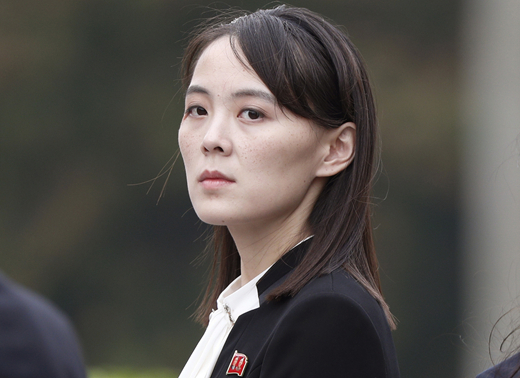
Seoul on Thursday expressed hope for easing tensions and advancing peaceful coexistence with Pyongyang, following a statement by Kim Yo-jong — the sister of North Korean leader Kim Jong-un — regarding the unification minister's expression of regret and suggestion of preventive steps over a recent drone incident.
"In response (to Kim Yo-jong's statement), the government hopes the two Koreas will move toward peaceful coexistence and shared growth," a presidential office official said. "We urge both sides to refrain from actions that heighten tensions in border areas and to work together to build peace."
In a separate statement, the Unification Ministry said it "takes note of North Korea's swift response" to Seoul's expression of regret and its pledge to prevent a recurrence.
"The preventive measures announced yesterday by Unification Minister Chung Dong-young are intended to safeguard the safety and peace of both Koreas," the ministry said, adding that the government would implement them responsibly.
Earlier in the day, Kim Yo-jong, vice department director of the Workers' Party of Korea, said in a statement carried by the state-run Korean Central News Agency that she highly appreciated Seoul's commitment to preventing a recurrence. However, she warned that "the borderline with the enemy should be firmly guarded" and that the South would face "terrible consequences" if such a "violation" happens again.
"Our military leadership will take a step for heightening vigilance in all sectors along the southern border with the ROK," she added, referring to South Korea's official name, the Republic of Korea.
Seoul officials described the exchange as part of efforts to stabilize inter-Korean ties and prevent escalation following the drone controversy, emphasizing dialogue and risk-reduction measures.
Still, the government remained cautious. Asked during a closed-door briefing whether Kim's remarks signaled a conciliatory gesture, a Unification Ministry official said only that the government was "taking note," declining further comment.
South Korea's rival parties clashed over Chung's response and his plan to restore parts of the Sept. 19 inter-Korean military agreement.
Rep. Jang Dong-hyeok, chair of the main opposition People Power Party, called Chung's move "submissive." "The public wants neither a submissive nor an aggressive posture — they want a confident and dignified stance," he said at a supreme council meeting of the party.
The Democratic Party countered that Chung's actions were a "realistic and level-headed judgment" to bolster security and protect public safety.
In a statement issued under the name of spokesperson Rep. Mun Geun-ju, the party said the move reflected the government's intent to manage tensions rather than escalate confrontation, noting that Pyongyang had positively assessed Seoul's willingness to restore parts of the military agreement.
The party also accused the previous Yoon Suk Yeol administration and the People Power Party of heightening tensions by effectively nullifying the Sept. 19 pact. Labeling current efforts as "subservience" politicizes security, it said. "What is needed now is not harsher rhetoric, but mature judgment and institutional capacity to control the crisis."
The exchange came a day after Chung said Seoul is seeking to partially revive the 2018 inter-Korean military agreement — including reinstating no-fly zones — to prevent further civilian drone incursions into the North.
Chung said he had formally expressed regret to Pyongyang over Jan. 4 drone flights by South Korean civilians, now under investigation by a joint military-police task force. Authorities found that three civilians had sent drones into the North on four occasions since the Lee Jae Myung administration took office in early June 2025.
He added that Seoul plans to tighten penalties for illegal drone flights and will review restoring parts of the Sept. 19 agreement in consultation with relevant ministries and the military to reduce accidental clashes and build trust.
The Ministry of National Defense said it is reviewing a partial reinstatement of the pact, including no-fly zones, in coordination with other ministries and the United States.
The agreement was effectively suspended after North Korea scrapped it in November 2023, following Seoul's earlier suspension of the no-fly zone clause in response to Pyongyang's claimed military spy satellite launch. Chung's remarks come as North Korea prepares to convene a key party congress expected to set policy priorities for the next five years.
Yang Moo-jin, a professor at the University of North Korean Studies, said Kim Yo-jong's statement suggests continued, though fragile, communication between the two Koreas.
Pyongyang's swift reaction indicates it is closely tracking Seoul's messaging, reflecting "unstable but indirect communication," he said, and showing that the North is "closely monitoring, in real time, the South's consistent messages."
Yang added that Kim's remarks suggest Seoul's emphasis on easing tensions and pursuing peaceful coexistence has been acknowledged. "The South's sincerity regarding peaceful coexistence and the end of hostile acts was manifested through Kim Yo-jong's statement," he said.
However, Yang cautioned against reading too deeply. "These are not new expressions, so there is no need to overreact," he said, stressing the importance of demonstrating "our consistent will and preemptive measures for peace" to sustain trust-building efforts.
mkjung@heraldcorp.com