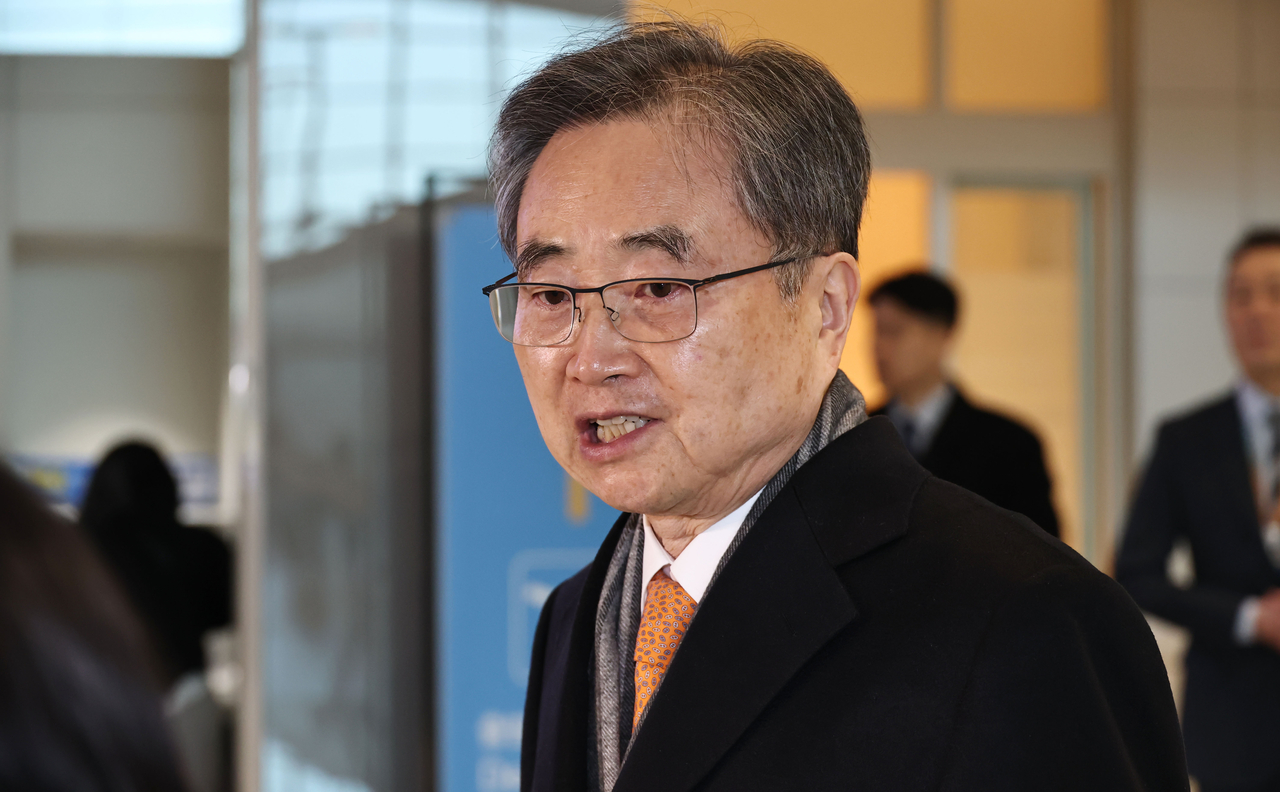
Seoul will provide a detailed explanation of its parliamentary procedures to Washington amid ongoing tariff tensions, Foreign Minister Cho Hyun said Tuesday as he departed for the US.
Cho is set to meet with US Secretary of State Marco Rubio and attend a US-hosted ministerial meeting on critical minerals.
“[We will] clearly explain our position and seek understanding from the US side,” Cho said, referring to Washington’s concerns over delays in legislation related to South Korea’s investment commitments.
“Our agreement between the two governments is being pursued through legislation in accordance with National Assembly procedures," Cho said, emphasizing that the issue does not constitute a violation of bilateral agreements.
According to Seoul’s Foreign Ministry, Cho will meet Rubio on Tuesday afternoon (Washington time) on the sidelines of the ministerial meeting set for Wednesday. The talks will mark the first in-person meeting between the two foreign ministers since South Korea and the US released a joint summit fact sheet on Nov. 14, outlining agreements on trade, investment and supply chain cooperation.
The ministry said the two sides plan to hold comprehensive discussions on bilateral issues, including ways to accelerate follow-up measures linked to the joint fact sheet.
Cho said he plans to deliver the same message to other senior US government officials and members of Congress. He added that Industry Minister Kim Jung-kwan, who returned to Seoul on Saturday, had informed him by phone that he had “explained Korea’s situation well to US Commerce Secretary Howard Lutnick and received understanding.”
Tariff tensions escalated after US President Donald Trump warned on Jan. 26 that Washington could raise “reciprocal” tariffs on Korean automobiles, timber, pharmaceuticals and other goods from 15 percent to 25 percent, citing delays in the South Korean National Assembly’s handling of a special bill required to implement Seoul’s US investment package.
In response, Cho said the move should not be interpreted as a collapse of the agreement. “It would be more accurate to understand it as a message expressing the hope that implementation can proceed more quickly,” he said.
Cho also dismissed speculation that Washington could be using tariff pressure to delay talks on uranium enrichment and spent fuel reprocessing — security-related commitments included in the joint fact sheet.
“At this stage, such a possibility appears unlikely,” Cho said. “I will work with Secretary Rubio to reach a constructive understanding and move forward with the swift implementation of the joint fact sheet.”
Cho’s visit comes as Seoul has stepped up diplomatic engagement with Washington. Last week, Industry Minister Kim Jung-kwan traveled to the US and held two rounds of talks with Commerce Secretary Howard Lutnick but returned without a breakthrough, saying afterward that the discussions helped resolve what he described as “unnecessary misunderstandings.”
Trade Minister Yeo Han-koo has also remained in Washington since last week, engaging US officials, including Trade Representative Jamieson Greer, to reassure the Trump administration of South Korea’s commitment to its investment pledges.
Against this backdrop, Cho’s meeting with Rubio is drawing attention as the first high-level diplomatic engagement between the two countries since Trump’s tariff warning. Observers say Cho is expected to emphasize Seoul’s efforts to implement the joint summit agreements while explaining the procedural realities facing the National Assembly.
The ruling Democratic Party of Korea has said it aims to pass the special investment bill by late February or early March during an extraordinary parliamentary session. The legislation would lay out procedures for implementing South Korea’s US investment package, including memoranda of understanding and the establishment of a strategic investment fund.
However, observers note that even if the bill is passed, there is no guarantee Washington will suspend or roll back the planned tariff increase, leaving uncertainty over the trajectory of South Korea-US trade relations in the coming weeks.
mkjung@heraldcorp.com