Expert urges Seoul to read broader US strategic shift
The US House of Representatives on Thursday passed a sweeping annual defense policy bill that would prevent the Trump administration from unilaterally reducing the 28,500-strong US Forces Korea, a move observers say underscores both congressional concern about alliance stability and the need for Seoul to assess Washington’s wider strategic recalibration.
The chamber approved the National Defense Authorization Act for fiscal year 2026 in a 312-112 vote, sending the $901 billion measure to the Senate, where it is expected to receive bipartisan support. The legislation bars the administration from using authorized funds to cut the level of USFK personnel unless the Pentagon certifies that such a move serves US national security interests and comes only after appropriate consultations with allies, including South Korea.
The NDAA also restricts expenditures for completing the transition of wartime operational control if it deviates from existing bilateral agreements. A clause limiting unilateral reductions of USFK forces has reemerged in the NDAA for the first time in five years, echoing provisions included during US President Donald Trump’s first term amid worries about sudden shifts in troop posture.
The bill will become law if passed by the Senate and signed by Trump.
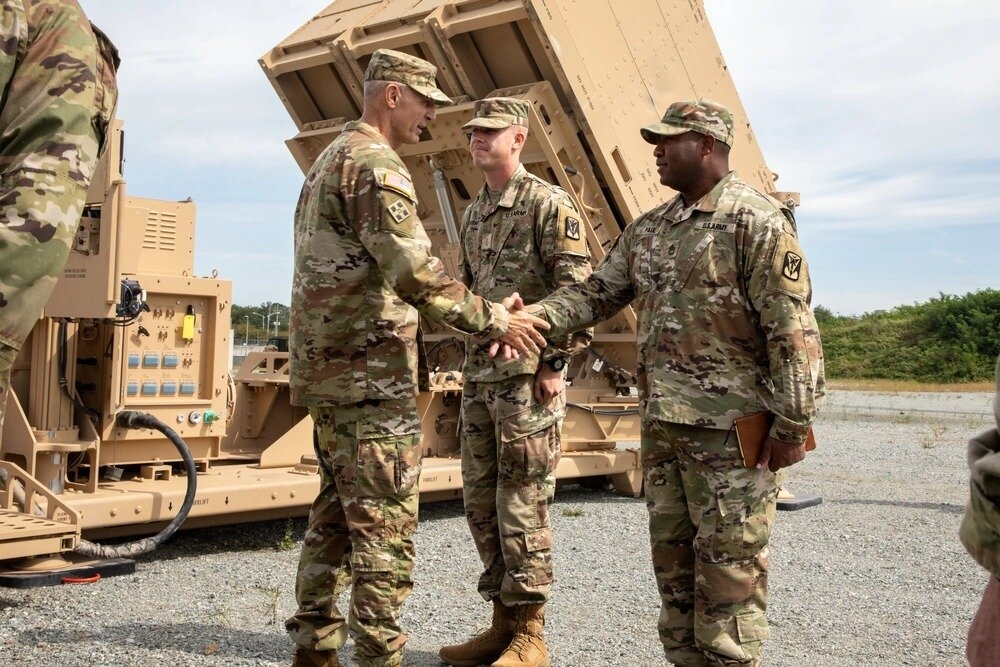
A defense analyst in South Korea pointed out that the combination of NDAA safeguards, shifting US strategic priorities, and congressional criticism of the National Security Strategy underscores a more complex policy environment in which Seoul may need both robust alliance diplomacy and stronger independent defense planning.
Yu Ji-hoon, a research fellow at the Korea Institute for Defense Analyses and former professor of military strategy at the Republic of Korea Naval Academy, said the House passage is “meaningful,” but cautioned that more procedural steps lie ahead.
“He pointed out that the bill still has several procedural steps ahead, including deliberation in the Senate, where additional views from both sides of the aisle could be reflected. Still, the fact that the issue has surfaced in the House and moved forward in this manner is meaningful, he said.
Yu warned that the NDAA should not be viewed in isolation from Washington’s broader strategic posture, particularly as outlined in the new White House national security strategy.
While the NDAA seeks to restrain unilateral adjustments to the US military presence on the Korean Peninsula, the National Security Strategy released last week signals a different set of priorities for the Trump administration. The NSS outlines the White House’s focus on reasserting American influence in the Western Hemisphere, preventing a conflict over Taiwan, and pursuing more explicit “burden-sharing” and “burden-shifting” with allies and partners. In this sense, the NSS has heightened concerns in Seoul that Washington’s long-term strategic direction may favor greater flexibility in force deployments — including on the Korean Peninsula.
“As the NSS shows, the US is no longer trying to lead the entire world as it once did. Instead, it is facing practical constraints and is prioritizing its efforts by region. Naturally, that means US troops stationed overseas will have to be used more flexibly in ways that align with Washington’s own strategic direction,” Yu noted, emphasizing that US force deployment abroad is increasingly shaped by regional prioritization and resource limitations.
He added that what the NSS omits is as important as what it includes.
“The document’s omissions are equally significant. North Korea is not treated as an independent strategic problem, and ‘denuclearization of the Korean Peninsula’ disappears from the text. … For Seoul, this weakens the traditional normative basis of alliance policy and strengthens arguments that South Korea must build far stronger independent capabilities — including SSNs — to ensure deterrence in a more narrowly defined US strategic environment,” Yu assessed.
At a press conference in Washington marking one year since he became the first Korean American elected to the US Senate, Sen. Andy Kim (D-NJ) welcomed the House’s action on the NDAA and reiterated that any USFK drawdown must be coordinated with Seoul.
"I am proud that steps have been taken, hopefully through this NDAA, that will limit this administration's ability to reduce troops on the Korean Peninsula unilaterally, and other steps that we can try to add some stability to the strategic relationship between the US and South Korea,” he said.
"The troop reduction issue should always be something that the US should consult over with South Korea,” he stressed. “That's the point of being strategic allies and I feel strongly about this."
"Any type of effort by this administration to reduce the troop level without partnership with the South Koreans as well as with Congress will be met with strong opposition by me and many others," he added.
Kim also expressed unease over the NSS, criticizing what he described as its deprioritization of the Korean Peninsula and its downgrading of denuclearization goals.
"Certainly, I am concerned about its deprioritization when it comes to the Korean Peninsula," he said, calling the strategy “out of line” with what he considers essential for US national security. He argued that the NSS tries "to reduce America from a global power to a regional power,” and warned that it would lead the US and its allies “down a very dangerous path.”
The NDAA passed by the House authorizes $901 billion in defense spending — $8 billion above the Trump administration’s original request — reflecting congressional consensus on maintaining US military readiness amid intensifying global competition. The bill also includes military aid to Ukraine and measures to support US troops, such as a pay raise and base housing improvements.
While the NDAA sets the policy framework, separate appropriations bills will be needed to fund the programs.
The passage comes as recent joint ROK-US documents have omitted explicit language committing the US to maintaining the current USFK troop level, raising concerns in Seoul that a future force posture adjustment could leave room for reductions. ROK is the acronym for South Korea's official name, the Republic of Korea.
mkjung@heraldcorp.com