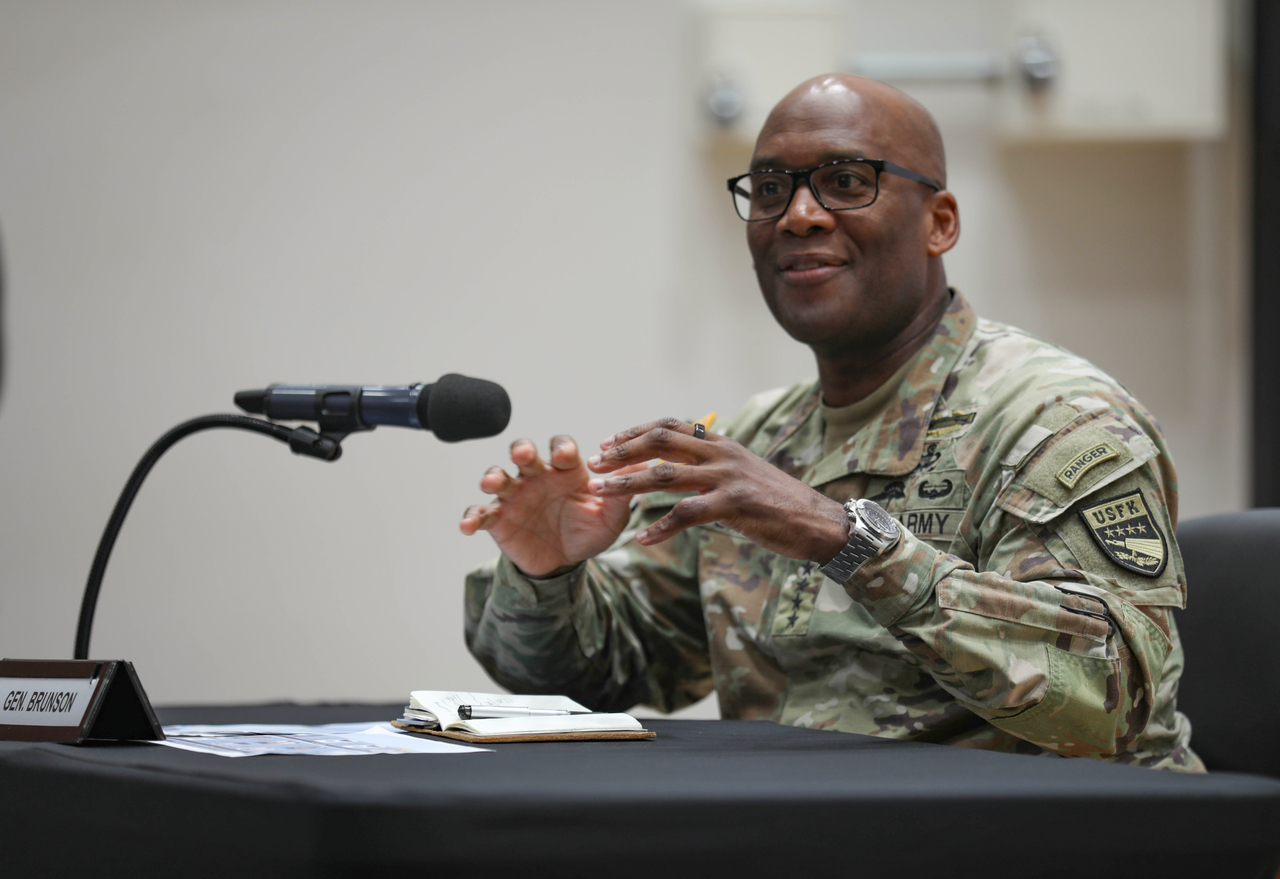
The Korean Peninsula is a central operational hub “inside the defensive perimeter,” not a vulnerable outpost on the edge of Asia, US Forces Korea commander Gen. Xavier Brunson said in a statement to the defense press corps.
In the statement, the USFK commander said the 28,500 US troops stationed here are not “projecting power from afar,” but are already operating from the region where deterrence matters most. The shift, he argued, requires planners in both Seoul and Washington to reassess long-standing assumptions about geography, posture and joint warfighting.
The remarks accompanied an essay posted by USFK on Monday titled “Revealing Hidden Strategic Advantages in the Indo-Pacific.” In it, Brunson turns the traditional north-up map clockwise to present an “east-up” geographic framework, which he says helps illuminate linkages and strategic dynamics that are often overlooked. By reorienting the map, areas south of the peninsula, including Taiwan and the Philippines, rise visually into focus, placing Korea at the center of a wider security arc.
Brunson explained that the point was not to introduce a new label but to correct a persistent misconception.
“For decades, the Korean Peninsula has been described as a forward-deployed area, something exposed or distant,” he said. “But when we shift the perspective, we see that it is actually central: a position of access, reach and influence.”
He believes this reframing should resonate in Seoul, as it underscores that South Korea’s location “is not a vulnerability but an advantage.” Forces deployed here, Brunson added, represent the most tangible form of deterrence against North Korea and serve as the foundation of wider regional stability.
“When you understand that our forces are already inside the defensive perimeter, it changes how you plan,” Brunson said. “It’s not about moving units but about how we think about their positioning.”
According to him, this shift in mindset invites new approaches to sustainment, exercises and wargaming — ones that assume the alliance is already operating within the decisive space rather than preparing to fight toward it. That means deeper logistical synchronization between the two militaries, more fully integrated combined-joint planning, and everyday rehearsal that reinforces standing deterrence.
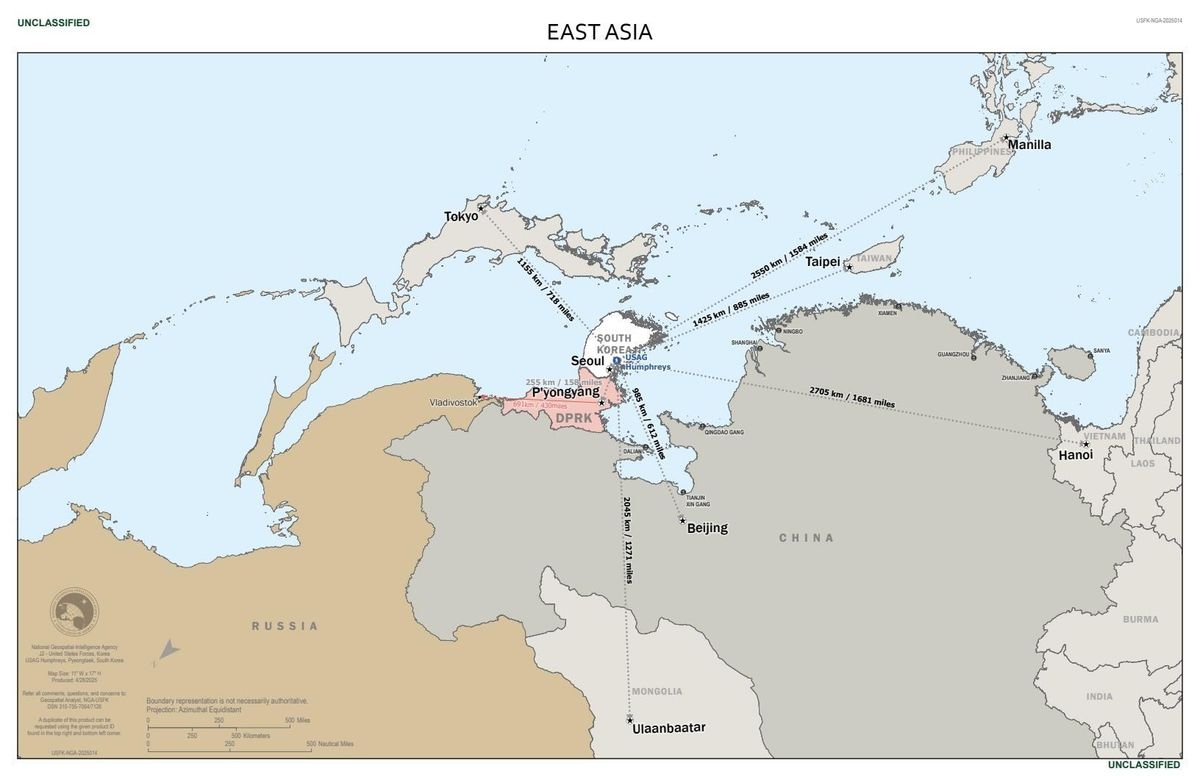
Brunson also highlighted what he described as a “complementary” triangular framework linking South Korea, Japan and the Philippines. This arrangement, he stresses, does not replace or compete with existing bilateral alliances but sits naturally atop them.
“When viewed through the east-up lens, South Korea, Japan and the Philippines form a connected network rather than three separate bilateral lines,” he said.
Each partner, he noted, brings a different form of strategic leverage: South Korea provides central depth, Japan offers technological and maritime reach and the Philippines sits along key southern sea lanes.
The idea, he emphasized, is not about forging a new alliance but recognizing geographic relationships that already exist and finding practical ways to coordinate. “That geometry strengthens the collective ability to preserve stability across the region,” he said, adding that robust deterrence on the peninsula remains the core mission that prevents North Korean aggression and contributes to regional peace.
The east-up framework also highlights Korea’s ability to impose costs on several regional actors simultaneously.
The peninsula’s position allows the alliance to shape behavior “north toward the DPRK, west toward China, and northeast toward Russia” without overextending itself, Brunson said. DPRK refers to North Korea’s official name Democratic People’s Republic of Korea.
“Every action that strengthens deterrence here naturally contributes to stability beyond it,” he said.
As Seoul prepares for the eventual transition of wartime operational control, Brunson said the peninsula-as-pivot framework reinforces the continued value of Korea’s geography when paired with interoperable, capable allied forces.
OPCON transition, he said, will involve refining command relationships and deepening cross-domain linkages, while keeping the alliance unified and fully capable of deterring and defeating North Korean aggression.
Brunson also echoed US Defense Secretary Pete Hegseth’s call for greater flexibility in responding to regional contingencies, pointing to an environment where threats evolve across domains. He cited the North’s advancing missile arsenal and broader state and non-state challenges as key concerns.
“Flexibility is the currency of readiness,” he said. The east-up framework, he added, helps commanders better visualize how threats intersect and where proximity provides opportunities rather than risks.
The concept, he noted, has drawn “genuine interest” from officials in Washington, Seoul and elsewhere in the region. “They see that this perspective clarifies the peninsula’s central role within the broader theater,” he said.
“It is not about shifting focus away from Korea; it is about recognizing that the deterrence we maintain here extends outward to sustain peace across the Indo-Pacific.”
mkjung@heraldcorp.com