Georgia raid detaining 300 workers sparks calls for new visa program, bilateral reform
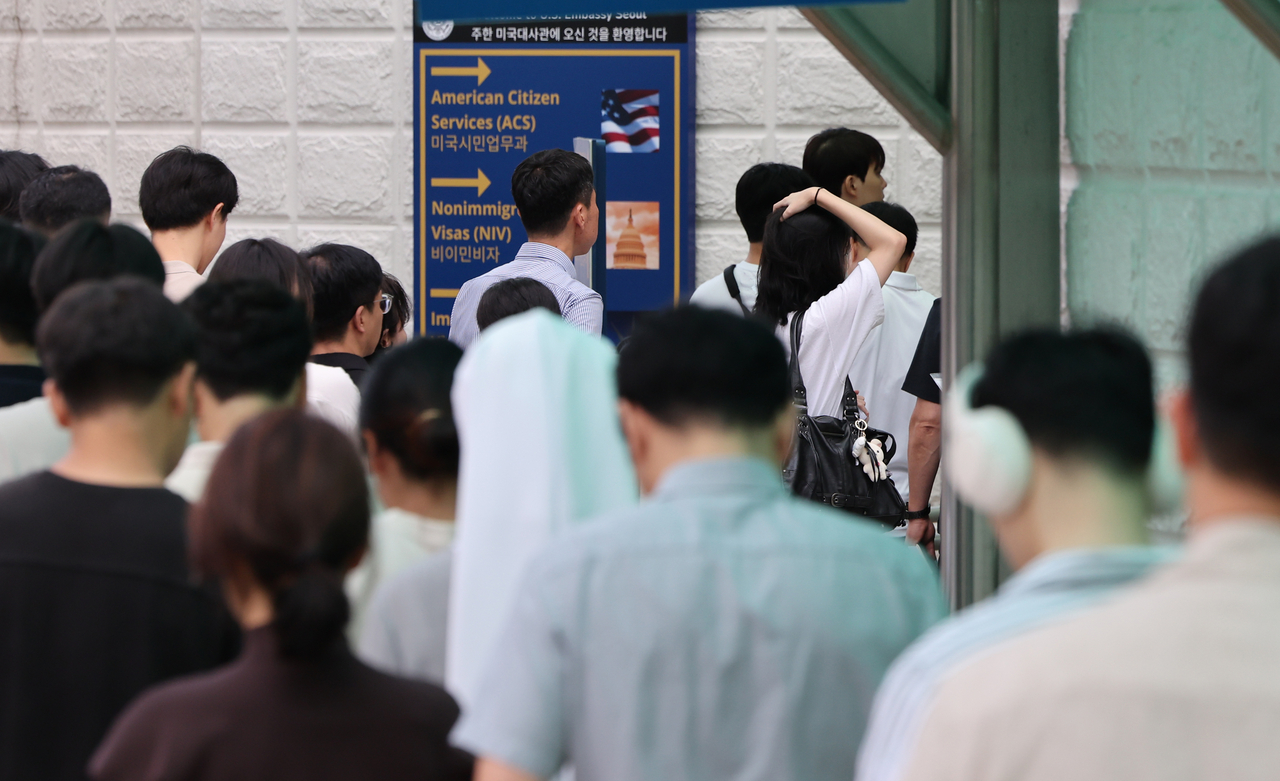
Korean companies are rushing to revise US business travel plans and tighten internal guidelines after last week’s immigration raid at a battery plant under construction in Georgia, where more than 300 Korean workers were detained.
Caught off guard by the unexpected crackdown, Korean businesses and experts are urging the government to use this moment to push for a proper visa framework and secure a quota for Korean professionals working in the US.
On Monday, the Ministry of Trade, Industry and Energy held an emergency meeting with major US investors, including Hyundai Motor Group, LG Energy Solution, SK On, Samsung Electronics and SK hynix, to review the visa issue.
At the meeting, corporate representatives expressed hopes that the Korean government would make visa reforms a priority in bilateral talks with Washington to ensure stability for Korea's US investments.
“Visa issues should not become an obstacle for companies doing business in the US, but they all face the same challenge. Firms want to move quickly, and they cannot simply rely on expatriate visas that take months to be issued,” an industry official said on the condition of anonymity. “Even for corporate work and investments, many employees are still entering the US on ESTA or other short-term visas.”
To work legally in the US, a specialty occupation H-1B visa is required. But since issuance is highly restricted — with only about 2,000 granted to Koreans annually out of roughly 85,000 in total — and the process is lengthy, Korean companies have fallen into the customary practice of sending employees on short-term B-1 business visas or through the Electronic System for Travel Authorization, or ESTA.
Of the 475 workers detained at the joint venture site in Georgia run by LG Energy Solution and Hyundai Motor, about 300 reportedly held B-1 visas or ESTA permits.
“The subcontractor staff who were detained were not doing basic construction but installing and inspecting line equipment, fixing defects and breakdowns. They are often called in to urgently recalibrate and adjust conditions — work that lasts less than a couple of days. Who is going to apply for an H-1B or employment visa just for that?” another industry official said on condition of anonymity.
“US President Trump himself has been pushing to get these plants built quickly, yet visas are not being issued.”
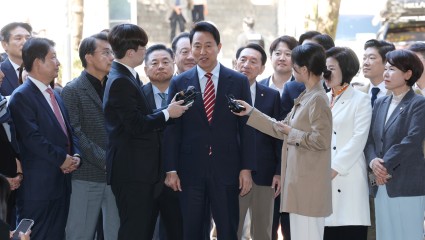
In a policy discussion with the ruling Democratic Party of Korea on Monday, SK Group Chairman Chey Tae-won, who also heads the Korea Chamber of Commerce and Industry, stressed the need for a suitable visa program to ensure the smooth business operations of Korean companies in the US.
“To ensure the safety of Koreans in the US and the smooth business operations of our companies, measures to prevent a recurrence, such as securing a visa quota, are urgently needed,” Chey said.
The proposed visa quota refers to the creation of a separate employment visa (E-4) program for Korean workers. The US already allocates annual professional visa quotas to free trade agreement partners such as Mexico and Canada (unlimited), Singapore (5,400) and Australia (10,500).
Seoul’s Foreign Ministry has also been pushing for US legislation to establish a new E-4 visa program that would allow up to 15,000 Korean professionals to work in the country, but the bill has yet to clear Congress.
“Visa issues have long been raised in connection with Korean companies’ investments in the US and remain an ongoing process. But since this is an immigration matter that requires congressional action, it is not something that can be resolved solely as a trade issue at the government level,” a senior official at the Ministry of Trade, Industry and Energy said.
Kim Tae-hwang, an international trade professor at Myongji University, stressed that the Korean government should push harder in visa negotiations.
“Neither the US nor Korea would want this issue to escalate, so it is likely to pass for now. But since the recent crackdown stemmed from a Georgia political candidate's filing, similar risks will continue to rise,” Kim said.
“The Korean government should use this incident to press the US to allow Korean technical personnel to obtain visas. These workers are not the kind of people who cause problems with drugs or guns, and companies are not asking to bring in 10,000 workers at a time — just a few hundred or a few thousand. Korea must secure proper visa programs to ensure access to the US market.”
In 2023, Korea emerged as the largest foreign investor in the US, with commitments totaling $21.5 billion. As part of ongoing tariff negotiations, Seoul has pledged to invest a massive $350 billion -- an amount equivalent to 18.7 percent of the nation's nominal GDP. Resolving visa issues is viewed as urgent to safeguard bilateral industrial and business cooperation.
herim@heraldcorp.com
hyejin2@heraldcorp.com
forestjs@heraldcorp.com