South Korea’s Foreign Minister nominee Cho Hyun said Tuesday that Seoul and Washington have yet to hold any discussions on the possibility of withdrawing or downsizing the 28,500-strong US Forces Korea.
“The issues (related to the withdrawal or downsizing of the USFK) weren’t discussed at all,” Cho said in a document filed with the National Assembly’s Foreign Affairs and Unification Committee ahead of his parliamentary confirmation hearing.
Cho’s remark addresses the reports in recent months that the Donald Trump administration seeks to adjust the role of the USFK to focus on deterring threats from China.
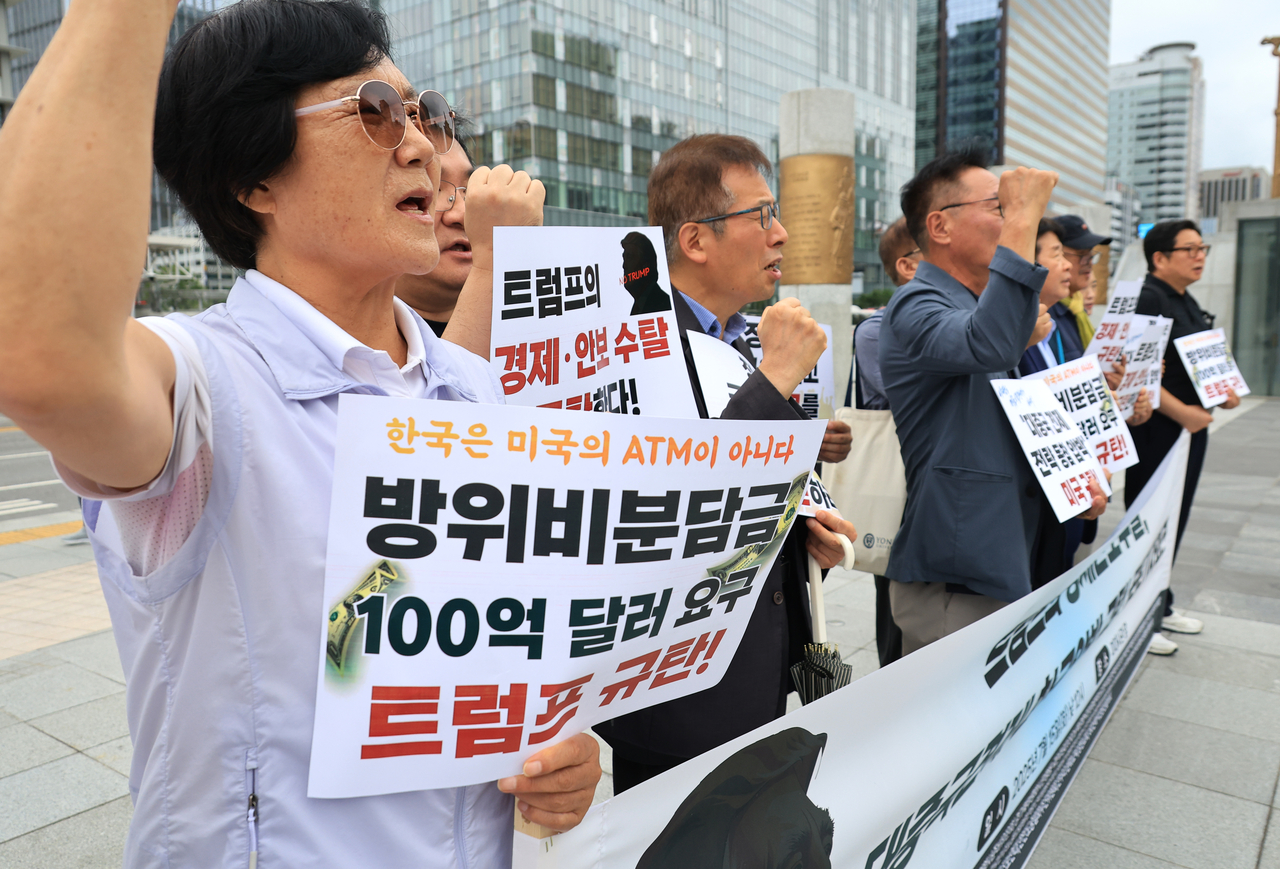
Aligned with its goal, the Trump administration has been ramping up its demand that its allies and partners increase defense spending. It added that South Korea and other Asian allies are subject to the new “global standard” of spending 5 percent of their gross domestic product on defense. The North Atlantic Treaty Organization member states recently agreed to raise their defense spending target to 5 percent of GDP from the current 2 percent by 2035.
Pointing to Washington’s demand and growing pressure against Seoul to shoulder more defense costs in maintaining the USFK on the peninsula, Cho reiterated the Foreign Ministry’s stance that the latest South Korea-US defense cost-sharing deal for the 2026-2030 period should be upheld.
“Our government’s stance is that the 12th Special Measures Agreement, which was effectively agreed upon and is in effect, is not subject to renegotiation,” Cho said. “We plan to actively explain to the US about the extensive contribution (that South Korea) has continuously expanded for the alliance, including the cost of maintaining US troops (on the peninsula).”
Seoul is to pay 1.52 trillion won ($1.1 billion) next year for the stationing of the USFK here, under the 12th SMA signed with Washington during the previous Joe Biden administration. The figure is up 1.4 trillion won this year.
The nominee pledged to advance the decades-old South Korea-US alliance by establishing a joint future-oriented vision as well as pursuing cooperation that would be mutually beneficial.
Cho indirectly called the preceding Yoon Suk Yeol administration’s North Korea policy, which focused on “establishing peace through strength,” a failure.
“Technically, no progress was made on resolving the North’s nuclear issues, as the North’s nuclear and missile capabilities became more advanced with an increase in missile provocations,” the nominee pointed out.
Cho said that the Lee Jae Myung administration will deal with the North’s nuclear issues by reviving inter-Korean dialogue and building trust with Pyongyang.
mkjung@heraldcorp.com