Synthetic acts such as Seoria, H3arus test whether K-pop fandom can form around idols with no human performer behind the character
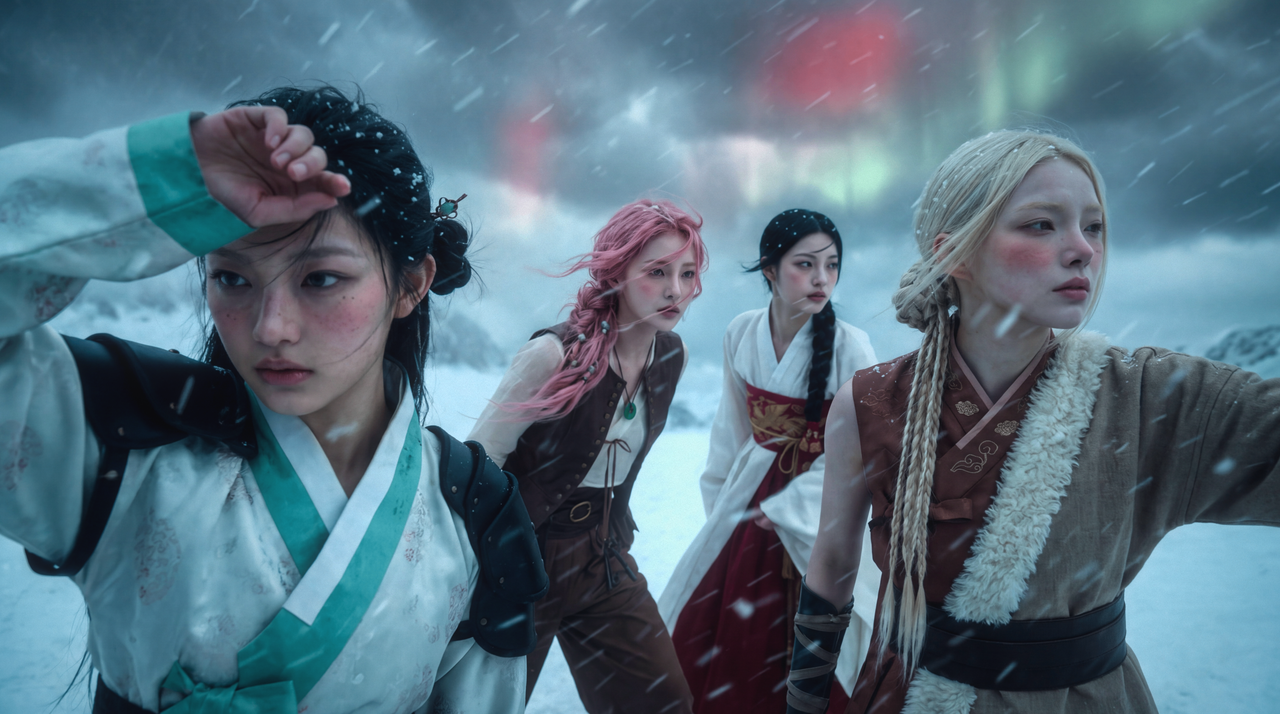
When four-member girl group Seoria appears in a music video, performs choreography, posts content or features in advertisements, there is no singer, dancer or trainee standing behind the characters.
The members themselves — their faces, voices and performances — are generated using artificial intelligence.
Seoria, which debuted in August with “Burning,” is one of a growing number of AI-generated acts testing whether K-pop can move beyond virtual idols like Plave that have already become an established part of the industry.
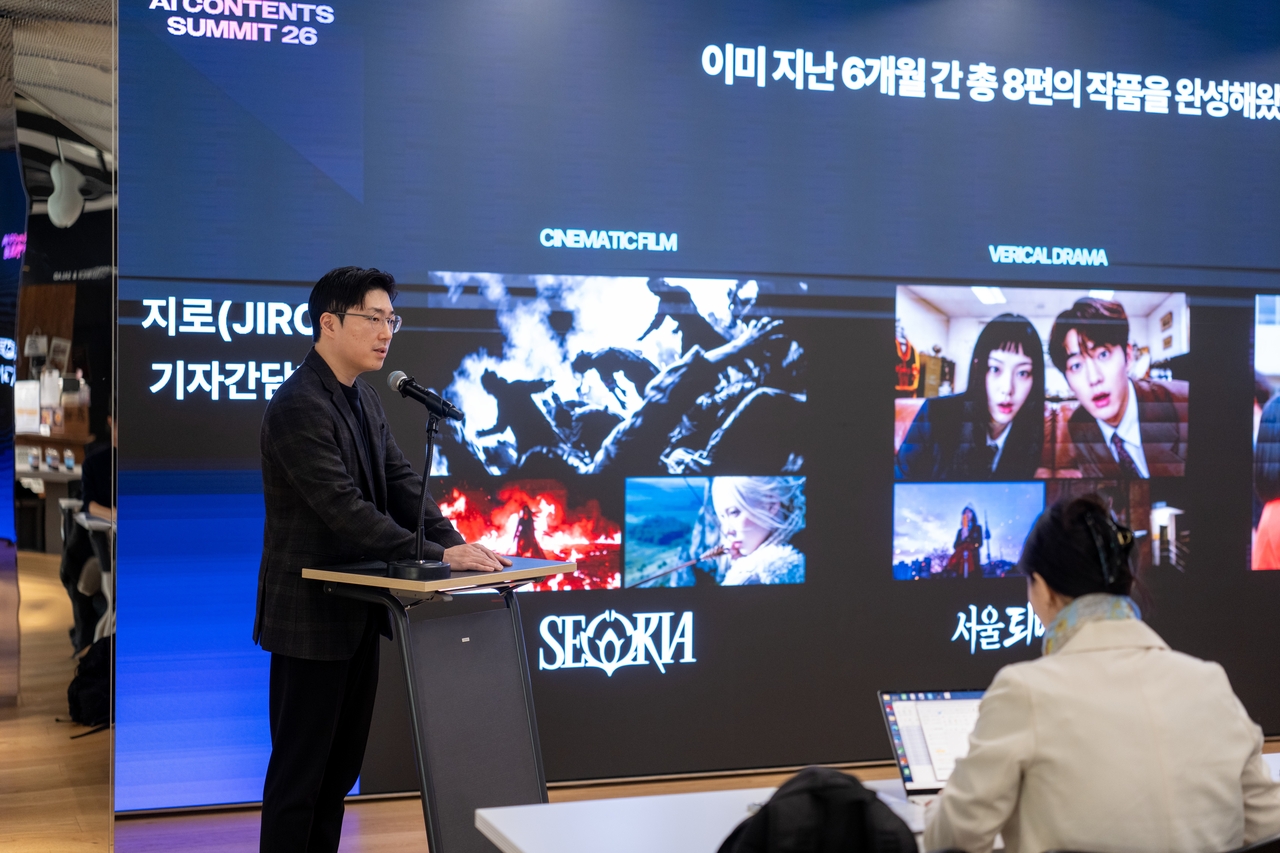
Generative AI company Jiro introduced AI girl group Seoria during a press briefing in Seoul on Tuesday as its first original AI entertainment property and a showcase for what could be created using its AI platform, Dropshot AI.
“We wanted to make the most difficult thing possible,” Hwang Gil-hwan, co-CEO of Jiro, said, adding that the company wanted to demonstrate firsthand how far its technology could be pushed. “Creating a person — and, in particular, creating an attractive person — is an extremely difficult task.”
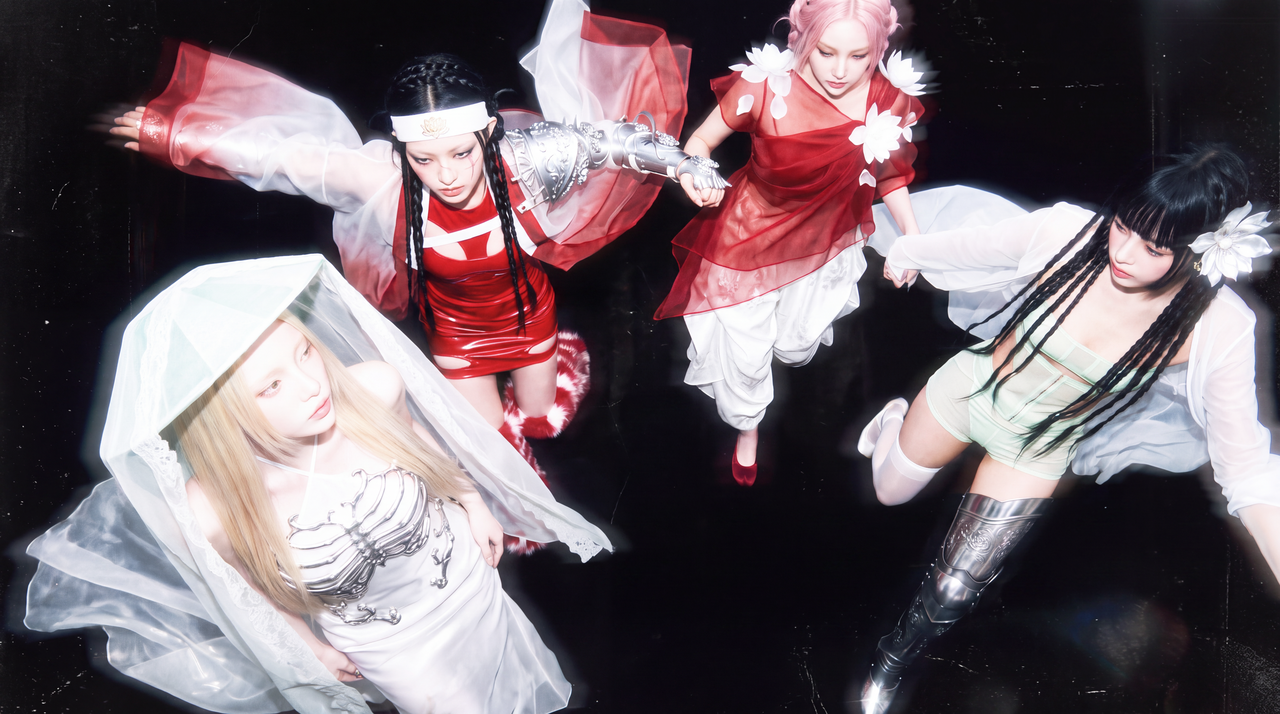
For Jiro, that difficulty was part of the point. The company spent four months taking Seoria from initial concept to debut, generating around 5,000 character images and tens of thousands of video clips while testing whether its platform could maintain consistent, humanlike characters across different content.
At the same time, Jiro built Seoria much like a conventional K-pop act, giving its four members — Riye, Cora, Iseol and Freya — distinct personalities, positions and a fantasy universe inspired by a legend about a secret female warrior group from the Goryeo Kingdom (918-1392). It also produced album artwork, a custom typeface, dance challenges, variety-style videos and behind-the-scenes content, just like any other K-pop group active today.
The early response has been stronger than Jiro expected. The company said Seoria’s video content had accumulated 2.54 million views as of early November, including 1.08 million views for its debut music video. In October, the group landed its first brand collaboration with athleisure company Andar, appearing in promotional content tied to the brand’s Seongsu-dong pop-up.
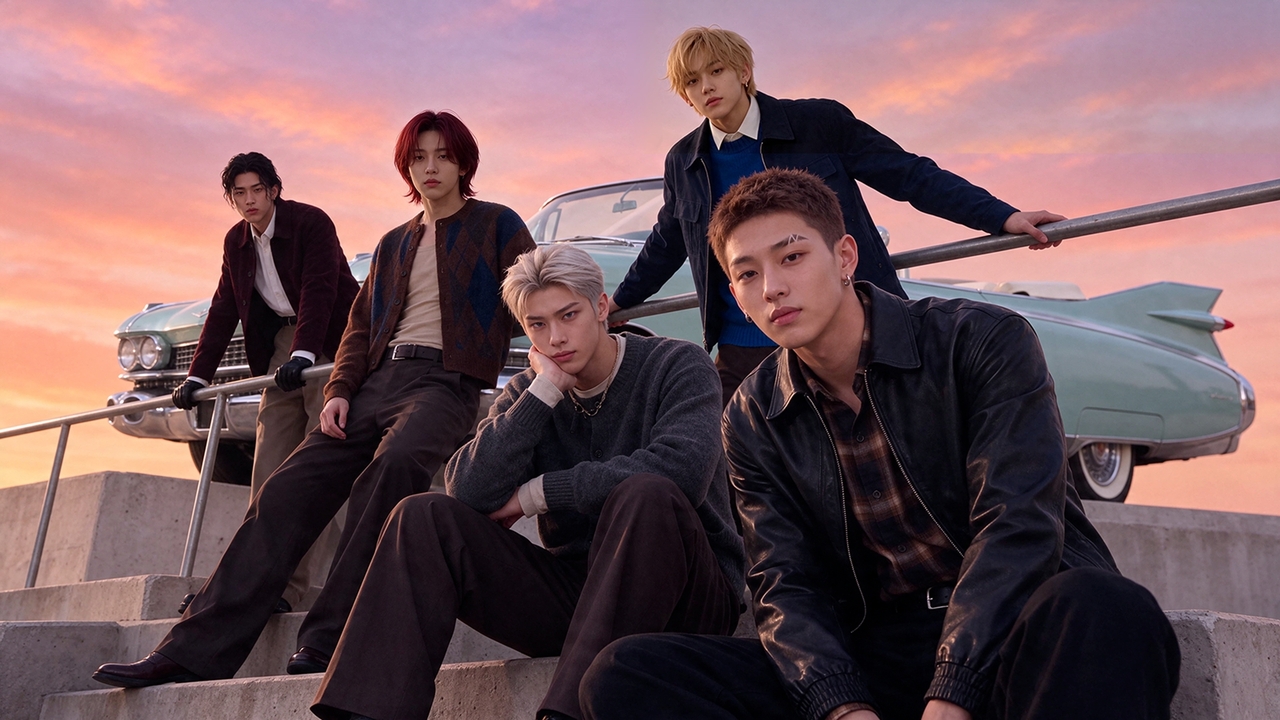
Seoria is not the only fully AI-generated act beginning to appear in K-pop. Three member AI act SisiSi Band debuted in September, while five-member AI boy group H3arus debuted Sunday with “Crush,” built around a storyline in which secret agents disguise themselves as idols.
Their emergence follows the steady rise of so-called virtual idols, which have already shown that fans can form strong attachments to performers who are represented by digital characters.
Plave, the most prominent example, is a group of real people who perform through animated avatars they control using motion-capture technology. The members sing, compose, choreograph and communicate with fans themselves, even though their real identities are hidden.
Fully AI-generated idols, however, are different. There is no hidden performer whose voice, movement or personality is being projected through an avatar.
For their creators, that distinction has potential advantages.
“AI idols are not bound by the same spatial, physical or time constraints as human performers, opening up different possibilities for how they can operate,” Jiro co-CEO Lee Jae-seok said, adding that the company plans to use such advantages to continue releasing music, while expanding Seoria's reach to formats including animation, films, live streaming, advertising and other content.
Music critic Lim Hee-yun pointed to other potential advantages, saying AI idols face none of the “human risks” associated with private-life controversies or military enlistment, while content can be produced rapidly and without the usual limitations of time, place or language.
However, major limitations remain, such as whether fans will stay emotionally invested in an artist they know does not exist — particularly in an industry where parasocial bonds and a sense of personal connection between fans and idols play a central role in building and sustaining fandoms.
“K-pop fandoms form deep bonds through personal interaction with artists,” Lim said. “Whether a being created 100 percent by AI can move beyond temporary curiosity and maintain a loyal fandom over the long term is still something that has to be proven.”
lee.jungjoo@heraldcorp.com