Rise of AI-generated vocals highlights gaps in copyright registration, disclosure, methods for verifying human creative input
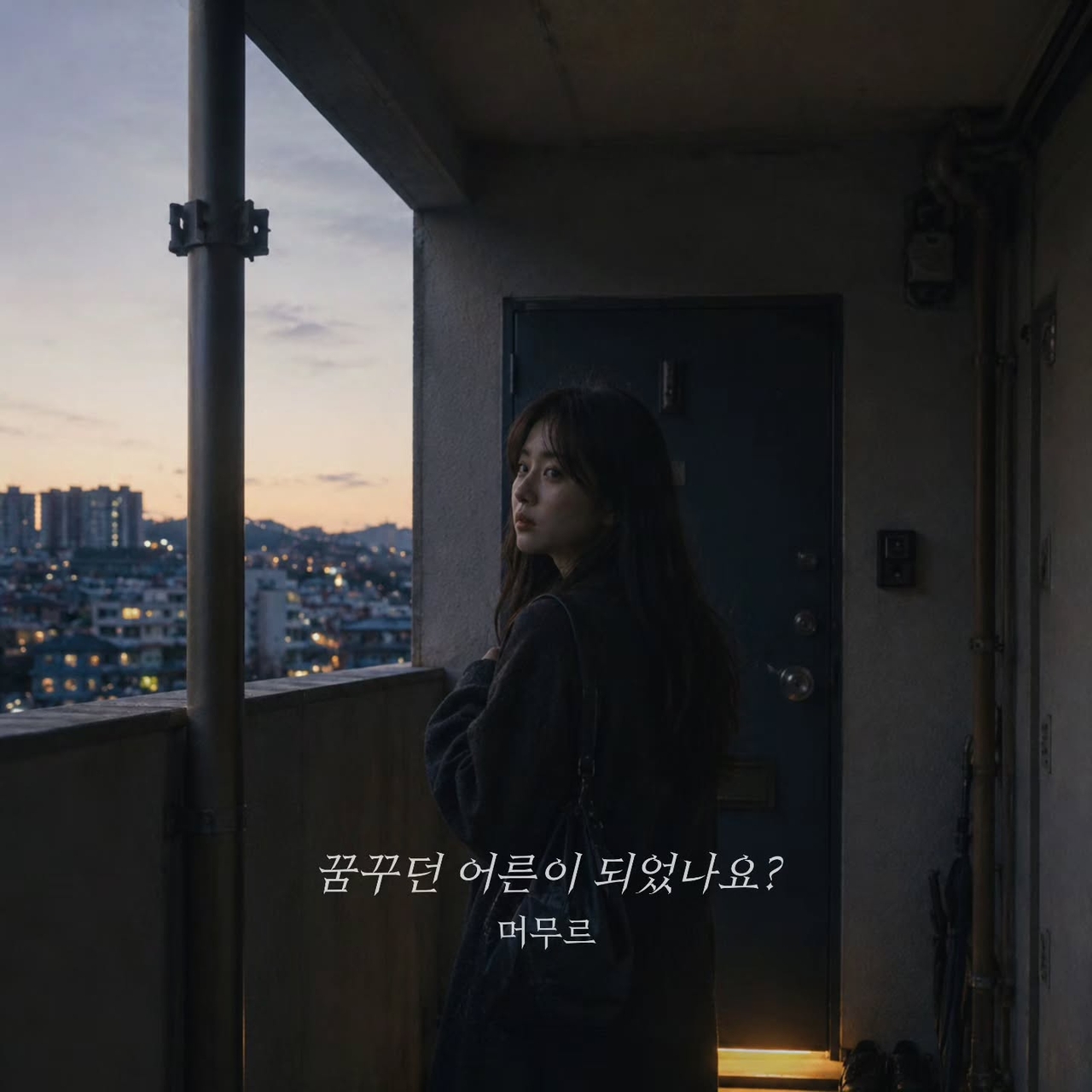
An AI-assisted song has climbed into the upper ranks of Melon’s Top 100 chart, drawing fresh attention to unresolved questions over copyright and transparency in music generated with artificial intelligence.
“The Adult I Dreamed Of,” by Meomuru, has risen to No. 3 on Melon’s Top 100 as of Wednesday. Released in June, the song recently gained traction after being widely used as background music in short-form videos on Korean social media.
However, the voice heard on the track does not belong to a human singer.
According to the artist’s album description, the vocals were generated using the program Suno, while Meomuru wrote the lyrics and handled the overall production direction.
“To me, AI is a modern instrument and a partner that helps bring my imagination into reality,” Meomuru wrote on his YouTube channel description. “I believe that while the tools may change, the stories do not.”
The song has prompted divided reactions among listeners. While some argue that the use of AI poses little issue, with a human creator still responsible for the composition, lyrics and direction of the work, others have expressed discomfort with AI-generated music itself. And some are calling for clearer labeling when artificial intelligence is used in a song’s direction.
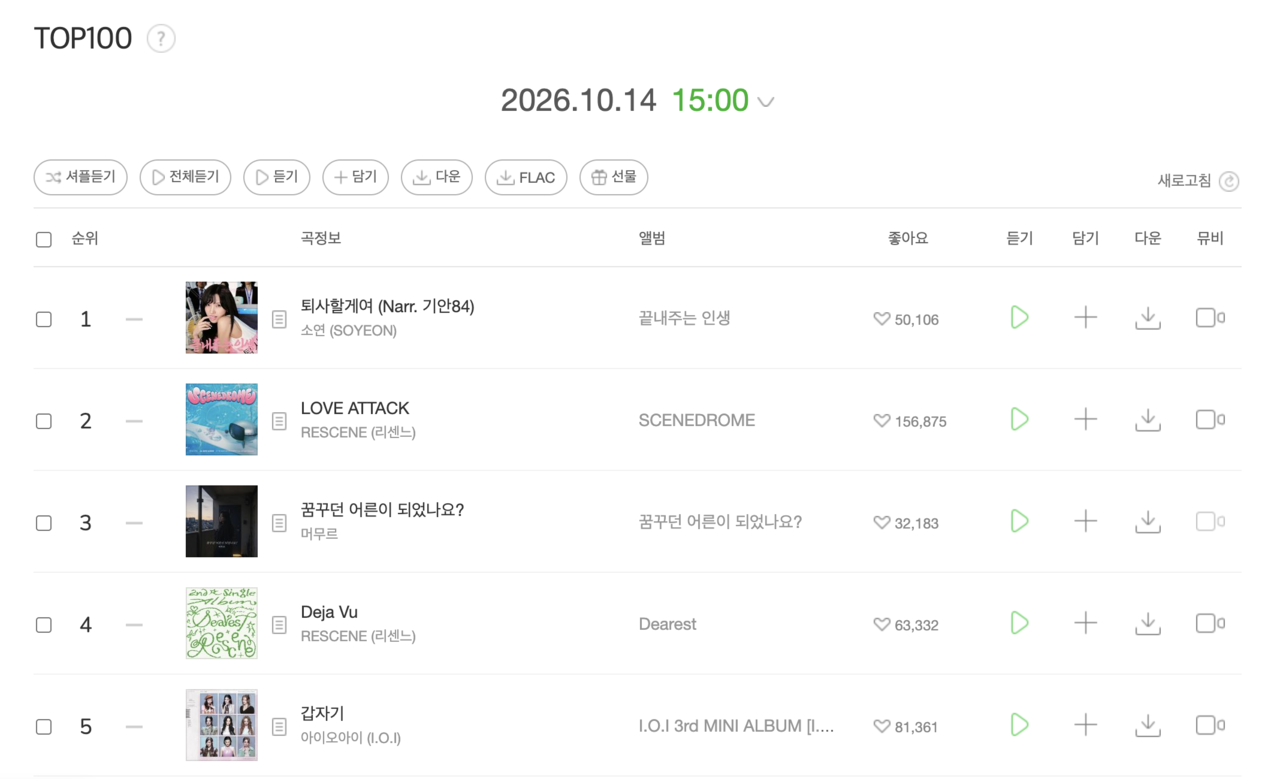
Meomuru is not the first AI-assisted act to gain traction on a chart.
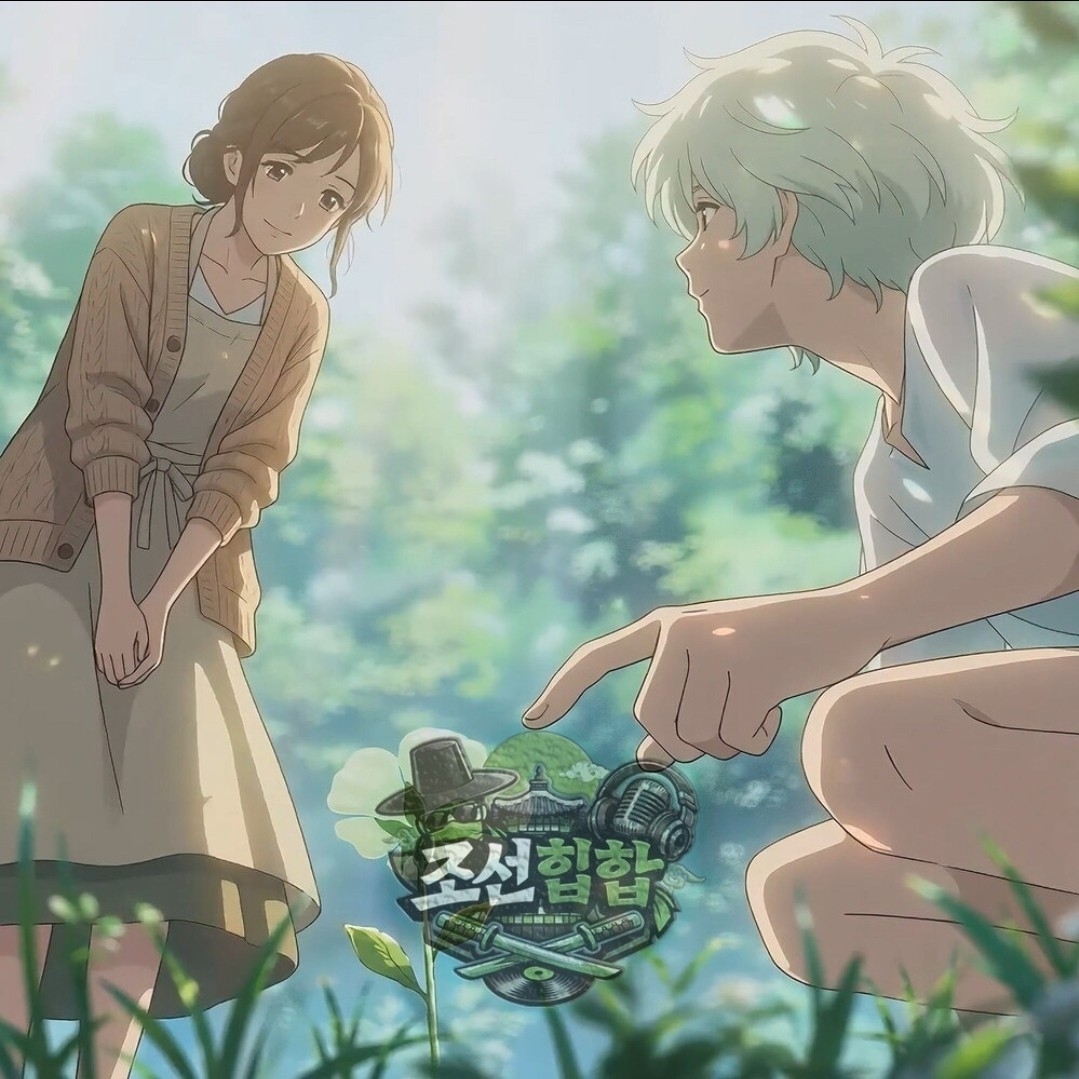
“Forest of the Heart” by Joseon Hiphop also ranked No. 89 on Melon’s Top 100. In this case, a human creator was responsible for the concept and lyrics, while AI was used for composition and vocals.
The growing presence of such songs has brought renewed attention to a question the music industry has yet to fully resolve — how copyright should apply when humans and artificial intelligence contribute to the same work.
Under Korea’s current copyright framework, protection is granted to creative contributions made by humans, while material generated solely by AI is not itself recognized as able to be copyrighted.
The Korea Music Copyright Association attempted to address the issue in August by introducing new criteria allowing the registration of AI-assisted works when a human had played “a substantive and leading role” in their creation, requiring creators to disclose the AI tools used, the extent of their use and the nature of their own contribution.
However, the association withdrew the criteria 22 days later amid criticism that sufficient social consensus had not yet been reached and that there was no established way to objectively determine how much of a piece of music was created by a human and how much was generated by AI.
“While some projects may clearly divide tasks — with a person writing the lyrics and an AI composing or singing, for example — more complex workflows can involve repeated prompts, revisions and editing through AI at multiple stages,” a music industry official told The Korea Herald. “In such cases, accurately measuring the proportion of human and AI contribution can depend largely on what the creator chooses to disclose.”
Another industry official said clearer standards will be needed as AI becomes increasingly embedded in music production.
“AI-generated music is an inevitable part of where the industry is heading, whether we like it or not. More detailed criteria are needed to measure the extent of AI use and the degree of control exercised by human creators in order to determine how copyright should be allocated,” the official added. “At the same time, we also need to consider how to protect existing artists and creators whose work may have been used to train AI systems that generate new music.”
lee.jungjoo@heraldcorp.com