City pledges full morning rush-hour service as unions demand 785 new hires
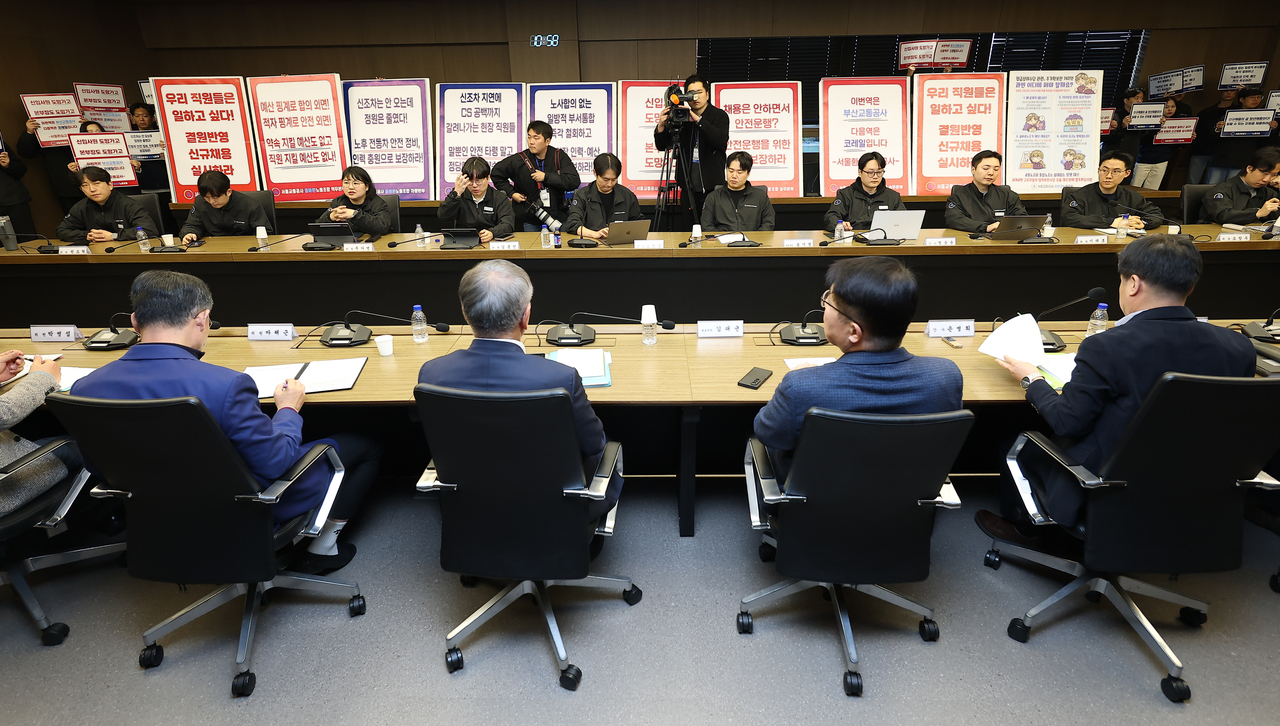
Seoul Metro and its three labor unions entered last-ditch negotiations Tuesday to avert an indefinite subway strike that could disrupt the capital's public transportation network starting Wednesday morning.
The talks were suspended as of 1:20 p.m. over disagreements on staffing levels, with the subway operator consulting the Seoul Metropolitan Government on how many additional workers it could hire.
Unless a deal is reached overnight, unionized workers on Lines 1-8 and some sections of Line 9 will stage a walkout from the start of service Wednesday.
The three unions have been holding separate rounds of negotiations with management since 10 a.m., with staffing shortages emerging as the biggest sticking point.
The unions are demanding 785 new hires to fill existing vacancies, cover employees taking extended leave, and replace retiring train crew members.
Citing passenger and workplace safety concerns, they have also asked management to abandon its workforce reduction plan and fully implement a two-person-per-team system. Currently, only 20 percent of teams operate with two members, leaving most workers to patrol railway facilities alone, according to the unions.
Seoul Metro and the city government, however, have maintained plans to eliminate 2,212 jobs between 2021 and 2026 amid mounting financial losses. So far, 684 positions have been cut, with the remaining 1,528 reductions put on hold.
Seoul Metro recorded an operating deficit of 826.8 billion won ($614 million) last year, up 14.2 percent from a year earlier, partly due to the cost of providing free rides to passengers aged 65 and older. Its cumulative deficit reached 19.7 trillion won.
The unions are also seeking a 3.5 percent increase in the total wage bill, in line with the government's wage growth guidelines for public institutions. They lowered their initial demand of 5.2 percent to facilitate negotiations over staffing.
City moves to minimize commuter disruption
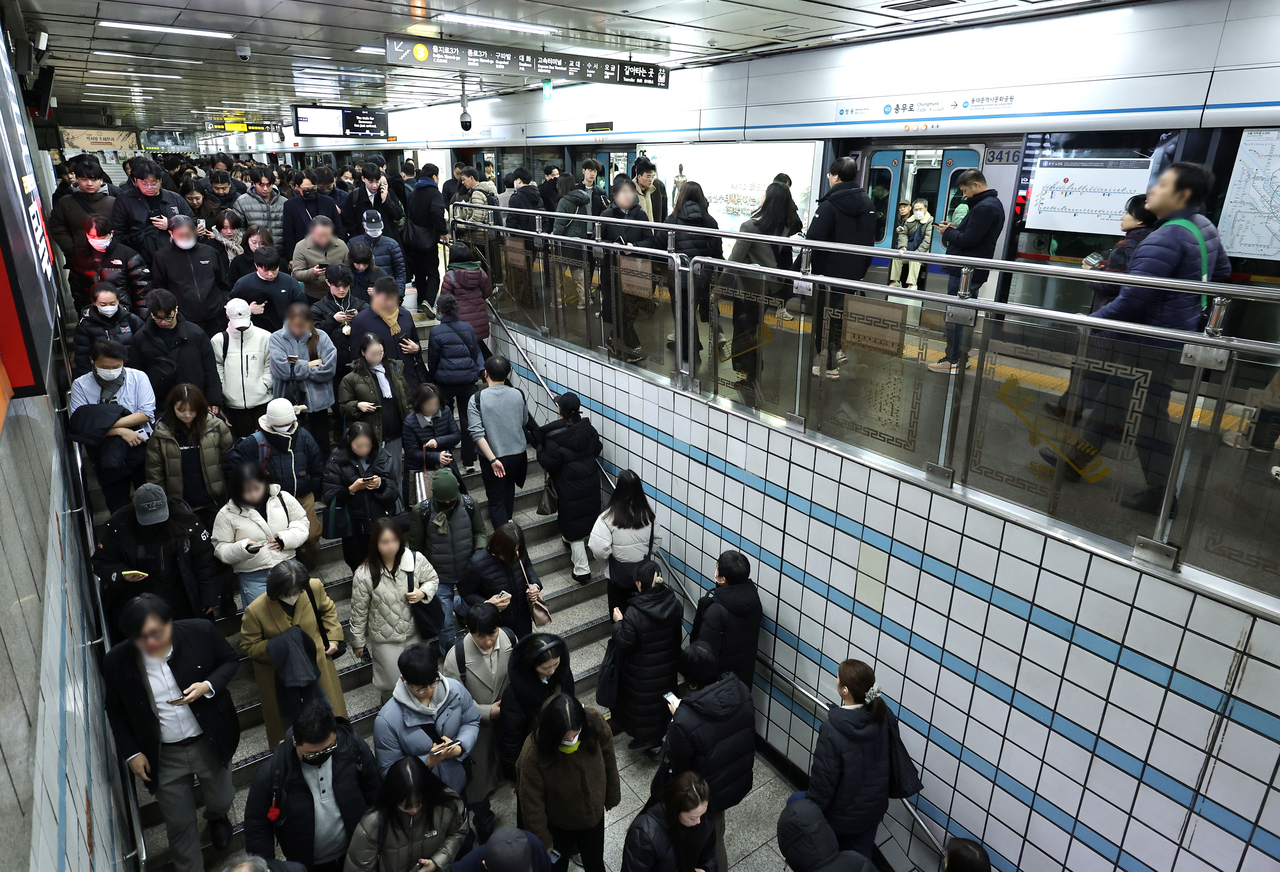
With negotiations expected to stretch into the night, the city has rolled out emergency transportation measures to minimize disruptions to Wednesday's commute.
Seoul Metro and its unions have narrowly avoided strikes through last-minute agreements in previous years. Last year, a deal was reached in time for the first trains to depart as scheduled, despite the unions declaring a deadlock at 3:30 a.m.
Should the strike proceed, the city plans to mobilize non-striking employees and workers from partner companies to secure 80 percent of the normal operating workforce.
The city pledged to maintain full subway service on Lines 1-8 during the morning rush hour from 7 a.m. to 9 a.m.
During the evening rush hour from 6 p.m. to 8 p.m., Lines 2 and 5-8 will maintain normal service, while Lines 1, 3 and 4 will operate at 88 percent of capacity.
Overall, service on Lines 1-8 is expected to fall to around 81 percent of normal levels. Line 9 is expected to operate without disruption.
If the strike lasts more than eight days, the city aims to maintain service at above 90 percent of normal capacity during the morning rush hour and 80 percent during the evening rush hour, while deploying additional transportation options, including shuttle buses.
The city will also increase bus services by 1,873 trips during the morning rush hour and 1,646 during the evening rush hour. A total of 124 city employees will be dispatched to 31 major subway stations to manage crowds and ensure passenger safety.
forestjs@heraldcorp.com