South Korea's move to retake wartime operational control from the United States will inevitably weaken the alliance, which is why South Korea needs to make a "political decision" to advance the transfer talks, the former interim US ambassador to South Korea said Tuesday.
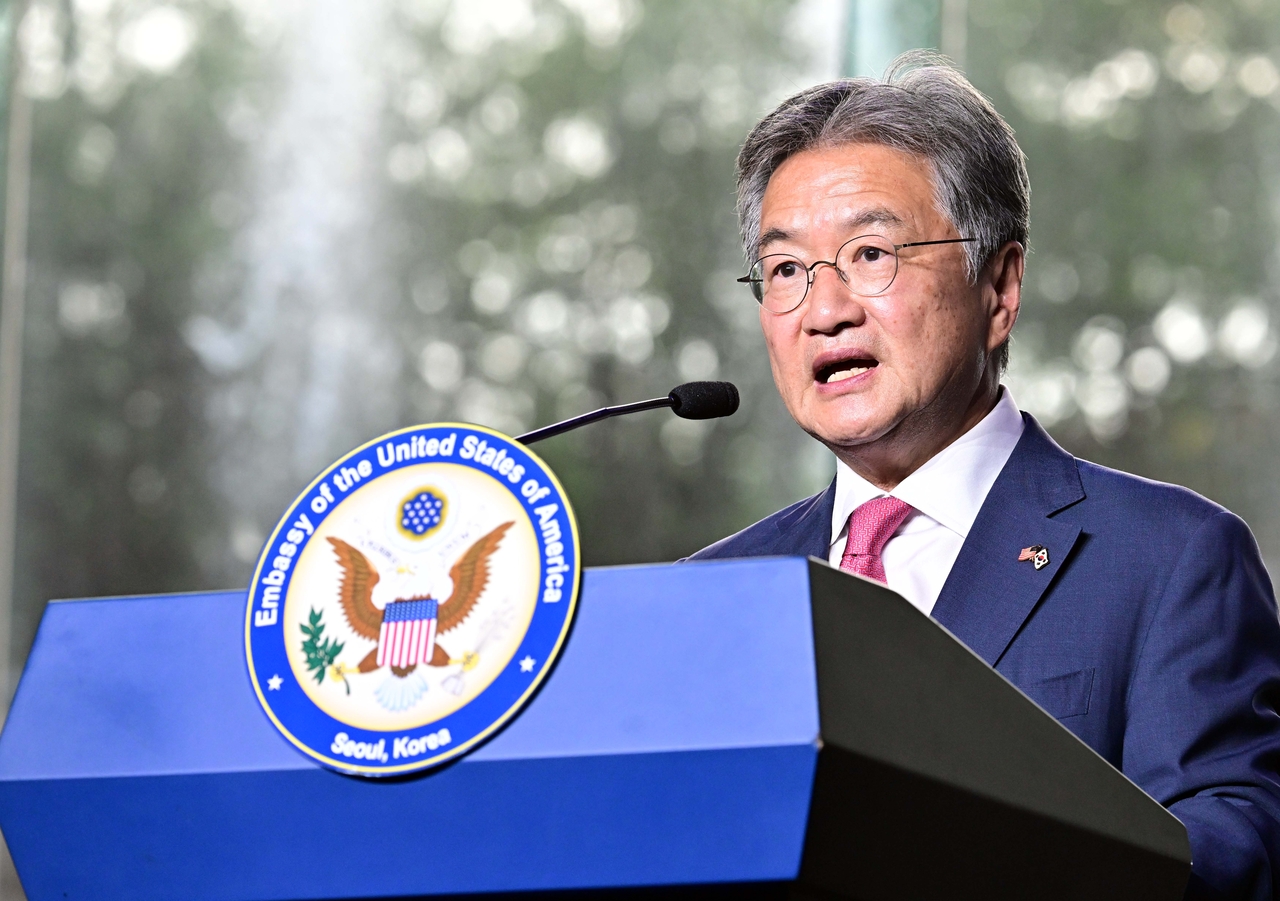
"There is no way Koreans can have OPCON back without weakening the alliance structure," Joseph Yun, former charge d'affaires ad interim at the US Embassy in Seoul, said at a panel discussion hosted by the Korea-US Parliamentarians' Union in Seoul.
"South Korea people want to have OPCON back with no weakening of the alliance. That is impossible."
Yun said that this is what is forcing South Korea to make "political decision" to proceed with the OPCON transfer, when the matter is a technical issue in Washington.
"If the Korean capability is so great, a little bit of weakening of the alliance is okay, then that's okay. But that's a political decision South Korea has to make, which is why I think OPCON transfer is such a divisive political issue in Korea, while it is a technical issue in the US," he said.
Yun's comment comes amid mixed views toward South Korea's move to regain wartime operational control before President Lee Jae Myung's term ends in 2030.
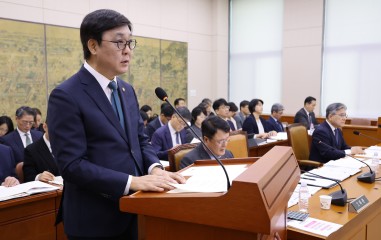
Rep. Kim Gunn, a lawmaker with the main opposition People Power Party, said the liberal Lee Jae Myung administration's push for the transfer before a specific deadline stops short of reflecting the changing geopolitical landscape surrounding the Korean Peninsula.
He claimed that the chances of foreign intervention in a conflict on the Korean Peninsula have grown significantly.
"We must consider that if a war were to break out on the Korean Peninsula, it could well escalate into an international conflict, and potentially a nuclear one," Kim Gunn said at Tuesday's event.
"Given the major shifts in the strategic landscape, we have to make sure we are truly prepared."
However, Kim Jung-sup, president of South Korean foreign policy think tank Sejong Institute, said there is no reason to delay the OPCON transfer further, as conditions agreed by the two countries have already been met.
But he warned of a pattern in which those who oppose the transfer, citing a lack of readiness, could continue to delay the process.
The claims that it is too early to carry out the OPCON transfer "will likely persist for over 40 years," he said. "While it is true that the security environment is shifting and new threats are emerging, this is a pattern that will likely continue indefinitely."
Instead, Kim Jung-sup suggested that Seoul consider offering an alternative to the structure of the current proposal, in which a US commander in the new South Korea-US Combined Forces Command is placed under a South Korean commander in the combined command structure.
"If the discomfort felt by US commanders over being placed under the command of the South Korean military stands in the way, we could certainly reconsider the command structure," he said.
Core alliance issues in disarray after US midterm elections
Experts at the panel discussion said that developments concerning the agreements between South Korea and the US, such as South Korea's construction of nuclear-powered submarines, its expanded use of spent fuel for civilian purposes and the OPCON transfer could be stalled following the Trump administration's losses in the US midterm elections last week.
Kim Jung-sup said such issues will "lead to strong scrutiny" from the Democrats after their party's US midterm election victories.
"We might see increased Congressional oversight regarding the fulfillment of specific conditions for the OPCON transfer and the state of military readiness," he said, adding the same could be true for other issues.
Clouded prospects for Trump-Kim summit?
The prospects for what could be the fourth meeting between Trump and Kim Jong-un remains unclear, as things surrounding North Korea have changed regionally and domestically in recent years, Yun said.
Yun said North Korean leader Kim Jong-un "got nothing out of meeting Donald Trump" three times between 2018 and 2019.
He said the last meeting in Hanoi, Vietnam, "was a bit of a humiliation" for Kim Jong-un, adding that the North Korean leader "sees nothing to be gained by meeting with Trump again."
He added the Republicans' loss in the midterms could further cloud the prospects for a summit, with the Democratic Party potentially having greater power to impede Trump's possible recognition of North Korea as a nuclear state, which was regarded as leverage for his talks with Kim Jong-un.
"(Supposing) Trump has nothing to say on denuclearization, I think the reception from the Democratic Party in the United States will be very poor," Yun said.
Moreover, North Korea is no longer an isolated country unlike in the past because it "has gotten so much out of Russia, out of China," he said.
consnow@heraldcorp.com