South Korea-US defense talks will be held in Washington next month, but the annual Security Consultative Meeting, where the allies were expected to discuss key issues, has been postponed.
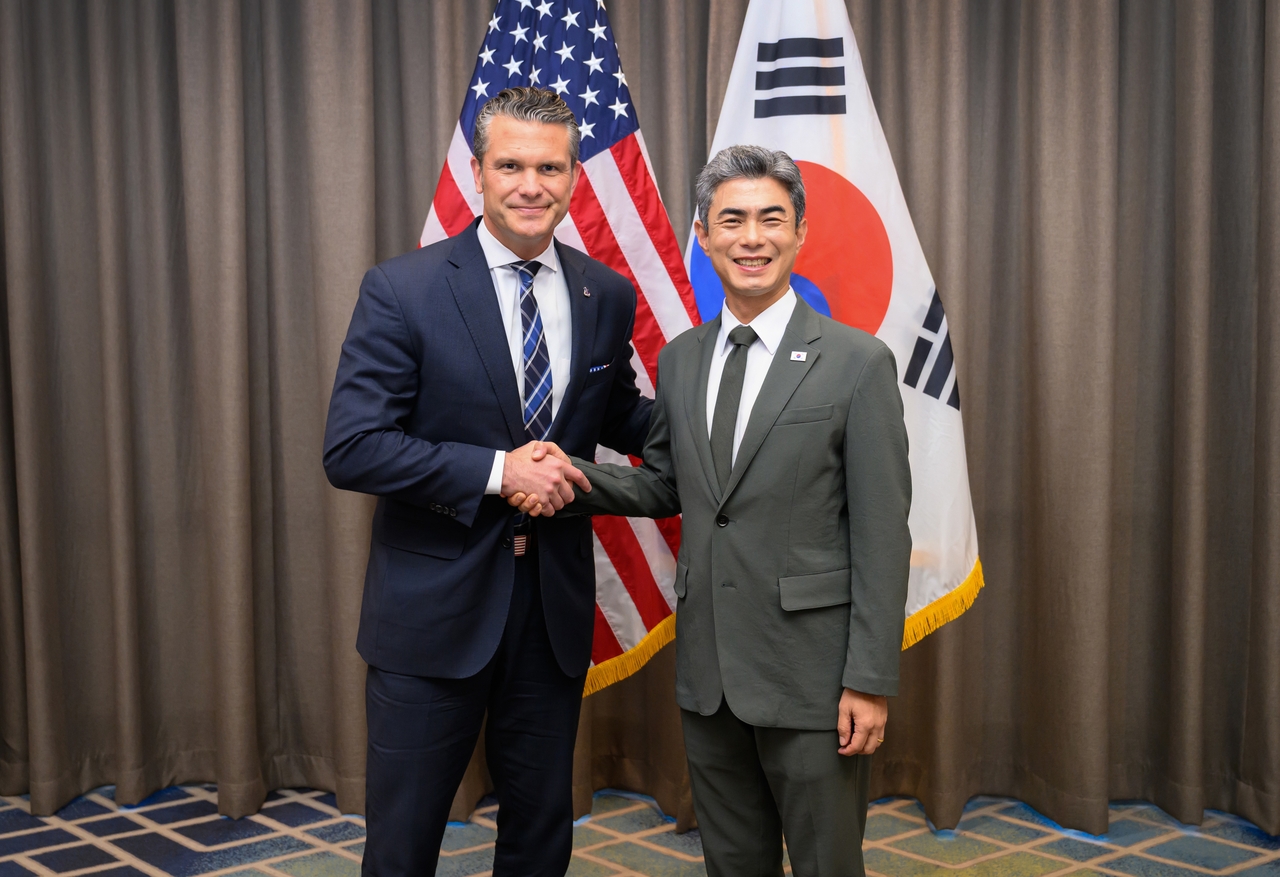
The agreement came as Defense Minister Kang Shin-chul met US Defense Secretary Pete Hegseth for the first time on the sidelines of the 13th ASEAN Defense Ministers’ Meeting-Plus in the Philippines on Wednesday, according to Seoul’s Defense Ministry.
At the meeting, Hegseth reaffirmed Washington’s commitment to the transfer of wartime operational control, or OPCON, and the two sides agreed to work closely to ensure that the transition proceeds smoothly and in a timely manner, the South Korean ministry said.
Kang said the South Korea-US alliance has served as a linchpin of regional peace and prosperity for more than seven decades, while Hegseth called for stronger defense cooperation and a robust combined defense posture.
The two ministers also agreed to meet in Washington in December ahead of convening the 58th SCM in early 2027.
Defense Ministry spokesperson Chung Binna on Thursday described the arrangement as a “two-step approach,” under which the defense chiefs would "solidify consensus on major issues and, based on that, make final decisions at the SCM early next year.”
A ministry official also played down speculation that major differences between the allies had forced the unusual scheduling arrangement.
“There are no major differences between South Korea and the United States,” the official said, adding that differences at the military level could be resolved through close consultations.
The SCM is the highest-level annual defense consultative body between South Korea and the US and is normally held around early November, alternating between Seoul and Washington.
Delaying an SCM into the following year would mark the first such case since 1998, when heightened tensions between the US and Iraq forced then-US Defense Secretary William Cohen to cancel an Asia trip, pushing the meeting scheduled for November to January 1999.
Speculation that this year’s SCM could be delayed had persisted in recent weeks, with the fallout from the US-Iran war and the US midterm elections cited among factors complicating the scheduling.
OPCON timeline in focus
The delay is particularly significant for Seoul’s push for progress on the wartime OPCON transfer.
The Lee Jae Myung administration had sought to complete the full operational capability, or FOC, assessment of the future Combined Forces Command and establish a target year, known here as the “X-year,” for the OPCON transition at this year’s SCM.
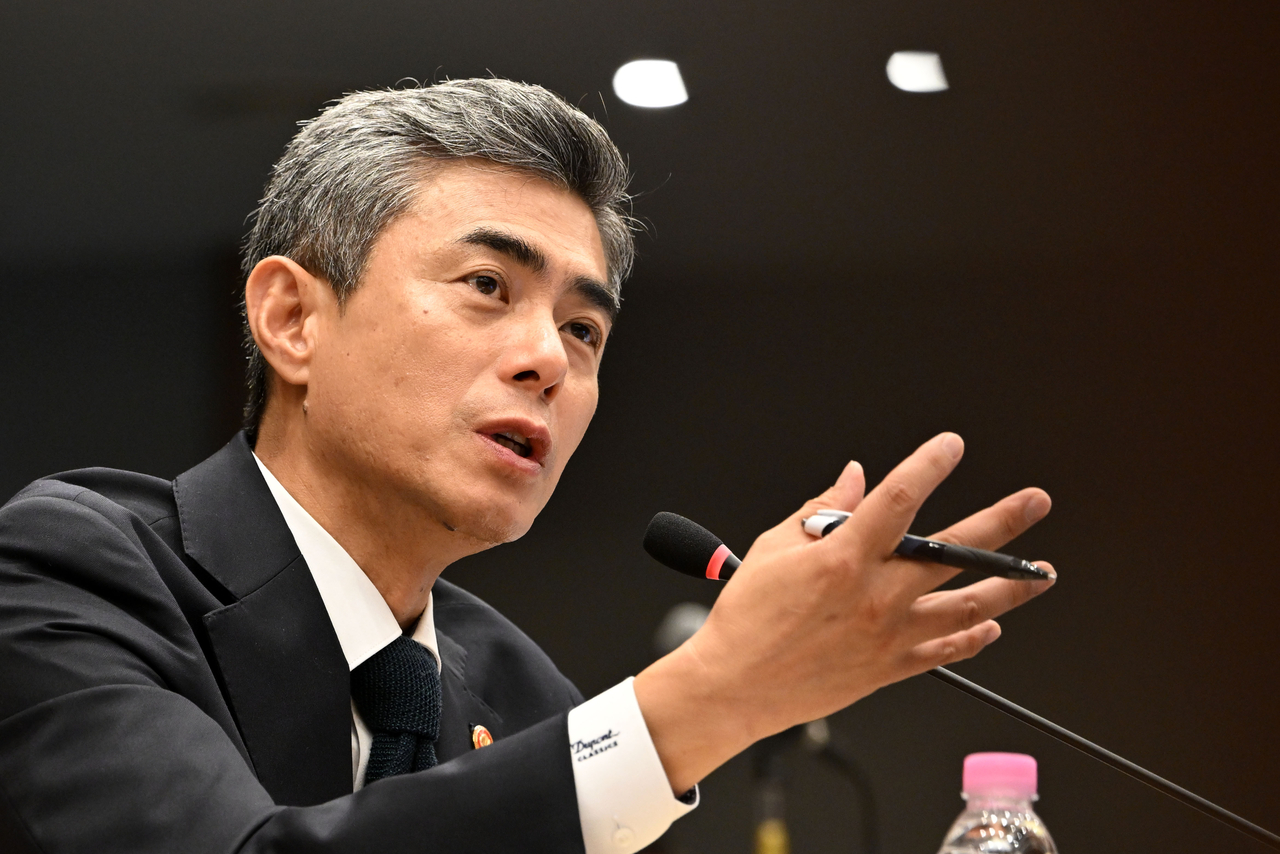
Just two days before meeting Hegseth, Kang told lawmakers during a parliamentary audit that Seoul and Washington were working toward both goals.
“We are closely consulting between the South Korean and US authorities to complete the FOC verification and determine the X-year,” Kang said Monday.
He also said the two sides had “an overall shared understanding” on setting the target year, while stressing that the transfer should take place based on trust between the allies. His comments came amid questions over whether the allies remain fully aligned on the conditions and pace of the transition.
Gen. Xavier Brunson, commander of US Forces Korea and the South Korea-US Combined Forces Command, recently said conditions had changed and referred to new standards that need to be met. Seoul, however, has maintained that the existing three conditions under the allies’ conditions-based transition framework remain unchanged.
Meanwhile, the December talks are also expected to cover other major alliance issues, including Seoul’s push for nuclear-powered submarines.
Before departing for the Philippines, Kang said the ministry expected the submarine issue to be raised in talks with the US side and was preparing accordingly.
Seoul has been seeking to move forward with the program after Washington backed South Korea’s push to build nuclear-powered submarines following last year’s bilateral summit.
Yoo Ji-hoon, a research fellow at the Korea Institute for Defense Analyses, said the SCM delay could push back OPCPN-related decisions.
“Since the plan had been to complete the FOC assessment at this year’s SCM and further specify the timeline for the OPCON transition, the postponement could somewhat delay the related discussions and decisions,” Yoo said.
He added, however, that the transition ultimately hinges less on a specific date than on whether the conditions agreed upon by the allies are met and confirmed through their joint assessment.
“What matters more than the schedule itself is substantive preparation and building a shared understanding between the two countries,” Yoo said.
flylikekite@heraldcorp.com