Virtual exchange program connects students across 33 countries, turning English lessons into real conversations and teaching global citizenship
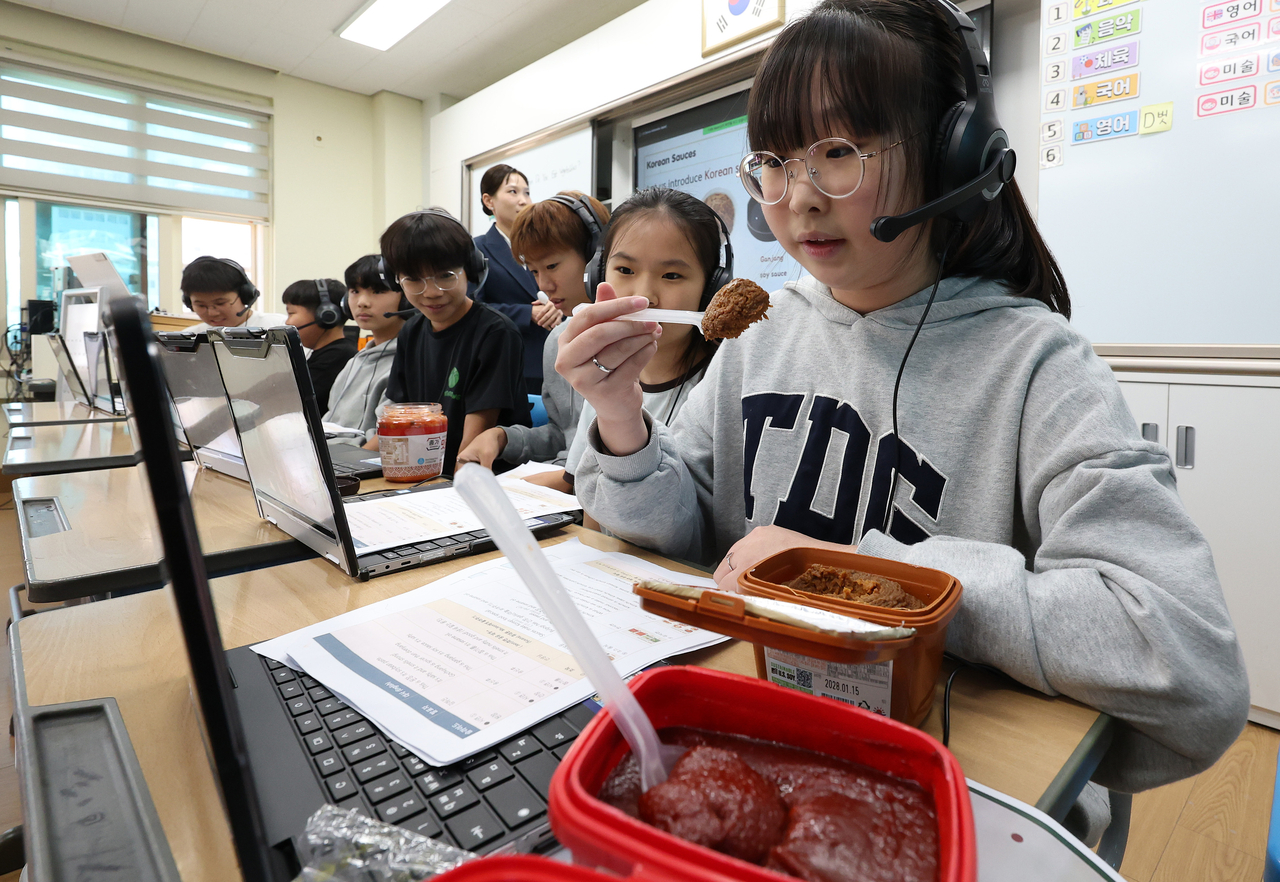
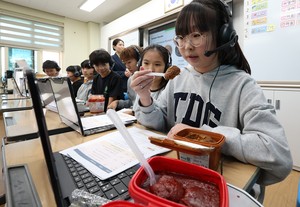
"This is gochujang, a Korean sauce made with red chili peppers," Kim Ha-jin, a sixth grader at Seoul Beondong Elementary School, said as she scooped a spoonful of the red pepper paste and held it up to her laptop's camera.
Although Kim was sitting alongside her classmates, she was speaking to students as far as 5,000 kilometers away at SDIT Al Ihsan Banjarmasin, an Islamic elementary school in South Kalimantan, Indonesia, and Bansei Elementary School in Nara, Japan.
Each sixth grader at the Seoul school sat in front of a laptop on Tuesday, the screens showing students from the two other countries. The day's theme was food culture, with students taking turns introducing their countries' traditional dishes, popular snacks and table manners.
The students then broke into smaller groups for discussions.
"During regular classes, we speak English with our teacher and classmates, but this class was more fun because we got to talk to friends from other countries," Kim told The Korea Herald.
"When we study from textbooks, we can only learn what's written in them, so there are still things we're curious about," Song Shin-hu, another sixth grader, said. "But this time, I could ask students from other countries directly and get answers to many of my questions."
Seoul's international joint classes take English beyond textbooks
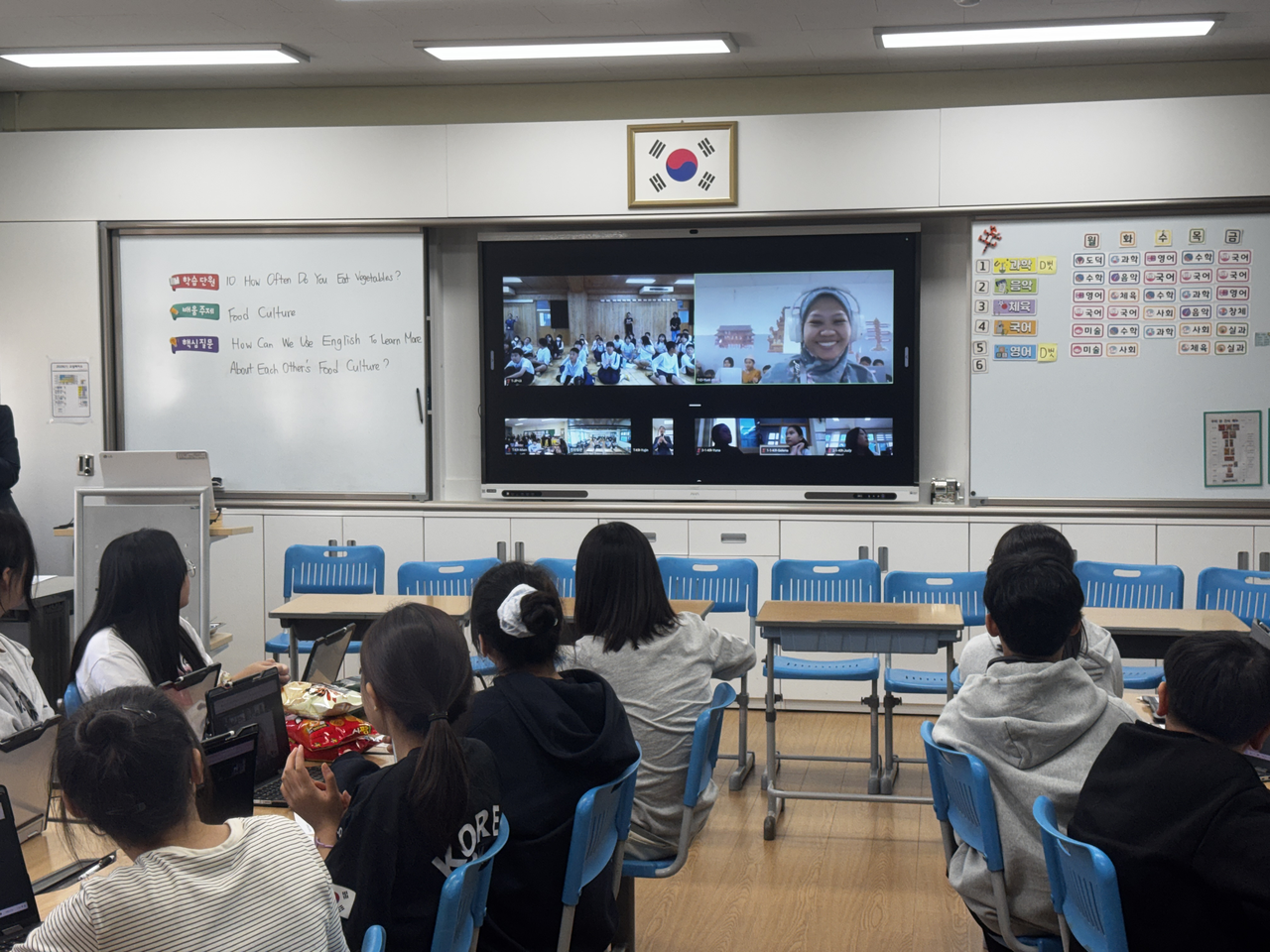
The class was part of the Seoul Metropolitan Office of Education's International Joint Class program, which connects classrooms in Seoul with partner schools overseas, allowing students to learn about each other's cultures and put their foreign language skills to use.
Teachers from participating schools decide lesson topics together and arrange exchanges through video calls and online collaboration platforms.
The classes can take place during regular school hours, after school or as part of extracurricular activities, with participating schools deciding how often to meet.
Launched in 2021 amid the COVID-19 pandemic as opportunities for face-to-face student exchanges dwindled, the initiative has since grown from 53 schools in seven countries to 358 schools in 33 countries as of 2025.
"Students used to ask why they needed to learn English if they weren't planning to go abroad," said Jeon Yu-jin, the English teacher who led Tuesday's class. "But through these classes, they've come to realize that they're already living in a globalized world as global citizens."
For Jeon, the value of the program goes beyond introducing students to other cultures. She said the exchanges help shift English education away from abstract grammar exercises toward using the language to communicate.
"Students often think they can't speak English unless they're good at it," Jeon said. "But I always emphasize, 'Simple English, deep thinking.'"
"Seeing students realize that they can express themselves and communicate, even by breaking their thoughts into smaller sentences, has been particularly meaningful," Jeon said.
The school also maintains exchanges with schools in the United States and Ukraine, although those students communicate mainly through online message boards and comments because of time differences.
Bringing international education within every student's reach
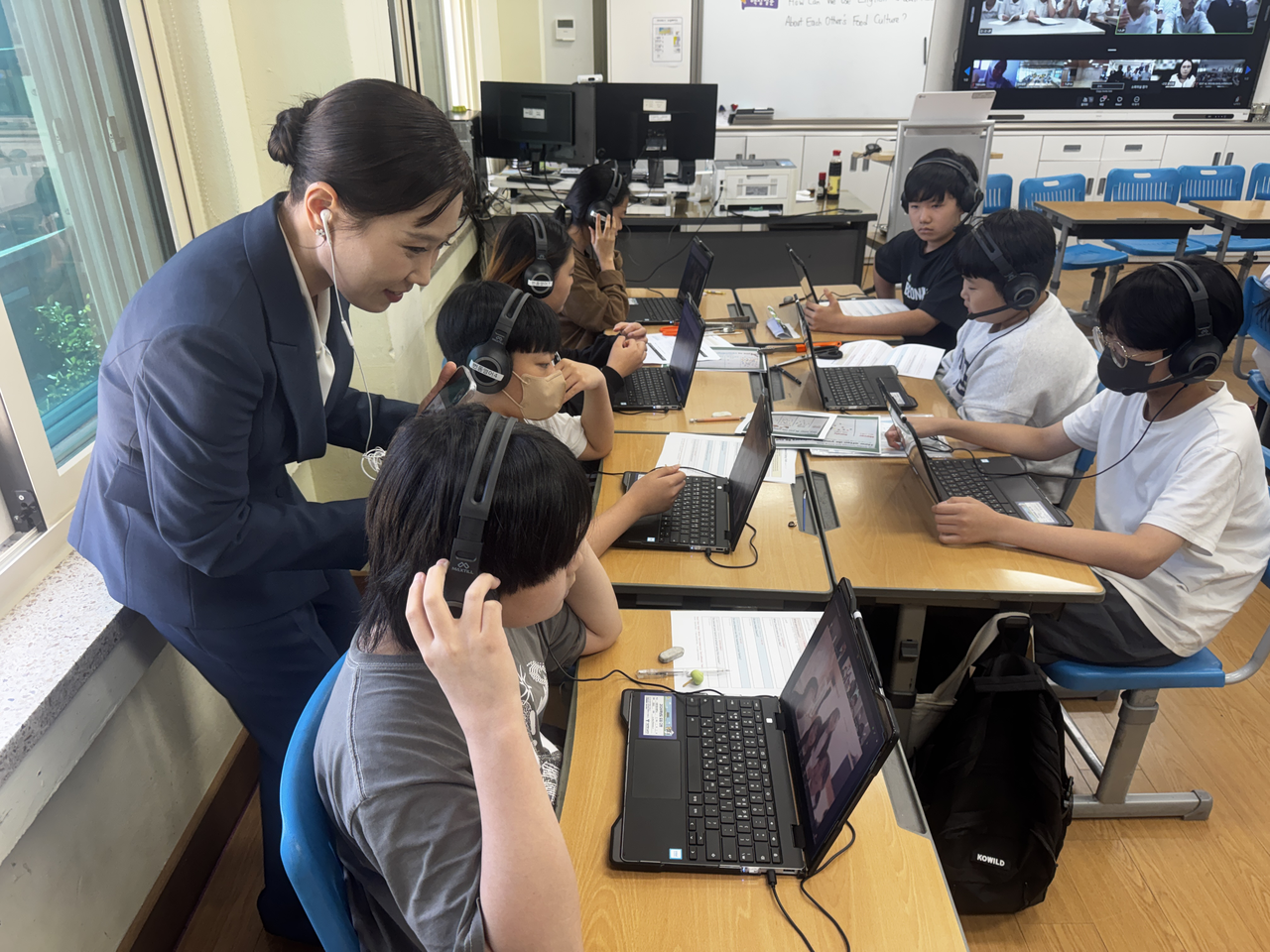
The Seoul Metropolitan Office of Education said the program has helped make international education more accessible by allowing students to interact with peers overseas without the costs and logistical barriers of traveling abroad.
In an earlier interview with The Korea Herald, Seoul Education Superintendent Jeong Geun-sik said the international joint classes help students understand different cultures while learning to cooperate with people from different backgrounds.
"What matters is the experience of working on shared tasks with students who speak different languages and come from different cultures, explaining one's ideas, listening to others and reconciling different opinions to reach a common outcome," Jeong said.
He said that global citizenship education should also help students recognize that major international challenges are connected to their lives.
"Students need to understand issues such as the climate crisis, poverty, migration, international conflicts and AI as problems that affect their own lives, and think about how to find solutions together," Jeong said.
seungku99@heraldcorp.com