At South Korea's historic defense manufacturing heartland, Hanwha Aerospace is betting on automation, unmanned warfare and localized production to expand its European footprint
CHANGWON — At a sprawling manufacturing complex in South Korea's southeastern industrial heartland, the future of arms exports takes shape in a place built for technologies of the past.
Once developed to manufacture conventional military hardware under South Korea's push for self-reliance in the 1970s, Changwon now sits at the center of Hanwha Aerospace's ambitions to build a new defense ecosystem powered by artificial intelligence, robotic production lines and unmanned combat vehicles.
The company is looking well beyond South Korea's borders, too, with Europe emerging as the biggest testing ground for its global ambitions.
During a rare tour of Hanwha Aerospace's manufacturing facilities on Friday, The Korea Herald joined a small group of international journalists from Germany and Sweden for a firsthand look at the machinery behind South Korea's rapidly expanding arms exports.
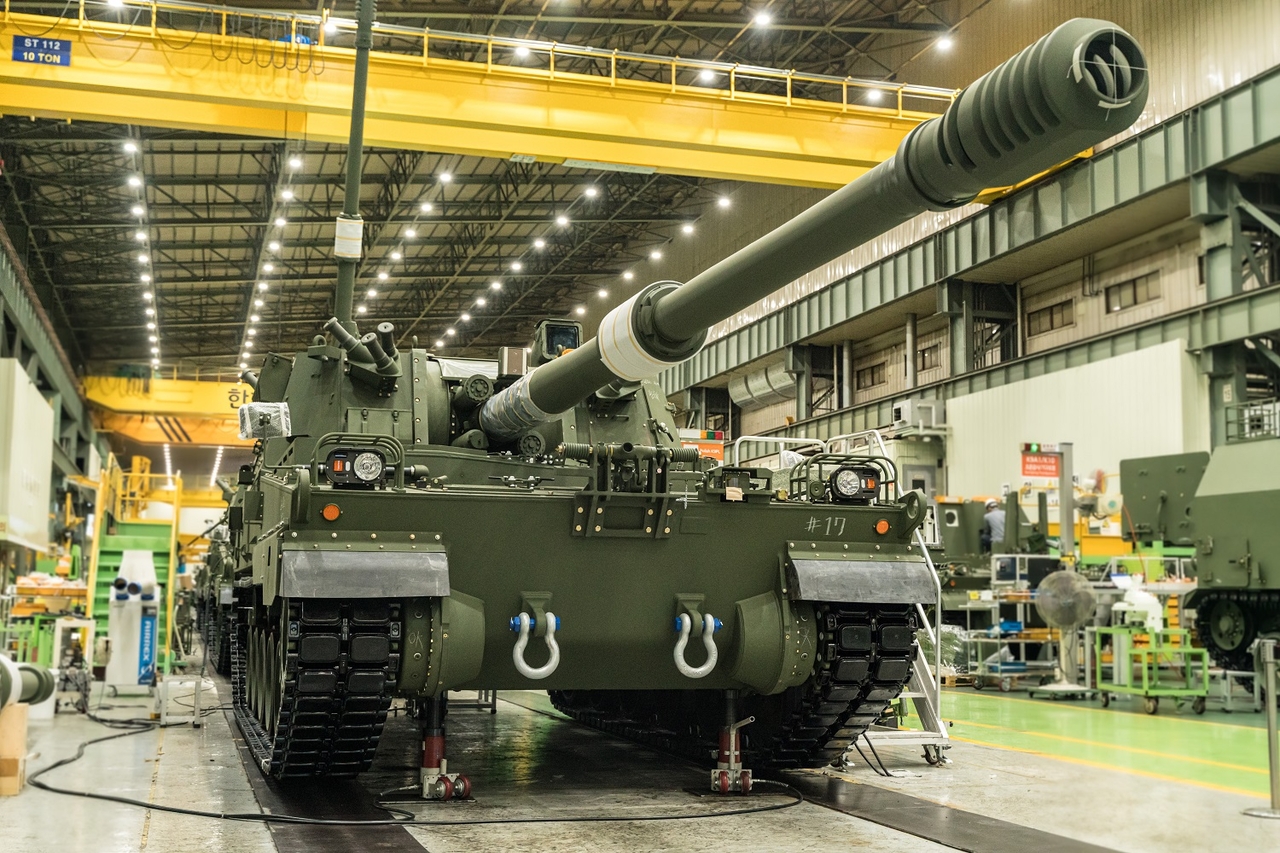
The visit included a ride aboard Hanwha's flagship K9 self-propelled howitzer, one of the country's most successful defense exports, as well as a glimpse of production facilities where robots are increasingly taking over work traditionally performed by humans.
But beyond the imposing armored vehicles and heavy machinery, Hanwha's bigger message was clear: The future of defense manufacturing is not simply about producing more weapons. It is about producing them faster, smarter and closer to the countries that need them.
Heavy machinery meets smart warfare at historic site
Changwon's emergence as a defense manufacturing powerhouse was no accident.
In the 1970s, the government of then-President Park Chung-hee designated the city as a strategic center for heavy machinery and weapons production under its industrialization campaign and drive for military self-reliance.
Faced with North Korea's military threat and uncertainty over the long-term US military presence on the Korean Peninsula, Seoul sought to establish its own arms production capabilities.
Changwon became a natural home for that ambition, developing a dense network of precision engineering firms, metalworking companies and specialized component suppliers.
Five decades later, that industrial foundation remains one of Hanwha's biggest competitive advantages.
The company's Changwon operations span multiple facilities, each serving a different part of its defense and aerospace portfolio.
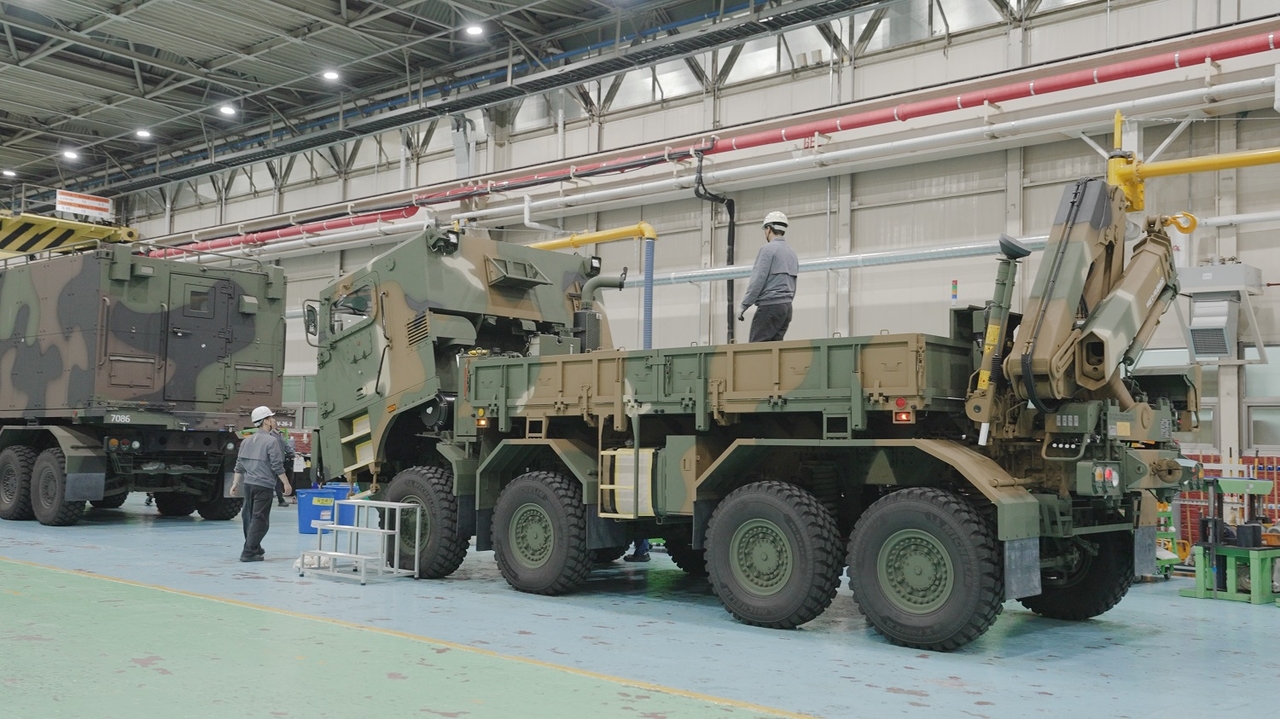
Plant 1 manufactures aircraft engines and propulsion-related components, including engines for South Korea's space launch vehicle program. Plant 2 produces combat vehicles, launcher systems, and chemical, biological, radiological and nuclear defense systems. Plant 3 and its research and development campus focus on firepower systems, including the K9 howitzer, amphibious assault vehicles, and other defense technologies.
Together, the facilities illustrate how a city once built around conventional heavy machinery has evolved into a manufacturing center for increasingly sophisticated military systems.
Hwang Dong-gyu, head of Hanwha Aerospace's Changwon Plant 2 under its Land Systems Business Group, told reporters that South Korea's broader industrial capabilities give its defense manufacturers an advantage that extends well beyond the factory floor.
"In Korea, our manufacturing industry is very famous," Hwang said, pointing to the country's strengths in automobiles, shipbuilding, semiconductors, electronics, telecommunications, software and construction.
Those industries, he explained, provide many of the technologies and components that underpin modern defense systems.
Hwang said the localization rate of Korean defense products exceeds 96 percent, giving manufacturers considerable flexibility in adapting their technologies for overseas customers.
"Since we have a very high ratio of internally developed technology, that means the technology inside the equipment belongs to our country and our companies," he said.
"That strength allows us to transfer those technologies more easily to customer countries so they can localize production."
Robots building the weapons of tomorrow
Inside Hanwha's Changwon production facilities, automation is already reshaping how military equipment is manufactured.
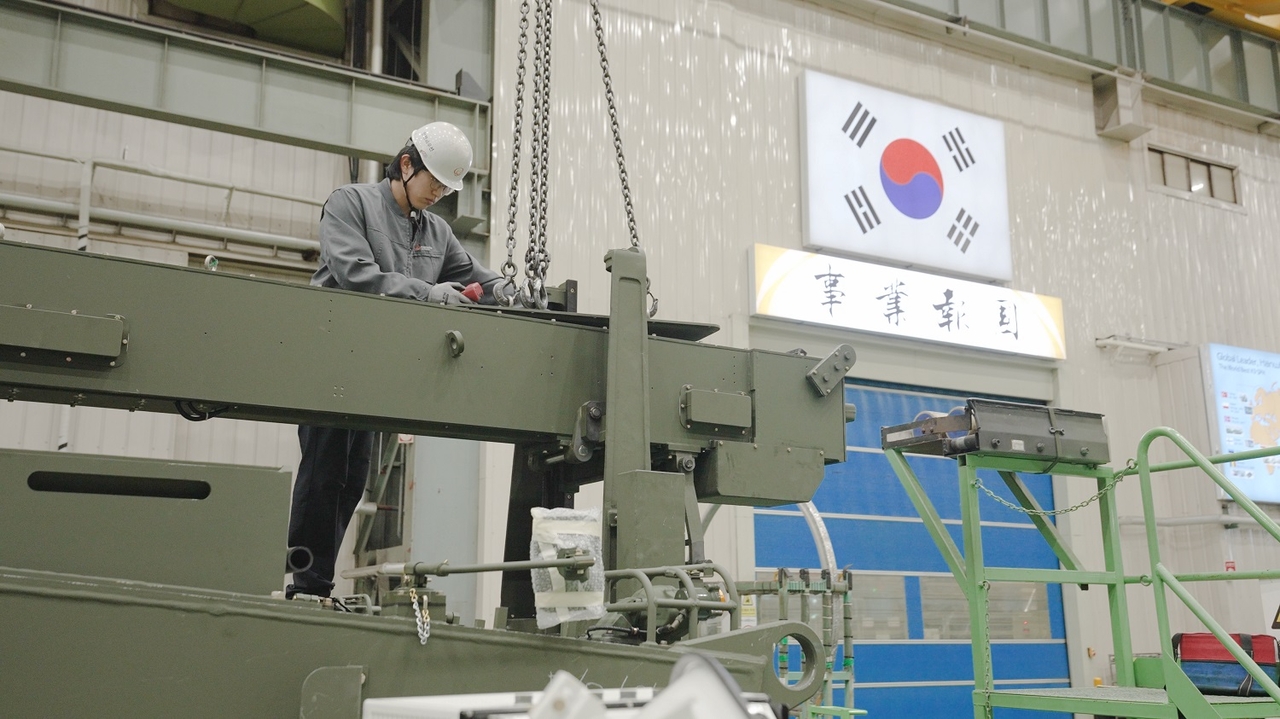
According to company officials, approximately 70 percent of manufacturing processes across the Changwon facilities are unmanned or automated.
At Plant 2, Hwang said robotic systems perform an even larger share of welding operations.
"As you saw in the manufacturing plant, we are using welding robots. About 70 to 80 percent of the welding processes are automated using those robots," he said.
Hwang also highlighted the introduction of three-dimensional scanning technology, which reduces "the inspection time for welded vehicle bodies from a day and a half to just one hour," he said.
That represents a striking improvement in a sector where production speed has become an increasingly important competitive advantage.
Russia's war against Ukraine has exposed a fundamental vulnerability in Western defense industries: Even technologically advanced weapons are of limited use if manufacturers cannot replenish supplies quickly enough.
For Hanwha, automation is therefore not simply about cutting production costs. It is also about scaling up manufacturing while maintaining quality and consistency.
The company is now looking to push digitalization further by integrating AI into its production management systems.
"We are continuously trying to integrate AI into our digital twin systems, which monitor our manufacturing environment in real time," Hwang said.
"We also monitor the condition of equipment using digital data while introducing digitalized input devices for inspection results."
The broader objective is to build a manufacturing system capable of monitoring production conditions, identifying potential problems and improving efficiency through increasingly sophisticated digital technologies.
From unmanned factories to unmanned battlefields
Hanwha's automation ambitions do not stop at the factory gates.
The company is also investing in unmanned ground vehicles, or UGVs, as part of its next-generation land warfare strategy. At the heart of that effort is manned-unmanned teaming, known as MUM-T, which allows crewed military platforms to operate alongside robotic vehicles.
Hanwha is developing unmanned systems ranging from smaller multipurpose vehicles to medium- and large-sized combat platforms designed for reconnaissance, combat support and other battlefield missions.
One of its more ambitious projects is the H-UGV, a 30-ton-class unmanned combat vehicle under development and targeted for introduction around 2030. The vehicle is being designed to operate with an intelligent unmanned turret equipped with a 30-40 mm cannon, a remote-controlled weapon station and anti-tank guided missiles.
Unlike conventional armored vehicles, the H-UGV is intended to perform missions without an onboard crew, while cooperating with manned platforms in offensive, reconnaissance and defensive operations.
The concept reflects a broader shift in modern warfare, where autonomous and remotely operated systems are expected to reduce risks to soldiers while expanding the range of missions military forces can undertake.
Hanwha is also seeking to connect different weapons and surveillance platforms into a more integrated battlefield network.
By combining Hanwha Systems' AI-based satellite imagery analysis with Hanwha Aerospace's Chunmoo multiple rocket launcher system, the company envisions a process in which potential targets can be detected, identified and prioritized through AI-assisted command-and-control systems before being engaged by long-range precision weapons.
The approach, commonly described as a sensor-to-shooter network, aims to shorten the time between detecting a target and responding to it.
As the range of precision weapons increases, such integration is becoming an increasingly important element of modern military operations.
For Hanwha, the ultimate goal is to offer customers interconnected systems capable of operating across multiple domains.
Europe becomes the next industrial frontier
The transformation underway in Changwon is closely tied to Hanwha's expanding ambitions in Europe. The continent has emerged as the company's largest and most strategically important overseas market, as governments accelerate military modernization and seek to rebuild defense production capacity following Russia's invasion of Ukraine.
Hanwha has already established a growing industrial presence in Poland and Romania. It is now setting its sights on Germany, traditionally one of Europe's most established and competitive defense markets.
The company plans to invest approximately 1 billion euros ($1.1 billion) to establish advanced defense manufacturing facilities and a research and development center in eastern Germany. The project is expected to create around 300 skilled jobs in its initial phase, with potential cooperation spanning long-range precision fires, guided weapons, air defense systems and modular artillery charge systems.
The investment would mark a significant step in Hanwha's efforts to move beyond exporting finished weapons from South Korea toward establishing a more deeply integrated European production network.
Germany, in particular, could become a manufacturing and technology hub supporting the company's expansion across Western Europe.
Hanwha already sources around 100 million euros worth of goods annually from more than 60 German suppliers, providing an existing network on which to build deeper industrial partnerships.
The company is also exploring opportunities for joint development, local manufacturing and potential joint ventures with German and other European defense companies.
Its strategy reflects a growing recognition that winning defense contracts in Europe increasingly requires more than competitive prices and proven weapons systems.
European governments are placing greater emphasis on local production, technology transfer, supply chain resilience and the ability to sustain military equipment over decades.
Hanwha seeks to position itself as a partner capable of delivering on those requirements.
Under its "Built with Europe, for Europe" vision, the company aims to combine South Korea's established production capabilities with European engineering expertise, suppliers and research institutions.
Thorsten Kutz, managing director of Hanwha Defence Deutschland GmbH, described the company's ambitions as extending well beyond conventional arms sales.
"Our goal is not simply to expand Hanwha's business in Germany, but to become an integral part of the country's defense industrial ecosystem," Kutz said.
"By combining Hanwha's manufacturing expertise with Germany's engineering strengths, we aim to create skilled jobs, build long-term partnerships with German companies and contribute to the country's defense production capacity."
The approach could also help address one of Europe's most pressing defense challenges: expanding industrial capacity quickly enough to meet growing demand without becoming excessively dependent on external suppliers.
For Hanwha, its highly integrated production base in Changwon provides a model it hopes to adapt to overseas markets.
The ability to control much of its technology and production processes internally, as Hwang emphasized, could make it easier to transfer manufacturing capabilities and customize products for European customers.
From industrial legacy to a new battlefield
Hanwha's push into Europe coincides with a broader transformation in defense industries worldwide.
The war in Ukraine has demonstrated the enduring importance of conventional artillery and armored vehicles, while also accelerating the adoption of drones, automated systems and digitally connected weapons.
That combination presents an opportunity for manufacturers capable of producing both traditional heavy weapons and emerging unmanned technologies. For Hanwha, Changwon sits at the intersection of those two worlds.
Its factories continue to produce the artillery systems and armored vehicles that have helped establish South Korea as a major arms exporter. At the same time, its engineers are developing the robotic manufacturing processes, AI-enabled technologies and unmanned combat platforms that could shape the industry's next chapter.
What began half a century ago as a government-led effort to build weapons at home is increasingly becoming the foundation for a global industrial strategy.
And as Hanwha seeks to establish a permanent manufacturing foothold in Europe, the machines rolling off its Changwon production lines may be only part of what South Korea's defense industry ultimately exports.
Hanwha Group’s defense business, comprising affiliates including Hanwha Aerospace and Hanwha Systems, generated a combined $68 billion in revenue in 2025, according to officials.
mkjung@heraldcorp.com