OpenRouter partnership gives KT's Token Factory access to hundreds of AI models for Korean businesses
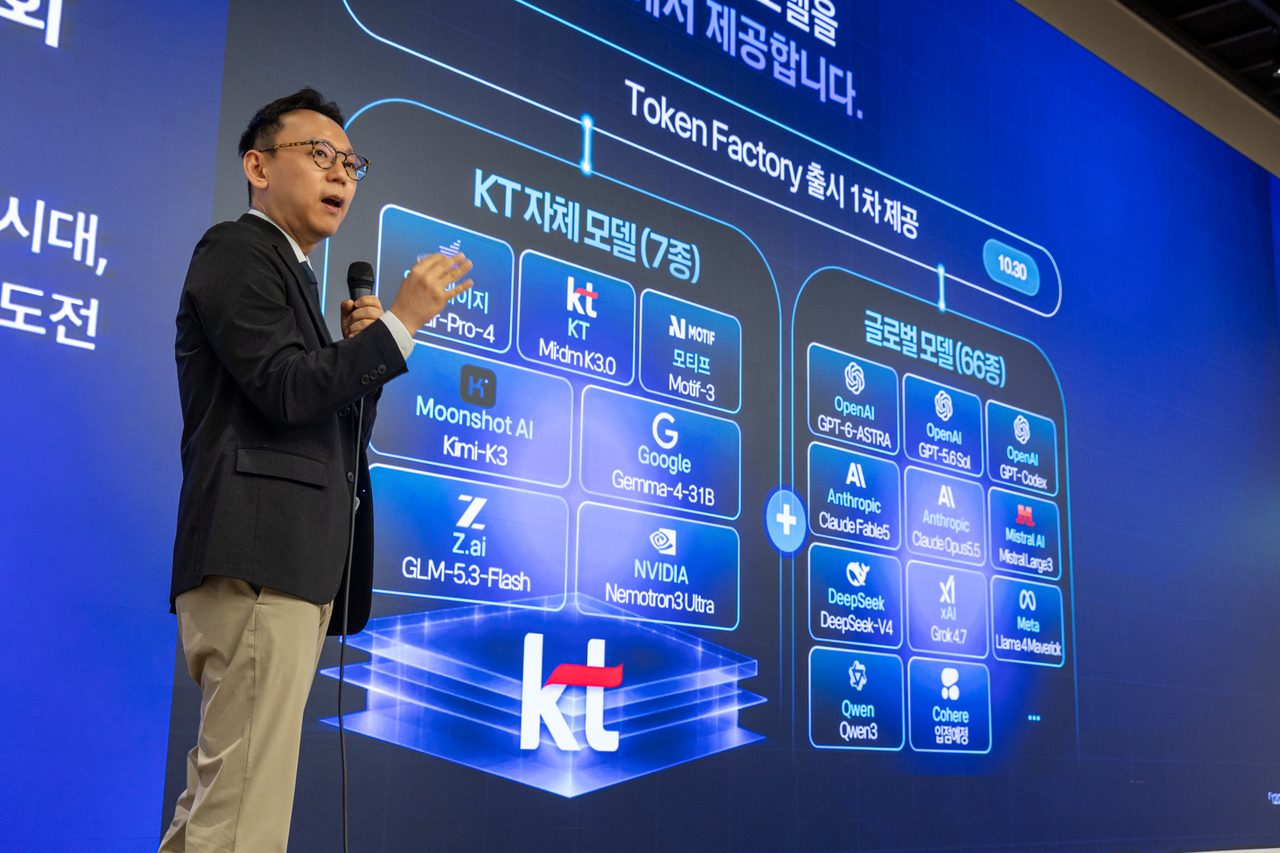
KT unveiled an enterprise AI platform Tuesday that will allow businesses to use models from different providers through a single service, taking on global cloud operators such as Amazon and Microsoft.
Token Factory will launch Friday with 73 models, with plans to expand the lineup to more than 500 in November through a partnership with US-based AI marketplace OpenRouter.
The idea came from needs KT encountered working with corporate clients.
"Businesses want to adopt newer AI models without constantly overhauling their systems. They also want to make sure employees aren't using AI tools outside company security controls," said Lee Jin-hyoung, head of KT's AX business unit, at a press conference in Seoul.
Through Token Factory, customers can select models, monitor usage and settle charges in Korean won. An automated system directs simpler requests to less expensive models and more demanding tasks to higher-performance alternatives.
KT estimates the technology could reduce AI processing costs by up to 25 percent, based on internal tests whose comparison criteria were not disclosed.
"Removing unnecessary text from prompts accounts for roughly 20 percent of the savings. Choosing the least expensive model capable of handling a request contributes another 5 percent," said Kim Jun-seok, head of KT's Agentic AI Lab.
Businesses can pay after using the service and combine AI charges with existing telecom bills. Larger customers will also be offered volume discounts and dedicated network options.
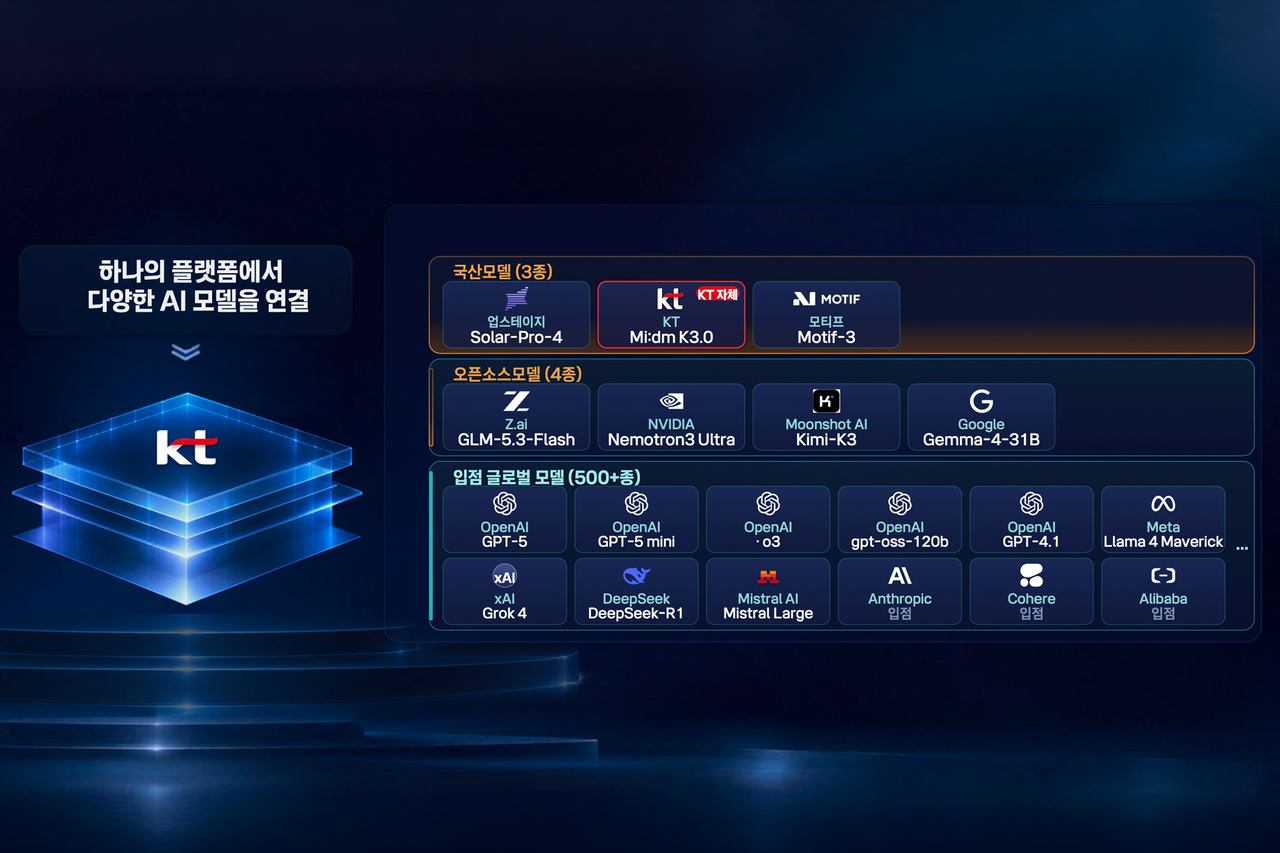
OpenRouter brings access to models from developers including OpenAI, Anthropic and Google. The partnership could also allow KT to sell AI services hosted in Korea to customers overseas.
"We built OpenRouter so developers and businesses could use AI models from different providers without having to manage each one separately," founder and CEO Alex Atallah said in a recorded message. "Working with KT extends that choice to Korean enterprises, with the option of using computing infrastructure located in Korea."
OpenRouter agreed in August to be acquired by US payments company Stripe in a deal reportedly worth more than $8 billion.
KT's revenue plans go further than distributing third-party models. It intends to sell AI computing capacity from its own data centers and incorporate Token Factory into existing corporate network, cloud and AI integration contracts.
"AI marketplaces generally take a commission of around 5 percent, but that's not our main business," Lee said. "We expect to earn most of our revenue from models running on our own GPUs, where we can control costs and set our margins."
The company expects its seven locally hosted models to cost less than comparable services, though it has not released detailed prices.
Domestic processing could also appeal to banks and public institutions with strict data requirements, KT said. But only seven of the 73 launch models will run in KT's Korean data centers. Most models supplied through OpenRouter will process requests overseas.
KT has not disclosed revenue targets or confirmed paying customer numbers.
mjh@heraldcorp.com