The American Chamber of Commerce in Korea and US networking giant Cisco called for greater attention to cybersecurity risks posed by aging IT infrastructure, urging Korean businesses to modernize outdated systems as artificial intelligence reshapes the threat landscape.
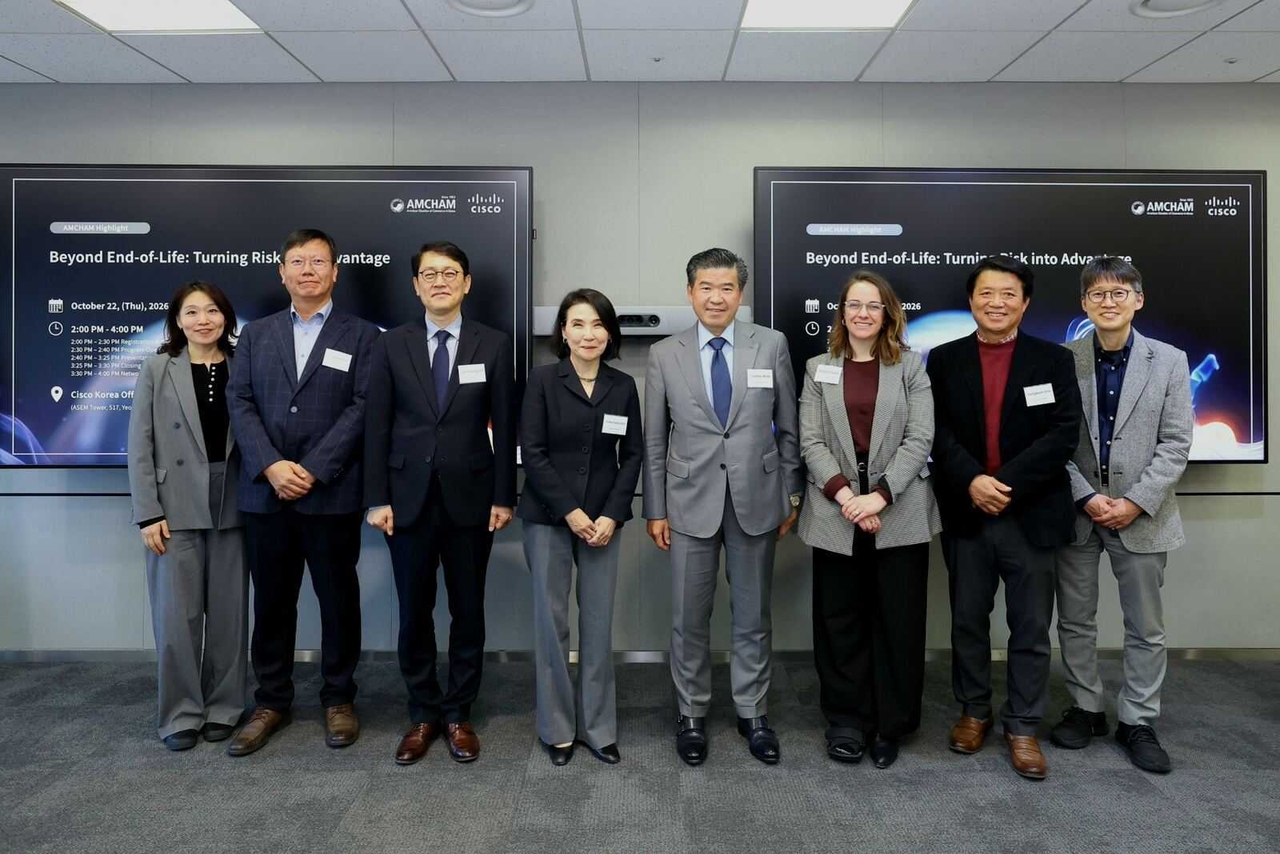
The two organizations held a closed-door roundtable Thursday at Cisco Korea's office in Seoul, bringing together business executives and cybersecurity experts to discuss the risks of end-of-life, or EOL, technology — equipment and software that no longer receive security updates or technical support.
The discussions focused on how companies can move beyond replacing outdated systems only when problems arise and instead develop long-term modernization plans that balance cybersecurity, operational needs and investment costs.
As AI enables increasingly automated and sophisticated cyberattacks, unsupported technology can become a vulnerable entry point for hackers, potentially threatening business operations and critical infrastructure.
The event featured remarks from Cisco Korea President Choi Ji-hee and AmCham Chairman and CEO James Kim, along with a keynote address by Korea Internet Security Agency Information Security Industry Division Director General Oh Jin-young.
"A secure and resilient digital foundation is essential to turning the potential of US-Korea technology cooperation into lasting business opportunities," Kim said.
He stressed that modernizing aging systems is an important part of strengthening competitiveness and pledged to continue cooperation with technology companies to facilitate dialogue between industry and policymakers.
Choi warned that businesses relying on unsupported equipment face growing risks as cyberthreats evolve.
"As businesses transition into the AI era, leaving EOL equipment in place after official security updates and technical support have ended can pose a critical threat to business continuity," she said.
She emphasized the importance of identifying vulnerable assets before developing phased replacement plans based on operational priorities and available budgets.
Sarah Sloan, Cisco's head of cybersecurity policy for Asia-Pacific, presented findings from a Cisco-sponsored report by the Australian Strategic Policy Institute examining risks associated with outdated technology.
Drawing on cases from Korea, India, the Philippines and Australia, the report argues that managing aging technology requires more than routine IT maintenance. It calls for clearer accountability, long-term investment planning and procurement reforms to reduce security vulnerabilities.
Sloan also led a scenario-based exercise in which participants examined how to prioritize infrastructure upgrades while maintaining business continuity.
Ok Jae-bom, leader of Cisco Korea's Technology Strategy and Advisory Group, outlined approaches to replacing outdated infrastructure and improving IT asset management.
The roundtable also addressed emerging security challenges associated with AI and quantum computing, underscoring the need for businesses to incorporate technology lifecycle management into broader investment and risk-management strategies.
AmCham said it would continue working with technology companies and policymakers to promote cybersecurity resilience and support Korea's digital competitiveness.
minmin@heraldcorp.com