Merck Electronics CEO sees Korea as key market as company braces for potential doubling of chip materials demand
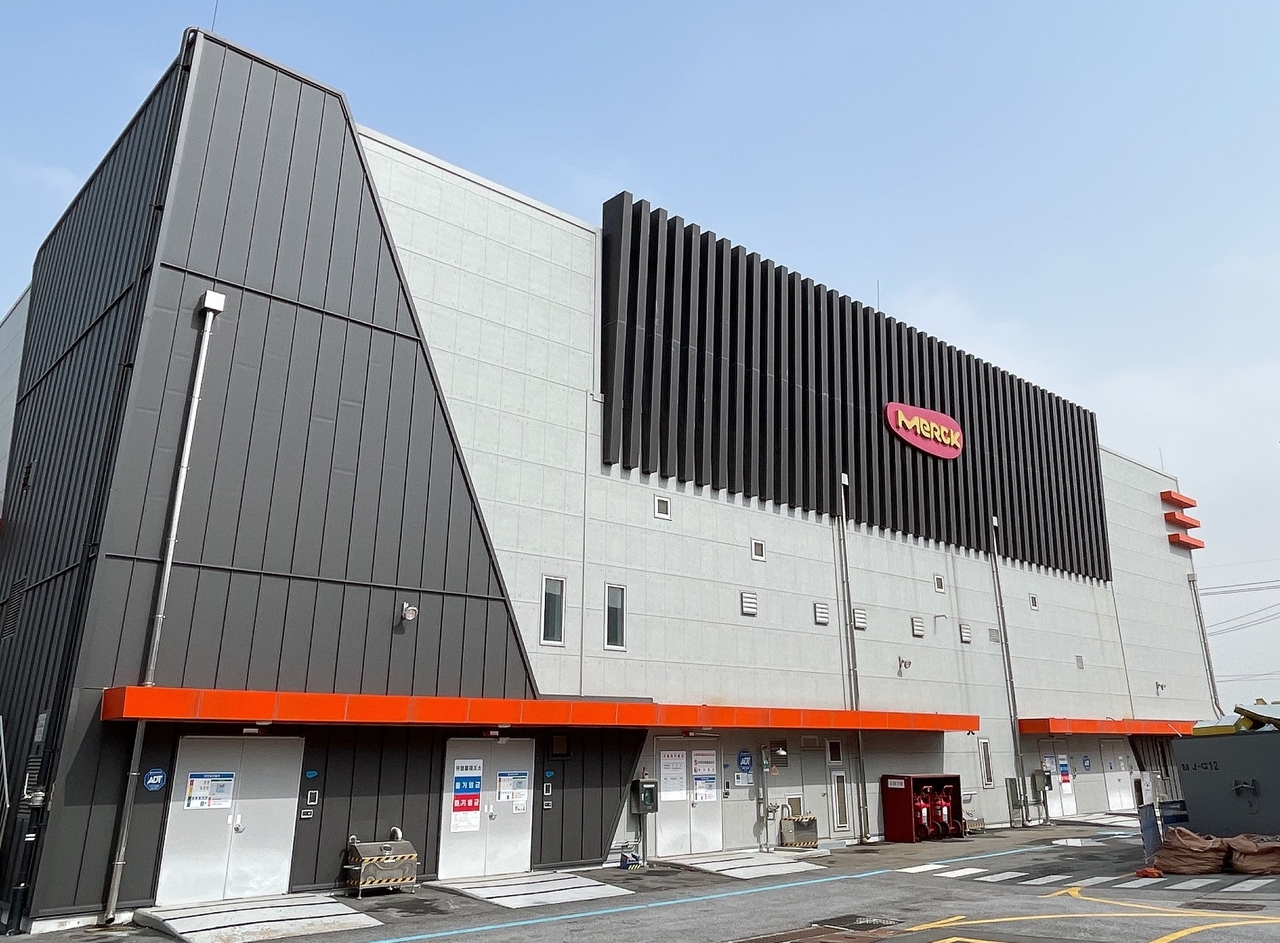
German science and technology company Merck opened a new semiconductor materials plant in South Korea on Thursday, expanding local production of molybdenum as chipmakers adopt the metal for increasingly advanced memory chips.
The facility in Eumseong, North Chungcheong Province, will produce molybdenum dioxide dichloride, a chemical used to deposit ultrathin metal films during chip manufacturing. It will supply customers in Korea and elsewhere in Asia.
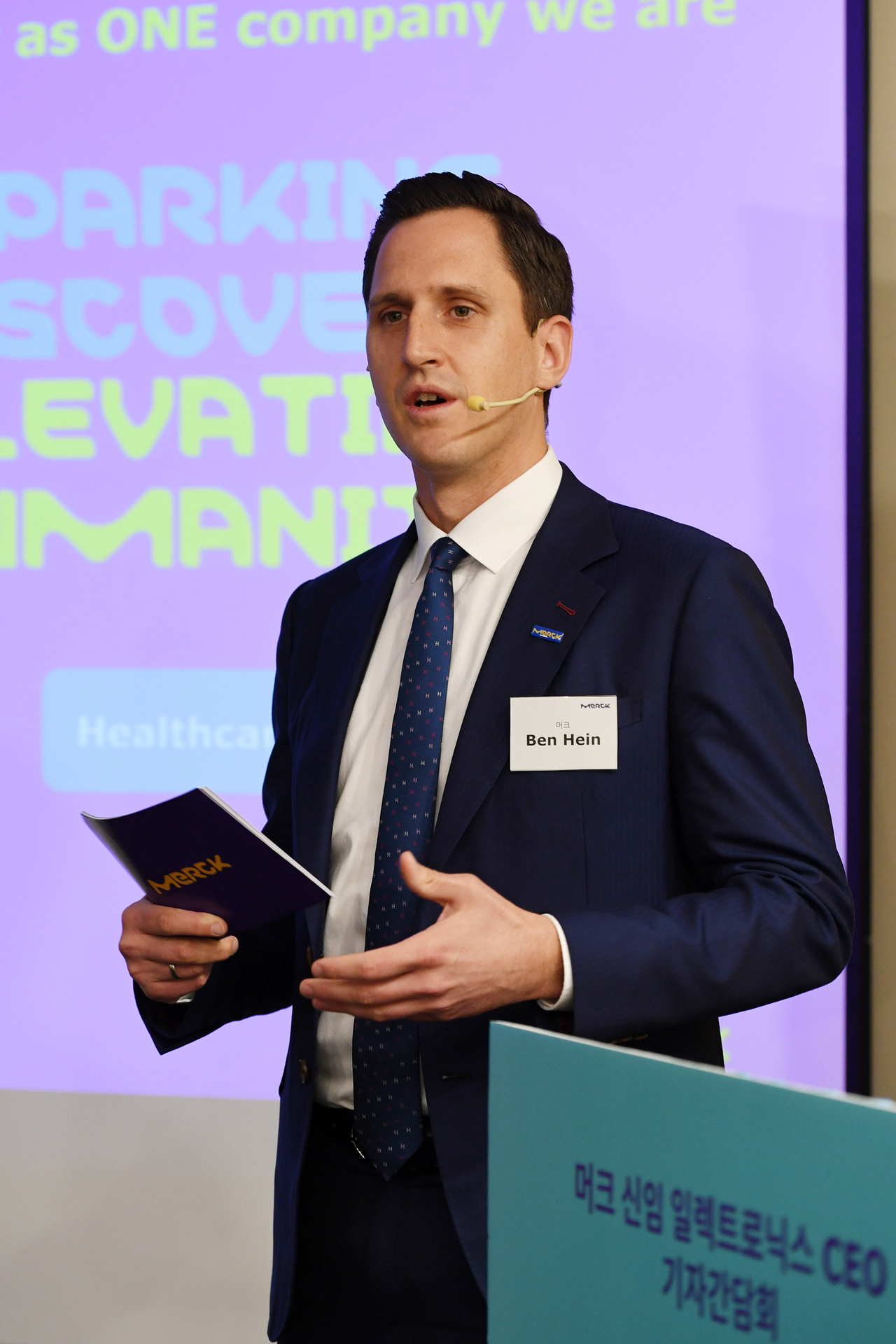
Benjamin Hein, CEO of Merck's Electronics business, described Korea as among the top three markets for semiconductor materials during a press conference in Seoul on Wednesday.
"What if the demand for semiconductor materials and solutions doubles within the next five years? Are we ready? We want to be ready," Hein said.
The plant will initially focus on materials for advanced 3D NAND flash memory, which increases storage capacity by stacking memory cells vertically.
Samsung Electronics began using molybdenum in its ninth-generation V-NAND in 2024, while SK hynix has reportedly been preparing to introduce the metal in its next-generation 375-layer NAND.
Molybdenum offers an alternative to tungsten, whose electrical resistance becomes increasingly problematic as chipmakers shrink components and stack more layers. It can also reduce the need for barrier films that occupy valuable space inside microscopic structures.
Bing Han, executive vice president and head of Merck's Thin Films business, said adoption was beginning with NAND, with DRAM and logic chips expected to follow. "Eventually more of the smaller features will all move to Moly," Han said, while acknowledging that the pace of adoption depends on individual customers.
Merck will combine precursor production in Eumseong with chemical delivery systems manufactured at its Ansan facility in Gyeonggi Province. The company says the integrated system can use more than 99 percent of the material loaded into its containers, potentially reducing waste and manufacturing costs.
"Local for local is everything," Han said. "You can have the best offering, but you have to have your best offering in the right location."
The expansion forms part of Merck's 600 million euro ($674 million) investment program announced in 2021. Merck disclosed plans for the molybdenum facility in February, but declined to reveal its investment cost or production capacity.
Hein also identified advanced packaging, which combines multiple chips into increasingly complex systems, as another growth area. He said manufacturers face an immediate shortage of packaging capacity, with further technological changes expected over the next three to five years.
"On advanced packaging, short term, there is simply not enough capacity," he said. "So on the immediate, it is about debottlenecking."
mjh@heraldcorp.com