From Homeplus Express to Haitai HTB and Burger King, budget coffee giant eyes expansion beyond cafes
In Korea’s food and beverage deal market these days, the most persistent bidder sells cheap coffee.
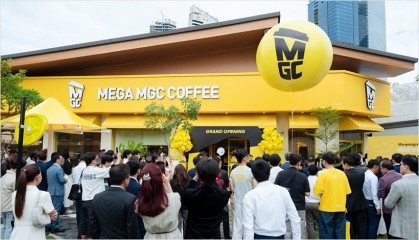
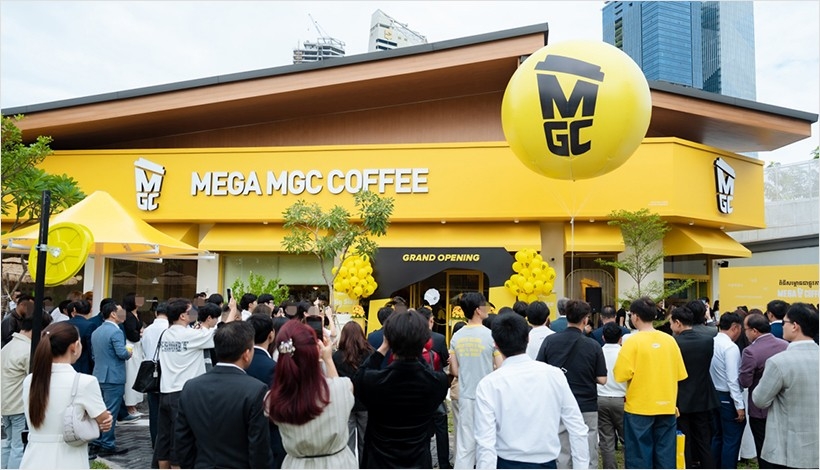
Mega MGC Coffee, the country’s largest coffee chain with 4,500 bright-yellow storefronts, no longer seems content merely selling Americanos. It now harbors an appetite for a larger share of the retail landscape.
"With a nationwide franchise logistics network and strong cash generation, Mega Coffee has emerged as a key strategic investor in F&B deals," one industry official said.
Deals in search of synergy
The hunt began in the spring with Homeplus Express, the supermarket unit carved out of embattled retailer Homeplus. MGC Global, Mega Coffee’s operator, made it to the main bidding round, but Harim Group, the parent of NS Shopping, ultimately won the deal in May.
The coffee chain’s goal, industry officials say, was to become an everyday retail platform by adding supermarket retail to its cafes and to the food supply business of Boratr, a Kosdaq-listed sister company. MGC Global Chairman Kim Dae-young founded Boratr in 2000, built his fortune on it and used it to buy Mega Coffee in 2021.
Homeplus Express’ stores, logistics and familiar name would have let Boratr sell its meals and fresh food directly to consumers, and its global sourcing network could have filled the shelves with imported goods. The chain might also have carried Mega-branded ready-to-drink beverages and private-label food.
Undeterred, MGC Global has since turned its attention to Haitai HTB, the beverage unit LG Household & Health Care is selling, though it is keeping separate its Coca-Cola bottler.
MGC Global and private equity firm Godo Partners have made the shortlist for a deal LG H&H hopes will fetch about 300 billion won ($226 million), with a main bid looming but no date yet disclosed. Should it prevail, MGC Global is expected to draw on Haitai’s plants and logistics network to produce cup coffee and bottled drinks.
Funding is unlikely to be the obstacle.
Parent company Wooyoon, which holds 82.3 percent of MGC Global, had 195.1 billion won in cash and short-term financial instruments at the end of last year. Boratr held another 150 billion won in cash and liquid financial assets in the first half. Together, the two Kim-controlled firms can tap at least 350 billion won, and analysts say acquisition financing could stretch that far enough for a sizable deal.
Meanwhile, Mega pursues growth with equal vigor. It opened its 4,500th outlet this month and has expanded abroad with stores in Mongolia and Cambodia. Japan is under review, and a US store is reportedly on the way. MGC Global’s revenue jumped 30.4 percent on-year to 646.9 billion won last year, with operating profit of 111.4 billion won.
MGC Global has also lately surfaced as a potential suitor for BKR, the Korean operator of Burger King and Tim Hortons, after sale advisers Deutsche Bank Securities and Lazard Korea floated the business to the coffee chain, according to investment banking sources.
Affinity Equity Partners, which owns BKR, is even mulling a carve-out of Tim Hortons, which would spare Mega a clash with its core business, the sources added.
For now, synergy between Mega and Burger King remains an open question, except for the likely prospect of Mega coffee at the burger chain. Skeptics argue that coffee shops and burger chains differ in operations and customer demand, and that most Burger King Korea stores are company-run, unlike Mega’s franchise model.
"The Haitai HTB outcome, and the money it requires, will decide whether Mega joins the Burger King race," another industry observer noted.
minmin@heraldcorp.com