South Korea's Army plans to create specialized brigades dedicated to guarding the border with North Korea as it moves toward AI-based surveillance amid shrinking troop numbers.
According to the Army, front-line security units will be reorganized in two stages, beginning with the creation of division-level general outpost, or GOP, security groups and later expanding to corps-level GOP security brigades.
The first GOP security groups are scheduled to be established under the 5th and 22nd Infantry Divisions on Oct. 1, 2027. The Army plans to assess their operation before moving ahead with corps-level brigades.
Under the current system, brigades under front-line divisions take turns conducting GOP security operations. Under the new structure, dedicated units would assume the mission, allowing combat units stationed in the forward edge of the battle area behind the GOP to focus on training and combat readiness.
The restructuring is part of a broader plan to shift the Army's manpower-intensive GOP and coastal security operations toward AI-based surveillance.
The Army plans to complete upgrades to its advanced border surveillance system by 2028 and establish an AI-based border operations control system by 2033. The Defense Ministry also seeks to reduce personnel assigned to border security from about 22,000 currently to around 6,000 by 2040.
The plan comes amid renewed attention to security operations inside the Demilitarized Zone and their joint coordination by the South Korean military and the US-led United Nations Command.
Under the 1953 Armistice Agreement, the UNC maintains authority over armistice enforcement and access to the southern portion of the DMZ. Seoul has sought a greater role in activities conducted inside the zone.
The issue surfaced in August when reports emerged that the UNC was considering forming a new brigade combining its Joint Security Area security battalion with armistice enforcement functions. Former Defense Minister Ahn Gyu-back said at the time that the two sides had agreed not to proceed with the plan, although the UNC said its organizational review involved only an internal restructuring of existing resources.
Monday's audit also revisited the Sept. 21 mine explosions inside the DMZ that injured three South Korean soldiers, two of them seriously.
The soldiers were clearing a route for a joint South Korea-UNC inspection near the Military Demarcation Line when two mines exploded. A subsequent joint investigation concluded that North Korean resin antipersonnel mines had been deliberately planted south of the MDL, constituting an Armistice Agreement violation.
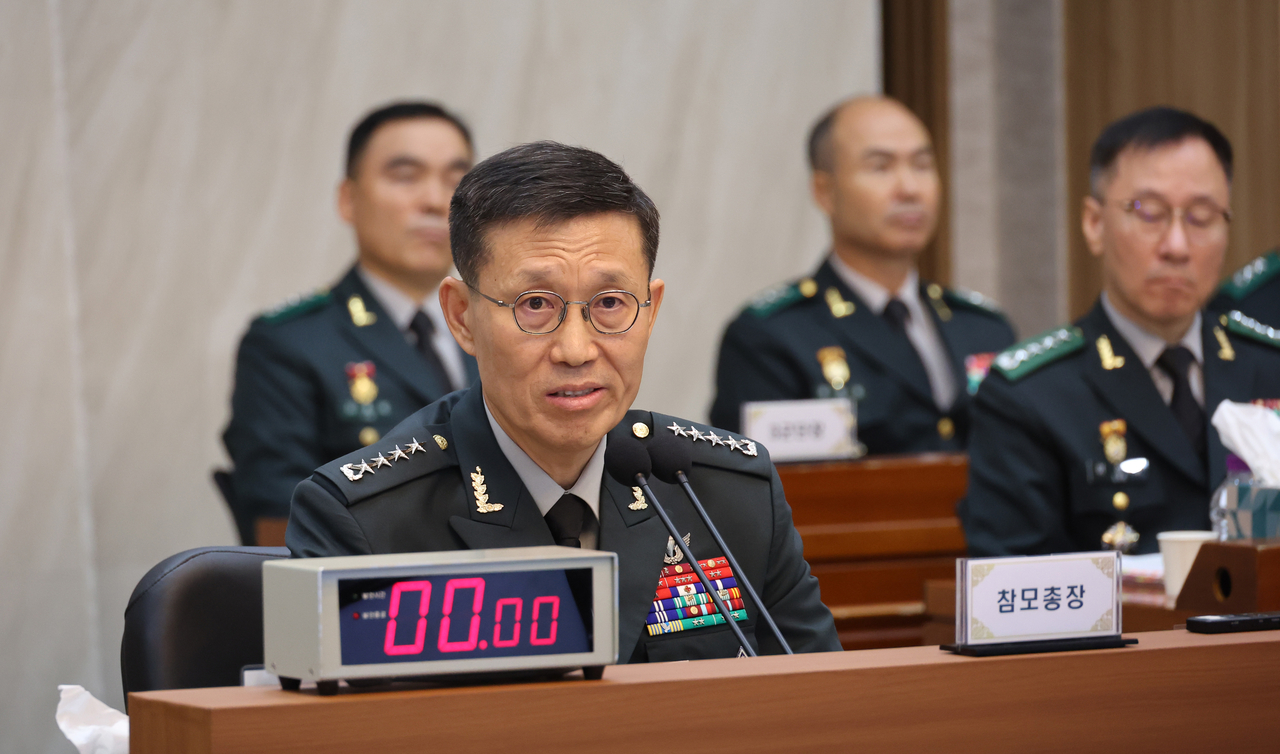
Separately, Army Chief of Staff Gen. Kim Gyu-ha rejected recent remarks by Gen. Xavier Brunson, commander of US Forces Korea and the UNC, suggesting that South Korea begins at the southern fence line of the DMZ.
"I cannot agree," Kim said when asked about Brunson's remarks during the audit.
Kim, however, also called for restraint in assessing the comments, saying Brunson has a deep commitment to South Korea's defense and that his remarks should be viewed in their broader context.
flylikekite@heraldcorp.com