Samsung expands training and internship programs to secure skilled chip workers as semiconductor investment accelerates across the US
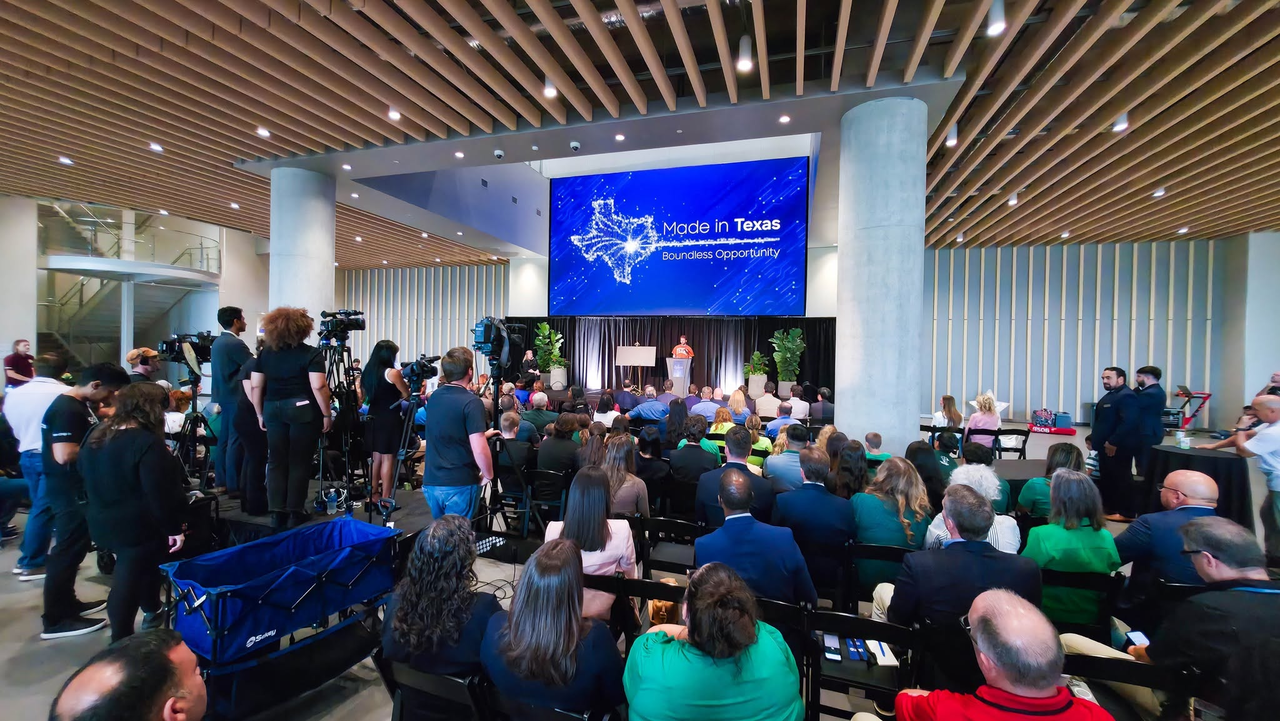
Samsung Electronics is committing more than $22.8 million to workforce development and community programs in Central Texas as rival TSMC explores a potential chip plant in the state, raising the stakes in the competition for skilled semiconductor workers.
Samsung Austin Semiconductor announced the investment at its “Made in Texas: Boundless Opportunity” event, unveiling new technical training and internship programs aimed at building a local talent pipeline for its expanding operations in Austin and Taylor.
The announcement comes as TSMC, the world's largest contract chipmaker, considers adding Texas to its US manufacturing footprint. CEO C.C. Wei confirmed that the Taiwanese company had sent a team to evaluate the state as a potential location.
TSMC's arrival could intensify competition for engineers, technicians and skilled tradespeople in a region already facing growing demand from Samsung's expansion.
Samsung's $22.84 million commitment includes $10.7 million for community initiatives, including STEM education through nonprofit organizations, and $10.64 million for its 5-Star Workforce Development partners through 2029.
The company will also invest $1.5 million in a Skilled Trades Employment Pathway program with the Taylor Independent School District, expand paid internships and launch a community engagement initiative called Spark!
"Spark! and the workforce development programs are about creating opportunities today that can have an impact for years to come," Koo Bon-young, president of SAS said. "By supporting STEM education, community initiatives and skilled trades, we’re helping build stronger, more connected communities and a robust workforce."
Taylor ISD Superintendent Jennifer Garcia-Edwardsen said the partnership would help prepare local students for jobs created by Samsung’s expansion.
“There is a high demand for electrical and HVAC employees to work on the fabs here at Samsung, and we want to make sure that our students are at the front of the line of opportunity,” she said.
Samsung also highlighted its growing economic footprint in the region. The company said its Austin and Taylor campuses injected $10.9 billion into the Central Texas economy in 2025, supported 28,746 jobs and generated $2 billion in wages.
The two campuses currently employ more than 4,500 people. Samsung’s continuing expansion — and TSMC’s potential arrival — could further strain the supply of skilled workers in the region.
The shortage is likely to deepen across the US as contract chipmakers accelerate construction. Semiconductor Equipment and Materials International estimates that the US semiconductor industry could face a shortage of as many as 157,000 workers by 2030.
Samsung is preparing to break ground in November on its second fabrication plant in Taylor. The facility will span roughly 2.7 million square feet, with mass production targeted for 2030.
TSMC is also accelerating its US expansion. Wei said the company was “working very hard” to increase its capacity in the country.
A potential Texas fab would add to TSMC’s planned $265 billion manufacturing complex in Arizona. The company recently completed construction of its second Arizona fab, where mass production is scheduled to begin in the third quarter of 2027.
“We have no intention to leave food on the table for others, and we want to capture every piece of business possible,” Wei said.
GlobalFoundries is also preparing to expand in Malta, New York, under a US-Japan initiative that could provide up to $21 billion for two new fabs. Japan will finance the project, while GlobalFoundries will supply the technology and manage construction and operations.
An initial investment of about $10 billion will fund the first fab, which is expected to begin production in 2029. A second investment of roughly $10 billion could finance another facility. A special-purpose entity owned by the US and Japanese governments will own the fab infrastructure and manufacturing equipment.
As US fab investment accelerates, securing skilled workers is emerging as the next battleground for global chipmakers.
herim@heraldcorp.com