Multilingual staffing has failed to keep pace with demand, leaving some workers to find interpreters on their own.
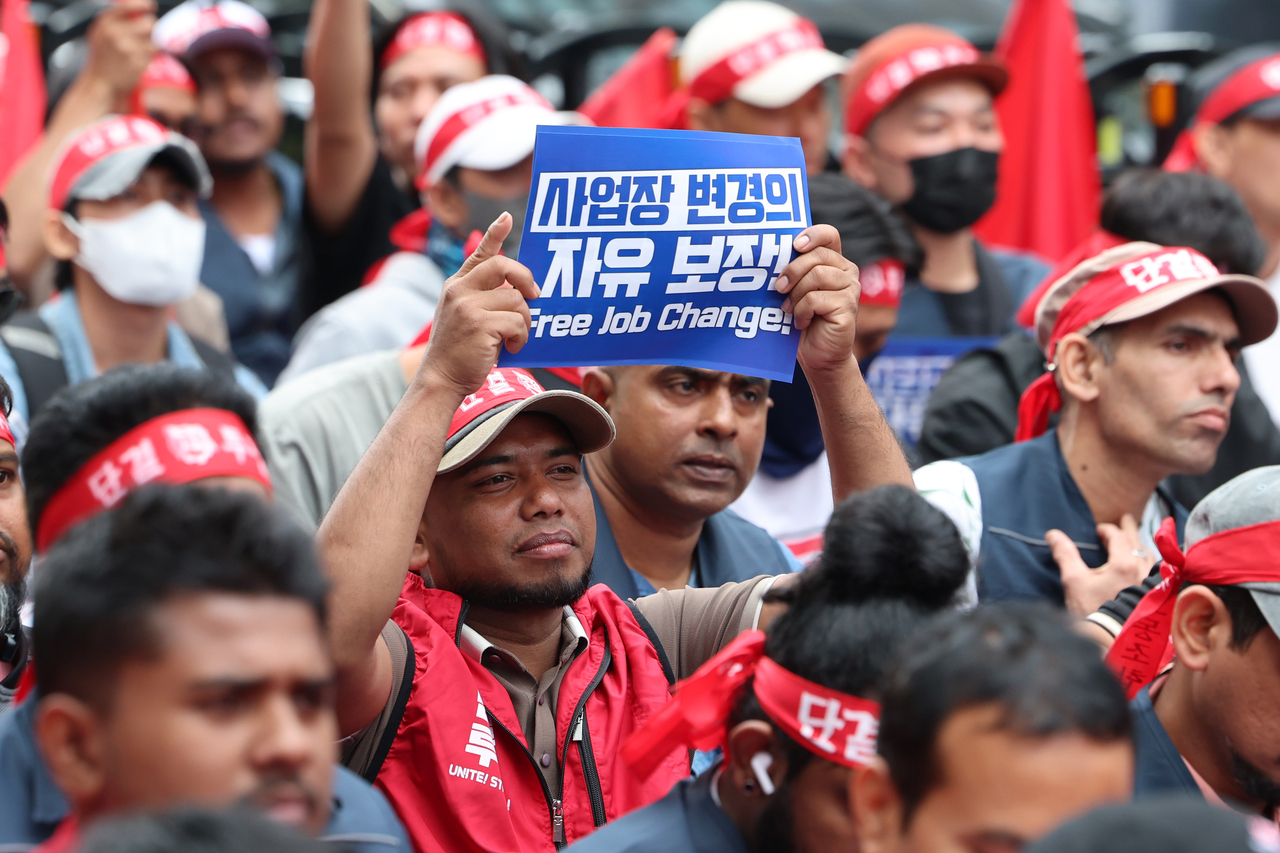
Language barriers at labor offices are leaving migrant workers unable to file complaints, track their cases or get answers for years.
Kim Yi-chan, head of the Global Station Center, a civic group that supports Cambodian workers in Korea, said some workers struggle to understand even basic guidance from labor officials.
“In some cases, workers do not file complaints because they cannot understand what officials at regional labor offices tell them,” Kim said.
“Even when they revisit the labor offices, they still cannot understand exactly what is happening. I have seen cases in which workers waited up to two years for a response because they believed their complaints had been filed.”
From January through August, 14,888 Cambodian nationals visited regional labor offices across Korea. Since 2014, the Ministry of Employment and Labor has dispatched multilingual consultants to the offices, but as of August, only nine consultants there spoke Cambodian.
The problem extends beyond Cambodian workers. A total of 246,385 foreign nationals visited regional labor offices in 2025, up from 147,379 in 2024, according to data released Monday by Rep. Lee Hack-young of the Democratic Party of Korea. The number had already exceeded 180,000 by August, with visitors representing 18 nationalities.
Just 60 multilingual consultants serve seven regional labor offices across Korea. Labor activists say workers are often asked to bring their own interpreters, either in person or by phone, which can impose an additional financial burden.
“For Nepalese workers, some labor offices in Korea offer multilingual services, while others do not,” said Udaya Rai, head of the Migrants’ Trade Union, in an interview with The Korea Herald.
As of August, 10 multilingual consultants at regional labor offices provided services in Nepali.
“Guidance also varies depending on the case. Some offices strictly require an interpreter to be physically present,” Rai said.
Rai added that when workers cannot bring an interpreter, some officials try to communicate through gestures or other means. Others explain matters in Korean regardless of whether the workers understand.
Staffing shortages are particularly acute for less commonly spoken languages. The offices had just one consultant each for Mongolian, Bengali, Kyrgyz and Tetum, while Thai, Filipino and Pakistani language services each had two.
Similar shortages affect the labor ministry’s other counseling centers dedicated to migrant workers. Of the 35 foreign-language counselors at the Foreign Workforce Counseling Center, none spoke Bengali, Urdu, Kyrgyz or Tetum as of August.
The center could provide services in only 14 languages, despite government websites advertising support in 18. Several other languages had only one counselor each.
Although limited staffing in some languages may reflect relatively low demand, a substantial gap remains between demand and available services. The Foreign Workforce Counseling Center received 1,540 requests for counseling in Bengali over the past three years.
Meanwhile, 184 counselors provided services at the Foreign Workers Support Center. Indian languages, Arabic, Kyrgyz and Tajik each had just one nonregular counselor, while services in Urdu and Sinhala, primary languages spoken in Pakistan and Sri Lanka, relied on two and seven daily counselors, respectively.
The labor ministry said it faces difficulties recruiting interpreters for less commonly spoken languages because few qualified speakers are available, and many live far from the agencies that need their services.
“At the Foreign Workforce Counseling Center in Ansan, Gyeonggi Province, we have made efforts to recruit speakers of less commonly spoken languages, including Sinhala,” a labor ministry official said. “We have even approached embassies for help, but our recent efforts have been unsuccessful.”
Critics say language barriers can further disadvantage migrant workers, who may already face vulnerable working conditions because of visa restrictions and cultural differences. They call for expanded language-specific staffing and alternatives such as real-time interpretation services.
“Telling migrant workers who suffer wage theft or assault to ‘bring someone to interpret’ shifts the burden of seeking justice onto the victims,” Rep. Lee told local media. He called on the government to expand language-specific counseling services so workers do not give up seeking help because of language barriers.
forestjs@heraldcorp.com