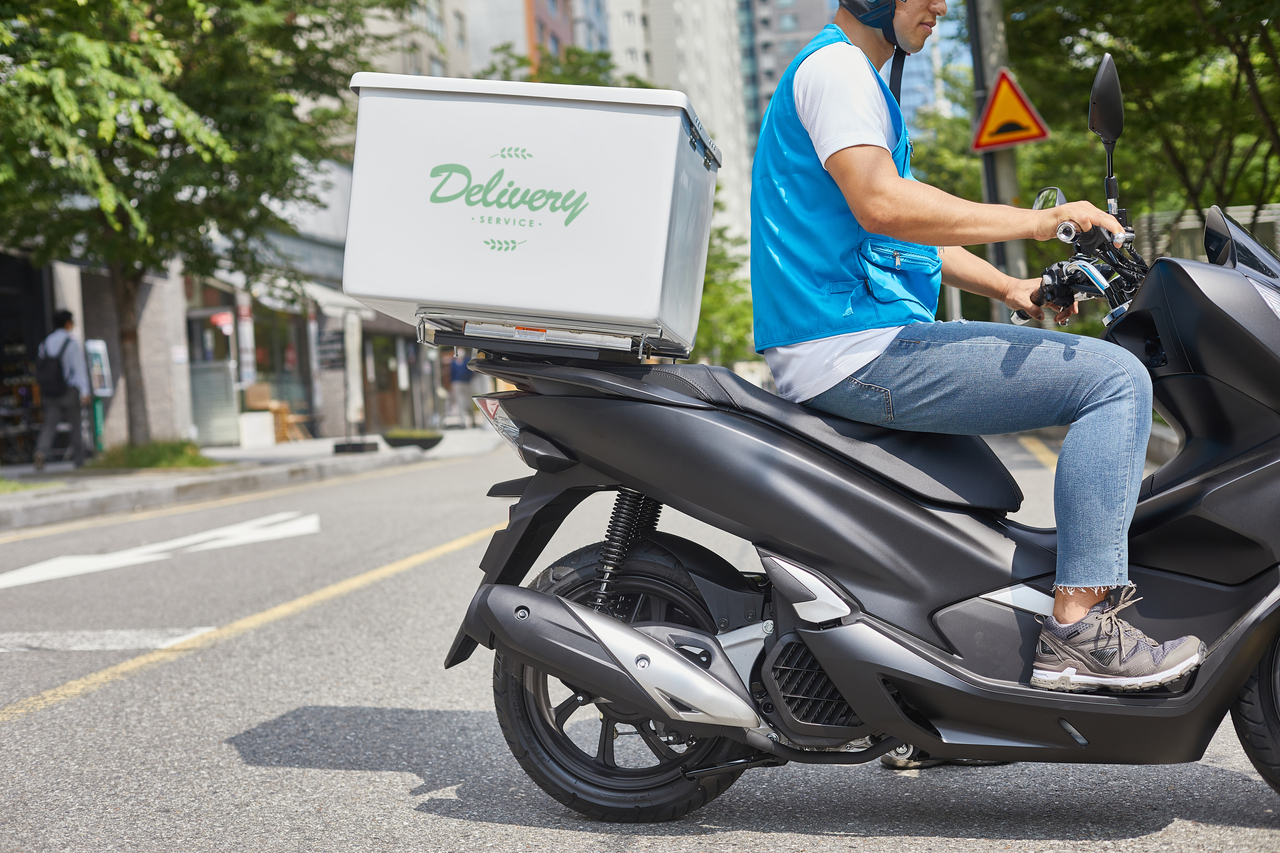
More than 1,100 foreign nationals were caught working illegally as delivery riders in South Korea during the first eight months of the year, according to a lawmaker, sparking concerns about potential blind spots in the country's work permit system for foreigners.
Rep. Kim Gi-pyo of the Democratic Party of Korea disclosed data from the Ministry of Justice during a parliamentary audit of the ministry on Thursday. The data shows that 1,132 foreign nationals were caught working as delivery riders without proper authorization between January and August.
The total number of unauthorized foreign riders is estimated to exceed 10,000.
Kim presented posts from Vietnamese-language social media groups and online communities promoting delivery work in Korea to foreign nationals entering the country on student visas.
One post featured an account of an international student who claimed to have earned 3.3 million won ($2,460) a month by making deliveries for nine hours on weekdays and 12 hours on weekends while attending university.
Other posts advertised motorcycles for delivery work and provided information about universities where foreign students could reportedly combine their studies with delivery jobs. Some also shared tips on borrowing accounts registered with delivery platforms such as Baemin and Coupang Eats, as well as motorcycle license plates.
"We even have a complete list of the universities involved," Kim said, adding that although the names had been redacted from the materials presented, the schools should also be investigated as part of the audit.
Kim also raised concerns over insurance fraud involving delivery motorcycles disguised as vehicles for personal commuting. A total of 37 cases of fraudulent insurance enrollment were detected, resulting in 120 million won in insurance payouts, he said.
Potential holes in the system
The revelations raised questions about the effectiveness of the government's crackdown on unauthorized foreign delivery workers.
Kim criticized immigration authorities for focusing enforcement efforts on individual riders while rarely investigating those who recruit or employ them, arguing that such an approach would do little to address organized illegal employment.
A delivery rider from Daejeon with 13 years of experience, who appeared as a witness at the audit, said he had repeatedly reported suspected cases of illegal account sharing to immigration authorities but had received no information about the results.
"There are only 10 immigration officials responsible for Daejeon and the Chungcheong provinces. That's why we report these cases to the police," he said. "But when we do, (the police tell us) it's not their responsibility either."
Acting Justice Minister Lee Jin-soo acknowledged the limitations of the ministry's enforcement efforts, citing a shortage of personnel and the need for cooperation with other law enforcement agencies and delivery platforms.
"Crackdowns by immigration officials alone are nowhere near sufficient," Lee said. "Some of these offenses appear to be carried out in an organized and systematic manner, involving insurance fraud and other illegal activities."
Kim also pointed out that foreign workers were allegedly being recruited through a major partner company of Baemin, one of Korea's largest food delivery platforms, calling for greater accountability from platform operators.
Kwon Oh-joong, CEO of Woowa Youths, the company responsible for delivery operations for Baemin, said the company provides delivery accounts only to foreign nationals legally authorized to work in Korea.
Kwon also acknowledged the company's responsibility for overseeing its partner firms, while explaining that the company operates through an outsourcing structure rather than directly contracting with individual riders.
forestjs@heraldcorp.com