South Korea on Thursday conducted its first test launch of a domestically developed hypersonic glide vehicle Thursday, marking a step toward acquiring a new high-speed strike capability designed to evade conventional missile defenses.
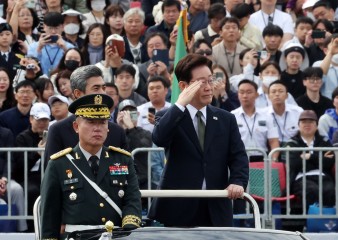
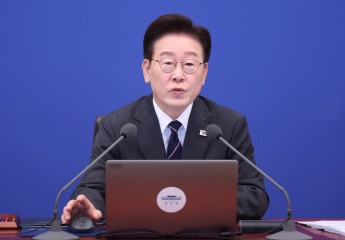
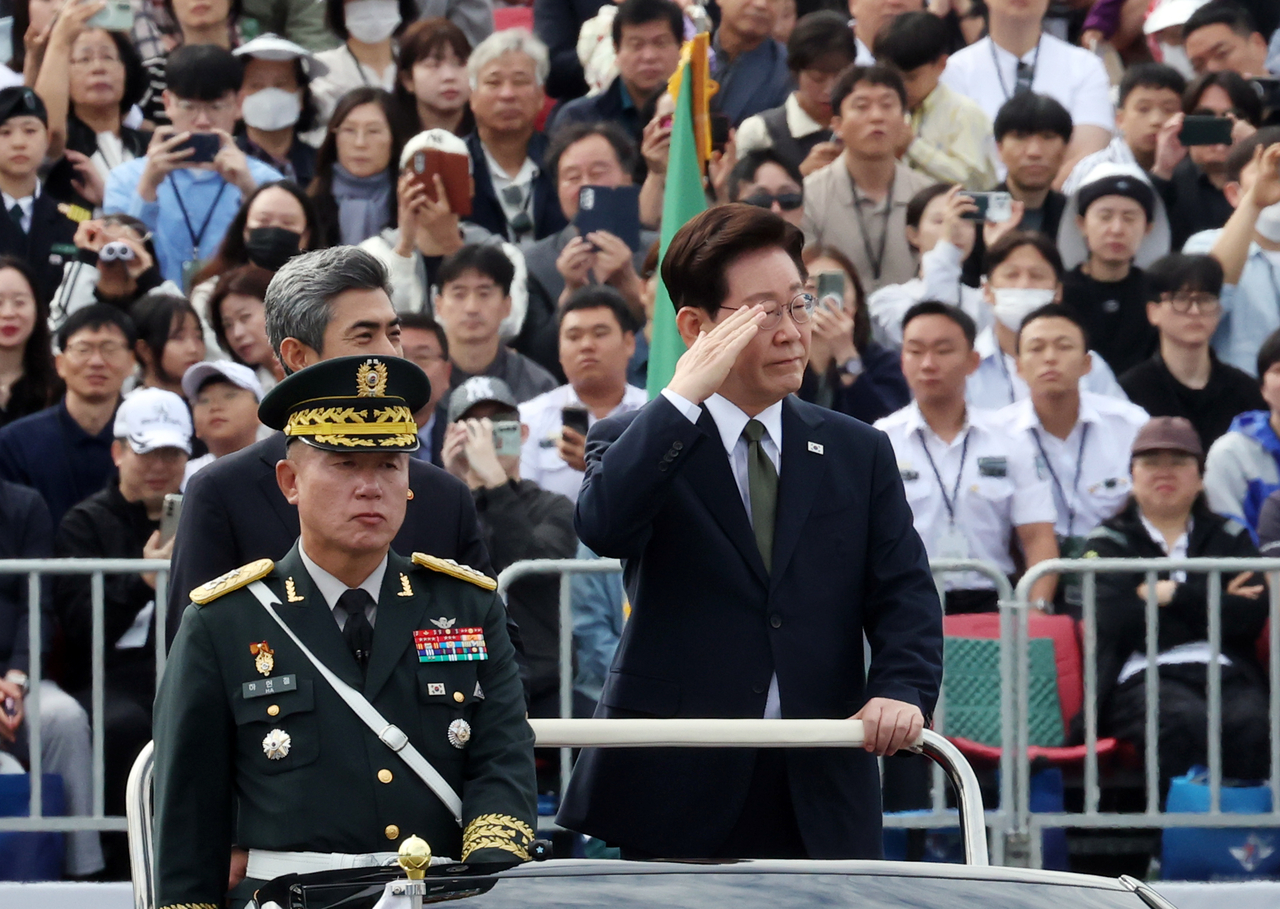
President Lee Jae Myung observed the test, according to Cheong Wa Dae, in a rare public appearance by a president at the development of a new strike weapon.
The test's location was not disclosed. The launch was conducted by the Agency for Defense Development, the state-run defense research agency responsible for developing major weapons systems.
The vehicle climbed to its target altitude aboard a booster before separating and completing its planned hypersonic flight. It then descended to a lower altitude and maneuvered both vertically and horizontally before accurately hitting its designated target, according to authorities.
Unlike conventional ballistic missiles, which follow more predictable trajectories, HGVs can maneuver during flight and travel at relatively low altitudes, making them harder to detect, track and intercept. A booster carries the HGV to high altitude before it separates and the HGV moves toward its target at speeds generally exceeding Mach 5.
Such capabilities could give South Korea another option for striking heavily defended or time-sensitive targets, complementing its existing ballistic and cruise missile arsenal.
The presidential office also described the weapon as a "key strategic asset capable of changing the course of the battlefield," citing its high speed and unpredictable flight trajectory.
It said the successful test represented an important step toward securing a new deterrence capability to strike key targets in the Korean Peninsula's battlefield environment.
Following the launch, Lee also inspected the Hyunmoo-5, South Korea's high-yield ballistic missile designed to penetrate hardened underground targets.
Officials from the Agency for Defense Development attended Thursday's test along with First Deputy National Security Adviser Kang Geon-jak, Defense Minister Kang Shin-chul and Defense Acquisition Program Administration chief Lee Yong-chul.
Thursday's launch marked Lee's first known presidential attendance at a missile test. He has attended other major defense events, including the rollout of the first mass-produced KF-21 fighter jet in March and the launch ceremony for the Navy's Aegis destroyer ROKS Daeho Kim Jong-seo in September.
"Our security must be secured through our own strength," Lee said after the test. "The government will support the development and deployment of advanced weapons so that the public does not have to worry."
The latest development also comes as Seoul seeks to strengthen military capabilities needed to assume a greater role in combined defense operations as South Korea and the United States pursue the conditions-based transfer of wartime operational control.
At a parliamentary audit Thursday, the Joint Chiefs of Staff said it was pushing for the early deployment of key capabilities necessary for a South Korean-led combined defense posture, including high-yield missiles and medium-altitude reconnaissance unmanned aircraft, as part of preparations for the OPCON transfer.
South Korea transferred operational control of its forces to the US-led United Nations Command during the 1950-53 Korean War. The authority passed to the South Korea-US Combined Forces Command when it was established in 1978. Seoul regained peacetime operational control in 1994, but wartime OPCON remains with the Combined Forces Command, currently led by a US general.
Lee has pledged to complete the transfer during his five-year term, which ends in 2030.
Thursday's test also comes as Seoul has emphasized a firm response to North Korean military activities following land mine explosions inside the Demilitarized Zone last month.
South Korea concluded this week that North Korean antipersonnel mines planted south of the Military Demarcation Line caused the Sept. 21 explosions that injured three South Korean military personnel. The military subsequently removed North Korean mines found south of the boundary.
Defense Minister Kang Shin-chul said the military was responding firmly to North Korean activities around the MDL. Meanwhile, JCS Chairman Gen. Jin Young-sung said Thursday that the military was considering both physical and nonphysical measures without elaborating.
flylikekite@heraldcorp.com

![[Surive&Thrive] Tips for getting around Seoul by subway (2)](https://wimg.heraldcorp.com/news/cms/2026/10/08/news-p.v1.20261006.1e7dee51d7f64cdba1a20b897d88cee6_T1.jpg?type=h&h=800)