Political uproar continues over Hur Jin-ho's thriller about a 1974 assassination
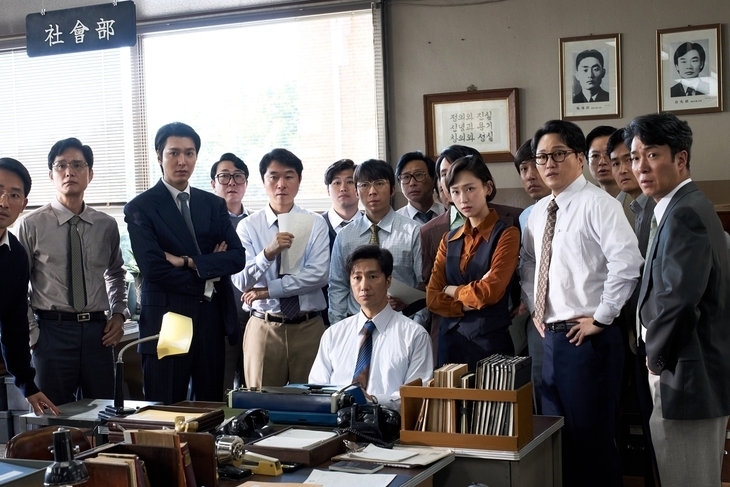
Since it hit theaters Sept. 23, the journalism thriller "The Assassin(s)" has been in the crosshairs for suggesting that a former president might have been involved in his wife's death.
Much of the furor has played out on social media, fueled by right-leaning online forums and conservative influencers. It has since reached just about everyone involved with the film, including its cast.
On Friday, production company Hive Media Corp. said the film's team would skip next week's Busan International Film Festival altogether, citing safety concerns for audiences and guests.
The director and leads were set to attend the Tuesday opening ceremony and meet fans at an outdoor stage event the next day. A free public screening planned for the day before the festival has also been called off.
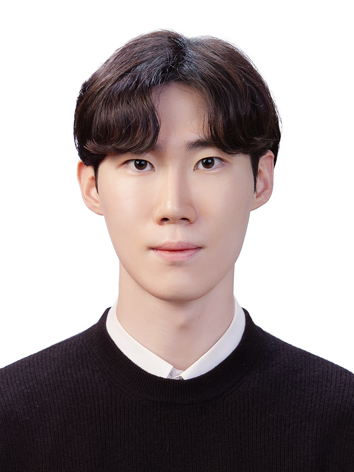
The announcement came a day after Lee Min-ho, who plays a reporter digging into the case, pulled out of a festival talk session. No reason was given for the withdrawal, but industry watchers widely linked it to the outcry over the film.
Co-star Yoo Hae-jin, who plays the detective on the case, has faced pressure of his own as users on social media have called for a boycott of a burger chain he fronts. Some even claimed they were planning to stage a protest outside the actor's home.
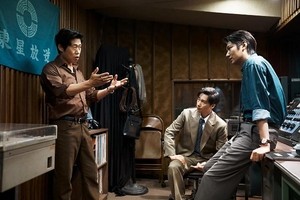
Directed by Hur Jin-ho, "The Assassin(s)" dramatizes the 1974 shooting at a Liberation Day ceremony in Seoul where a gunman opened fire on President Park Chung-hee and fatally wounded first lady Yuk Young-soo instead.
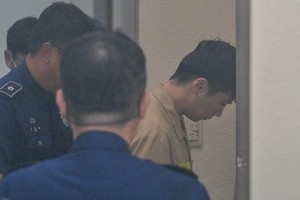
The shooter, Mun Se-gwang, was a 22-year-old Korean resident of Japan who had ties with left-wing activists there. He was arrested at the scene and hanged months later after investigators concluded he had acted on Pyongyang's orders.
At issue is the film's embrace of a long-running conspiracy theory that Park's own men may have staged the attack to divert attention from a political crisis. Some viewers have called the premise unconscionable and deeply hurtful to Yuk's surviving family, including her children.
Many on the right took it as a politically motivated attack on Park's legacy and rallied against it online. Users have bombarded the film with one-star ratings and lashed out at Hur and his cast for taking part in the project. Unverified claims that Chinese money helped finance the movie have also made the rounds on social media.
Lawmakers from the conservative opposition People Power Party have been especially vocal in condemning the film, with party leader Jang Dong-hyeok sharing a post calling for a boycott. On Tuesday, a party member filed a police complaint accusing the director, writer and producers of defamation.
Critics and online reviewers who spoke favorably of the film have also come under attack. A prominent film critic's YouTube channel made his review private after thousands of angry comments poured in. A number of popular YouTubers deleted their videos on the movie and posted apologies.
The controversy is the latest front in Korea's deep feud over its modern history, particularly over its years under authoritarian rule.
Park, a military strongman who ruled from a 1961 coup until his assassination in 1979, is revered on the right for steering the economic boom that pulled the country out of poverty. His daughter, Park Geun-hye, served as president from 2013 until she was removed from office in 2017 over a corruption scandal.
In an interview Thursday, Hur denied that the film portrays the former president as the man behind the attack, saying it simply raises questions. The company said the film takes creative liberties with the historical record and was not meant as a political statement.
At the box office, "The Assassin(s)" drew 55,018 admissions on Thursday to reclaim the top spot, according to the Korean Film Council. Its total now stands at 1.82 million tickets.
moonkihoon@heraldcorp.com