Hur Jin-ho's "The Assassin(s)" won the Chuseok box office race, but its first lady assassination plot has sparked political storm
This article contains spoilers for "The Assassin(s)."
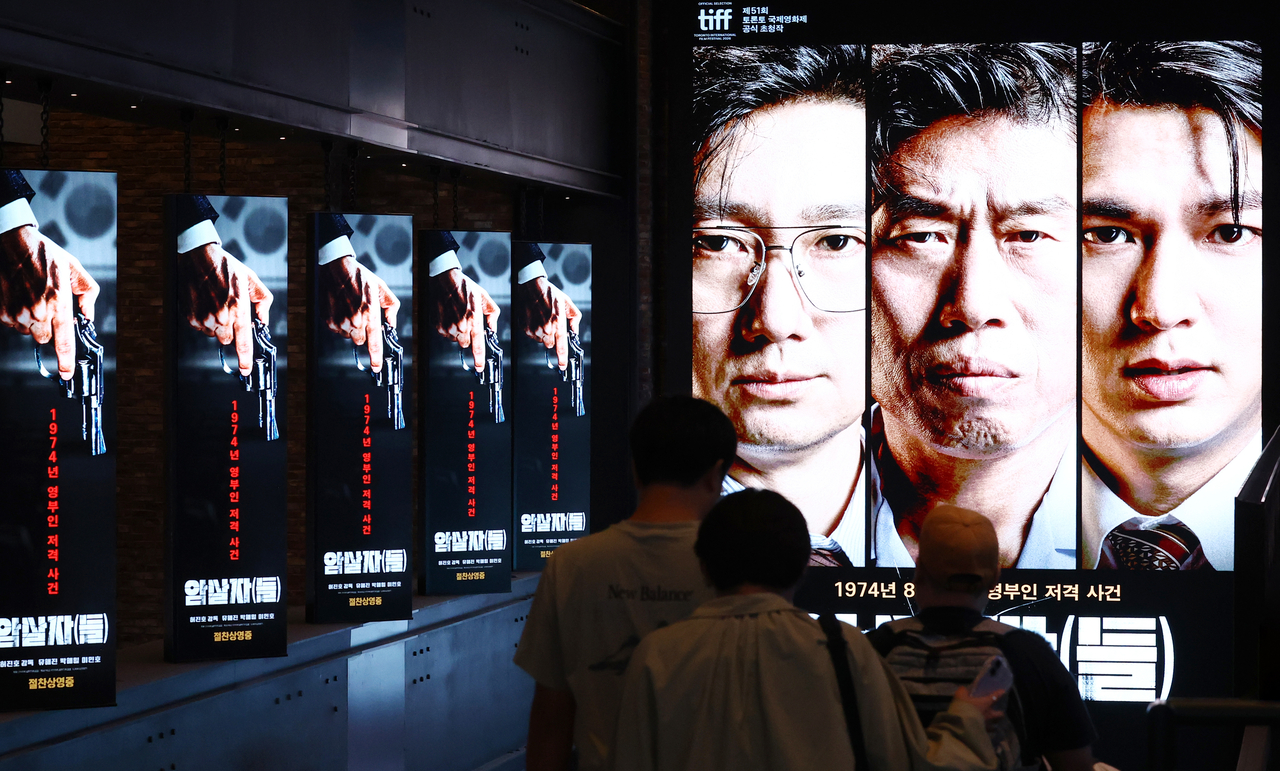
More than half a century after South Korea's first lady was shot dead during a live broadcast of a national ceremony, a movie about her murder has become the country's biggest holiday box office hit.
It has also become the latest flashpoint in Korea's long-running partisan battle over its own history.
"The Assassin(s)," a political thriller from director Hur Jin-ho ("Christmas in August," "A Normal Family"), opened in Korean theaters Wednesday following its world premiere at the Toronto International Film Festival a week prior.
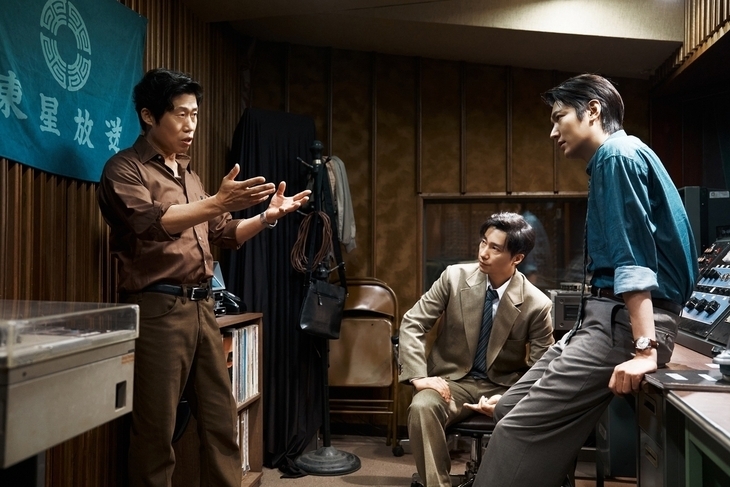
Set in the wake of the Aug. 15, 1974, shooting of Yuk Young-soo, wife of the then President Park Chung-hee, the film stars Yoo Hae-jin as a detective who works the case on his own as reporters (played by Park Hae-il and Lee Min-ho) chase the story officials are determined to cover up. What set off the uproar is where their investigation leads: a trail of clues implicating Park's own men in the first lady's death.
The film topped a crowded Chuseok frame after it sold 1.4 million tickets over the four-day holiday, according to the Korean Film Council's real-time box office tracker. In what shaped up as a three-way race among local releases, it bested both "Tazza: The Song of Beelzebub," the final installment of the popular gambling franchise, and "The Intern," a Korean remake of the 2015 Hollywood comedy starring Choi Min-sik and Han So-hee in lead roles.
A strong box office start notwithstanding, reaction to the film has been one of the most polarized in recent memory. Viewers who enjoyed it described a propulsive, if at times overheated, newsroom thriller backed by solid lead performances. Others took issue with the movie's embrace of conspiracy theories about the tragic death of a first lady, with some accusing it of pushing a political agenda aimed at discrediting Park's years in power.
On the local search engine Naver, the film scores 8.6 out of 10 among verified ticket buyers but 2.3 among all users, a gap suggesting many of the harshest ratings come from people who have not seen it.
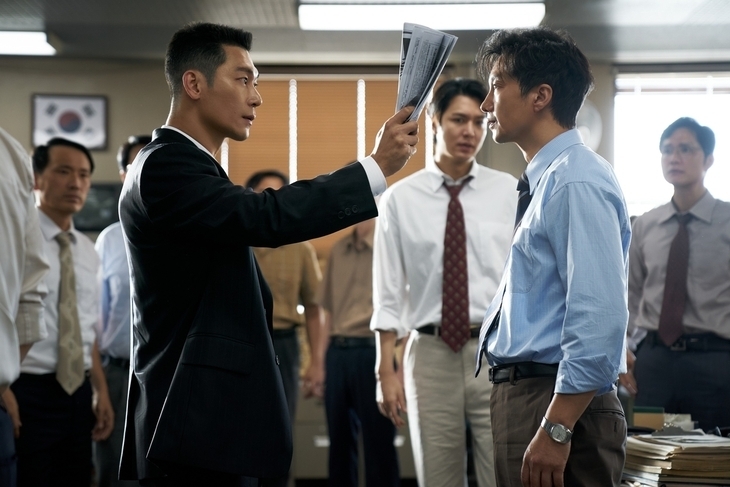
In a country where the left and right remain at odds over how to remember an authoritarian past, backlash against a movie that fictionally implicates the military strongman in his wife's death was more or less inevitable. A former army general, Park seized power in a 1961 coup and ruled for 18 years until his assassination in 1979. Many conservatives revere him to this day for overseeing the rapid economic growth that lifted Korea out of poverty; critics point to his harsh suppression of dissent, especially in his final years in power.
Conservative lawmakers wasted little time in condemning the film. On Sunday, Rep. Joo Jin-woo of the opposition People Power Party called it "an unconscionable crime" that tears at the hearts of Yuk's family. Rep. Na Kyung-won went a step further, suggesting that the country's film industry as a whole had been "taken over by leftist forces."
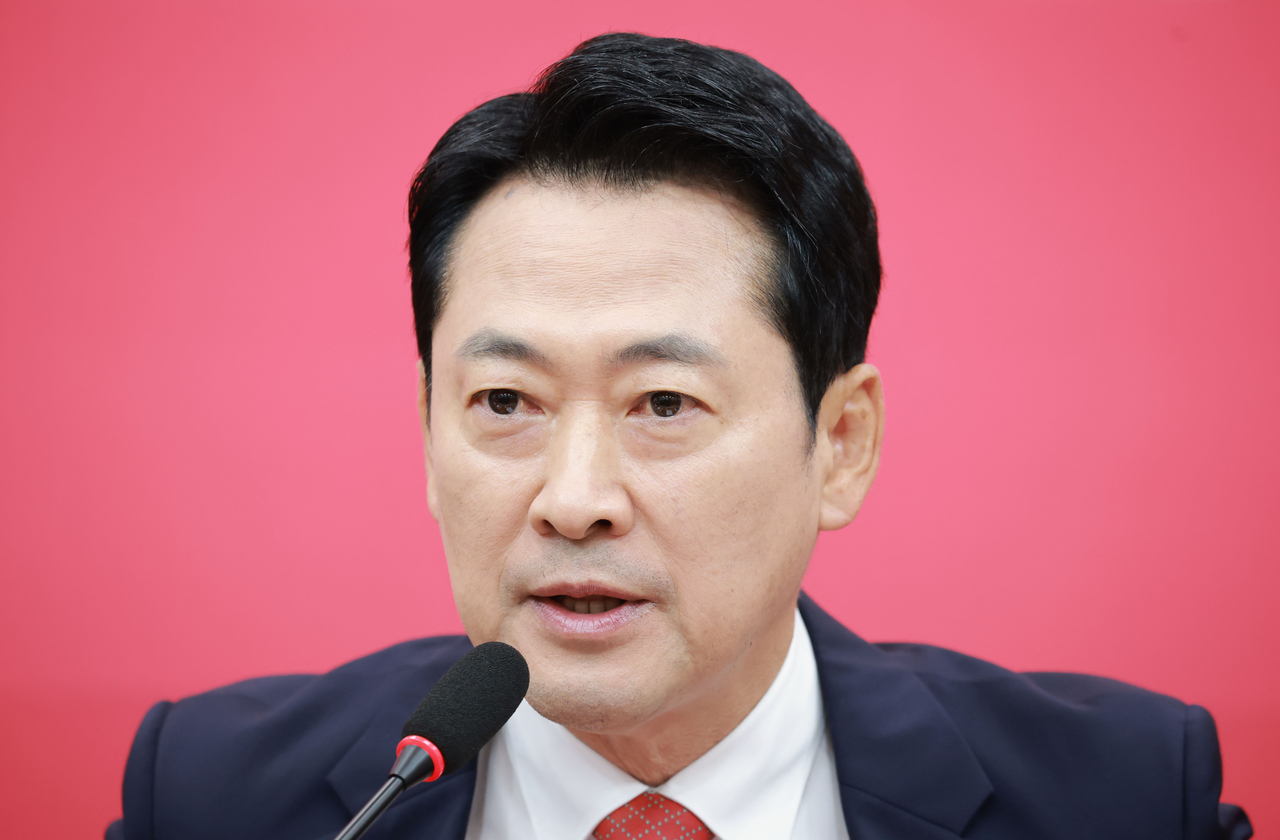
On Monday, opposition party chief Jang Dong-hyeok wrote on social media that the movie tells "a truly absurd story," adding that some had even compared it to a North Korean propaganda film. He also accused the left of a double standard on free speech, claiming that while saying the wrong thing about the 1980 Gwangju Democratic Uprising can land someone in prison, insulting Park is defended as freedom of expression.
"Is freedom of expression the exclusive property of the left?" Jang wrote in the post.
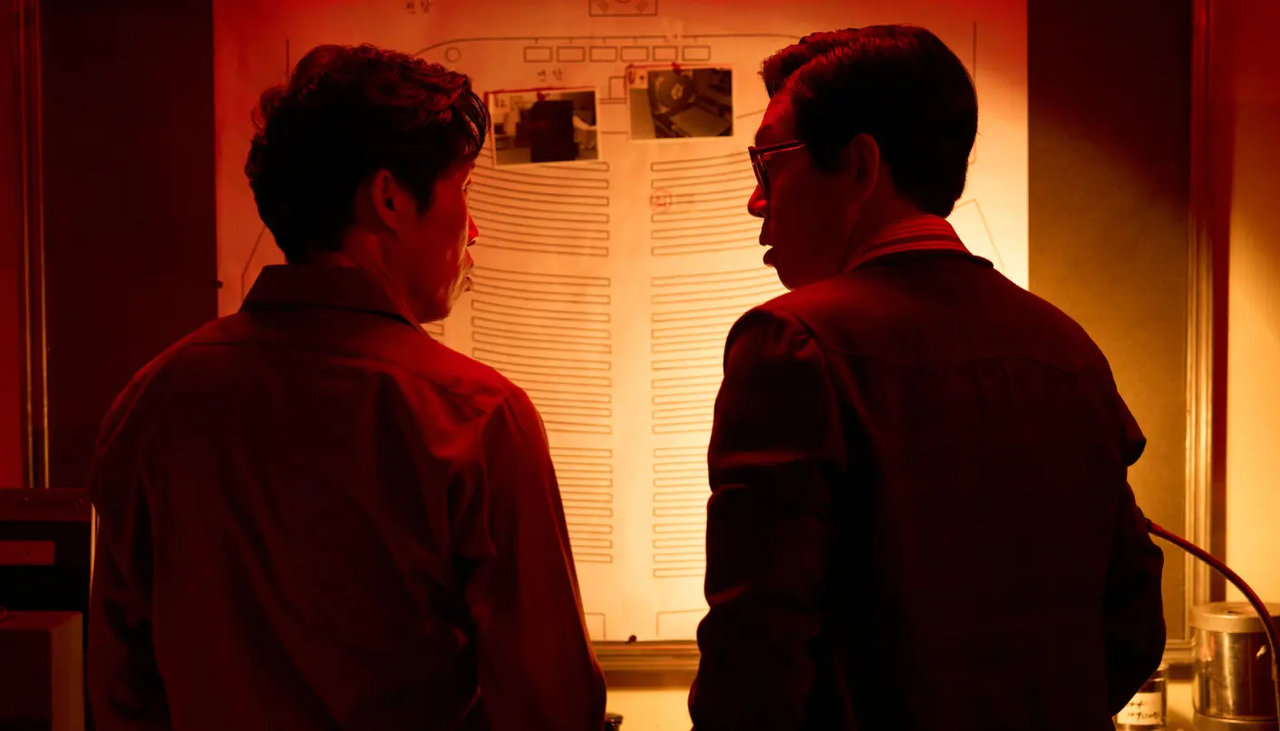
Films revisiting the decades Korea spent under military rule have become a fixture at the local box office. Recent hits include "The Man Standing Next" (2020), a dramatization of Park's shooting death at the hands of his own spy chief, and "12.12: The Day" (2023), which follows Gen. Chun Doo-hwan's coup seven weeks later. Both came from Hive Media Corp., the distributor behind "The Assassin(s)."
Blending fact and fiction to varying degrees, such films often open with a disclaimer that they are works of fiction and give real people and institutions invented names to limit legal exposure. "The Assassin(s)" follows the same playbook: The gunman is given a different name, while the newspaper at the heart of the story, along with the journalists, is entirely made up.
The conspiracy theory the movie floats is hardly new, however far-fetched it may sound. Much like President John F. Kennedy's assassination in the US, the 1974 shooting has been picked over for decades in books, articles and investigative TV shows. Many have raised questions about the government's possible involvement.
While doubts remain over key details of the case, from witnesses' conflicting accounts on the number of shots fired to how the gunman obtained his weapon, none of it amounts to credible evidence that the government was behind the attack.
The real gunman, Mun Se-gwang, was a 22-year-old Korean resident of Japan who had fallen in with leftist activist circles there, some of them aligned with Pyongyang. He was hanged that December after investigators concluded he had acted on orders from North Korea, though how far Pyongyang's influence actually reached him has never been fully established.
"I didn't approach this as a work uncovering a hidden truth or the people behind it," Hur told local media ahead of the release. "I wanted to express the emotions of people who lived through that era as they pursued the truth."
moonkihoon@heraldcorp.com

![[Graphic News] Average parental age of S. Koreans rises](https://wimg.heraldcorp.com/news/cms/2026/09/27/news-p.v1.20260927.0bcbf944ca9043c4a6ad4401fcfae25c_T1.gif?type=h&h=800)